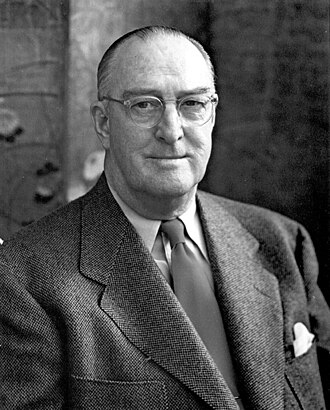
Overview
William E. Boeing did not set out to be an industrialist, much less the patriarch of the world's dominant aircraft maker. He was a wealthy, restless lumberman in his early thirties, the son of a German-immigrant timber and iron-ore fortune, when a barnstormer's flight over Lake Washington on the Fourth of July, 1915, lit an obsession that never went out [3][2]. Frustrated by the fragility of the Curtiss and Martin seaplanes of the day, he turned to his friend Conrad Westervelt, a Navy engineer, with the line that became the company's founding myth: that the two of them could build a better airplane themselves [4][2]. They did. The B&W floatplane, Boeing and Westervelt's initials, first flew from Lake Union on June 15, 1916 [1][3].
A month later, on July 15, 1916, Boeing incorporated the Pacific Aero Products Company, capitalized at $100,000, taking 998 of its 1,000 shares for himself [1][2]. When the United States entered the World War in 1917 he renamed it the Boeing Airplane Company and won a Navy order for fifty Model C trainers, the contract, worth roughly $575,000, that carried the fledgling firm through the lean postwar years when Boeing kept his men employed building furniture and flat-bottomed boats rather than let his shop disband [2][6]. He understood from the start that aviation would be made not by lone tinkerers but by patient capital and disciplined engineering, and he was willing to lose money for years to prove it [2][6].
The decisive bet was the airmail. In 1927 Boeing stunned competitors by bidding to fly the San Francisco–Chicago route at a price everyone assumed would ruin him, then made it pay by carrying paying passengers in the same Model 40 mail planes [6][9]. Boeing Air Transport became the seed of an aviation empire. In 1929 Boeing merged his manufacturing and airline interests with Pratt & Whitney engines, Hamilton propellers, and a string of other firms into the United Aircraft and Transport Corporation, a colossus that built the engines, the propellers, and the airframes and then flew them as United Air Lines [2][6][9]. For a brief moment one man's holdings spanned nearly the entire vertical chain of American flight.
The vertical empire proved its own undoing. When Franklin Roosevelt's postmaster general and a Senate committee chaired by Hugo Black pried open the airmail contracts of the Hoover years, they found the routes had been carved up among a few favored carriers, Boeing's among them, in private "spoils conferences" [2][9]. Boeing was hauled before the Black Committee and lashed for his "monopolistic" methods [2][9]. The Air Mail Act of 1934 forbade any company from both building aircraft and flying mail, and ordered the United combine broken into three: United Aircraft, the Boeing Airplane Company, and United Air Lines [2][6][9].
Boeing was fifty-two and humiliated. He resigned, sold every share of the company that bore his name, and walked away into a private life of thoroughbreds, prize cattle, and his beloved yacht, the Taconite, never again playing a meaningful part in the industry he had, perhaps more than any other single person, willed into being [2][9]. The bitterest of ironies arrived the same year: in 1934 he was awarded the Daniel Guggenheim Medal, aviation's highest honor, just as he abandoned aviation for good [2][9].
What he left behind outgrew him beyond imagining. The disciplined, research-driven, capital-intensive engineering culture he had insisted upon, "to let no new improvement in flying and flying equipment pass us by", carried the Boeing Airplane Company through the B-17 and B-29, into the jet age of the 707, and to the front rank of American industry [5][2]. He owned none of it when he died [2].
Early Life & Path
William Edward Boeing was born October 1, 1881, in Detroit, the son of Wilhelm Böing, a German immigrant from Hohenlimburg who had arrived in America in 1868 and built a fortune in Great Lakes timber and Mesabi Range iron-ore lands, and Marie Ortmann, the Vienna-born daughter of a lumberman [2]. The father died of influenza in 1890, when William was eight, leaving the boy heir to a substantial estate but raised largely apart from it, sent to boarding school in Vevey, Switzerland, and then to private schools in the eastern United States [2].
He enrolled in Yale's Sheffield Scientific School in 1899 but left after two years without a degree, drawn west to make money in the resource that had made his father's, timber [2]. In 1903 he settled in Hoquiam, on Washington's Grays Harbor, bought timberland, and went into the lumber trade, prospering on a national building boom; he organized the Greenwood Timber Company and in 1908 moved to Seattle, piloting his own forty-five-foot boat up the coast [2][3]. The lumberman's eye for graded wood and precise joinery would later serve him well: the first Boeing airplanes were essentially fine spruce-and-fabric carpentry, and Boeing the timber man knew exactly what good aircraft lumber should be [2].
Flight found him almost by accident. He glimpsed a flying machine for the first time at Seattle's Alaska-Yukon-Pacific Exposition in 1909, and on the Fourth of July, 1915, he and Navy Lieutenant Conrad Westervelt took rides in barnstormer Terah Maroney's seaplane over Lake Washington [3][2]. Boeing was hooked. He traveled to Los Angeles to learn to fly at Glenn L. Martin's school and bought one of Martin's seaplanes, and when it was damaged and parts proved slow in coming, his impatience hardened into resolve to build his own [3][2].
Career Timeline
- 1881Born October 1 in Detroit, Michigan, heir to a German-immigrant timber and iron-ore fortune [2].
- 1903Settles in Hoquiam, Washington, and enters the Pacific Northwest lumber business [2].
- 1909Sees an airplane for the first time at the Alaska-Yukon-Pacific Exposition in Seattle [3][2].
- 1915Takes a Fourth of July seaplane ride with Conrad Westervelt over Lake Washington; resolves with Westervelt to build a better airplane [3][4].
- 1916The B&W floatplane makes its maiden flight from Lake Union on June 15; on July 15 Boeing incorporates the Pacific Aero Products Company, capitalized at $100,000 [1][3].
- 1917Renames the firm the Boeing Airplane Company and wins a U.S. Navy order for 50 Model C trainers [2][6].
- 1919Pilot Eddie Hubbard and Boeing fly the first international airmail into the U.S., from Vancouver to Seattle, in a Boeing C-700 [6][2].
- 1927Boeing Air Transport wins the San Francisco–Chicago airmail route with a startlingly low bid and begins carrying passengers on the Model 40 [6][9].
- 1929Boeing forms the United Aircraft and Transport Corporation, merging his airframe, airline, engine (Pratt & Whitney), and propeller interests [2][9].
- 1933Senator Hugo Black opens hearings into the Hoover-era airmail contracts and the "spoils conferences" that divided them [2][9].
- 1934Hauled before the Black Committee and rebuked for "monopolistic" practices; the Air Mail Act forces United into three companies. Boeing resigns and sells all his stock, and receives the Daniel Guggenheim Medal the same year [2][9].
- 1942Donates his Highlands mansion to Seattle's Children's Orthopedic Hospital [2].
- 1954Attends, as honored guest, the rollout of the Boeing 367-80 ("Dash 80"), prototype of the 707 jetliner [2].
- 1956Dies of a heart attack on September 28 aboard his yacht Taconite on Puget Sound, three days short of his 75th birthday [2][7].
Key Ventures & Innovations
The B&W and Pacific Aero Products (1916)
Built in a hangar-boathouse on Lake Union with Westervelt's design help and young Herb Munter's hands, the twin B&W floatplanes Bluebill and Mallard proved Boeing could build a better seaplane than he could buy. He incorporated Pacific Aero Products on July 15, 1916, with $100,000 and 998 of its 1,000 shares in his own name [1][3][8].
The Model C and the Navy contract (1917)
Renamed the Boeing Airplane Company on America's entry into the war, the firm landed a Navy order for 50 Model C trainers worth about $575,000, the lifeline that established Boeing as a real manufacturer and funded the lean years when Boeing kept his workers busy building furniture and boats to avoid disbanding his crew [2][6].
Boeing Air Transport and the airmail (1927)
Boeing's audacious low bid for the San Francisco–Chicago mail route looked suicidal until he made it pay by carrying passengers in the same Model 40 mail planes. The airline became the foundation of a national carrier and the springboard for the holding company to come [6][9].
United Aircraft and Transport Corporation (1929)
Boeing assembled a vertically integrated giant, Boeing airframes, Pratt & Whitney engines, Hamilton propellers, Vought, Sikorsky, Stearman, and the airline that became United Air Lines, that built, powered, and flew aircraft across the entire chain. Its very completeness made it the target of antitrust reformers [2][9].
Research as doctrine
Boeing's lasting venture was a culture: he insisted on continuous research, wind-tunnel testing, and reinvestment even at a loss, instructing his people "to let no new improvement in flying and flying equipment pass us by." That doctrine outlived his ownership and carried the company to the B-17, B-29, and the jet age [5][2].
“It behooves no one to dismiss any novel idea with the statement, "It can't be done."”
From the Record
“It behooves no one to dismiss any novel idea with the statement, "It can't be done." ... Our job is to keep everlastingly at research and experiment, to adapt our laboratories to production as soon as practicable, and to let no new improvement in flying and flying equipment pass us by.”
“William E. Boeing, founder of the company that now makes this country's biggest jet bombers, died unexpectedly today aboard his yacht. He was 74 years old.”
“We could build a better plane ourselves and build it faster.”
What Operators Can Learn
- 01
Patient capital builds industries impatience cannot
Boeing was willing to lose money for years and keep his shop alive building furniture and boats rather than let his engineers scatter. He treated aviation as a long capital game, not a quick venture, the opposite instinct from the barnstormers around him.
- 02
Find the second revenue hiding inside the first
The airmail contract alone might have ruined him; the genius was seeing that the same plane carrying letters could carry paying passengers. The mail subsidy underwrote a passenger airline the market would not yet pay for on its own.
- 03
Total vertical control invites the regulator's axe
Owning the airframe, engine, propeller, and airline at once was an engineering and financial marvel, and exactly the concentration that made Boeing the emblematic villain of the airmail hearings. Dominance across a whole chain is a target as much as a moat.
- 04
An institution can outlast its founder's ownership
Boeing died owning not a single share, yet the research-first engineering culture he embedded carried the company for generations. The most durable thing he built was not equity but a way of working.
Legacy
William Boeing's personal story ends in withdrawal and grievance, but the institution he founded became one of the central engines of American power. The disciplined engineering culture he insisted upon, research, testing, reinvestment, and a refusal to call any improvement impossible, carried the Boeing Airplane Company through the B-17 Flying Fortress and B-29 of the Second World War and into the jet age of the 707, the company he helped birth eventually building the airplanes that defined both global warfare and global travel [2][5]. The University of Washington's aeronautics department and Seattle's identity as an aerospace capital both trace to the workshop he opened on Lake Union [2].
Historians treat him as a paradox: the indispensable financier-founder of American aviation who, unlike Ford or the Wrights, left almost no personal mark on the public memory of the thing he created [2][9]. He shunned publicity, sold out in disgust, and spent his last two decades as a gentleman of Puget Sound, breeding thoroughbreds and Hereford cattle, cruising on the Taconite, and developing Seattle real estate whose racial covenants are part of the harder reckoning with his legacy [2]. He was honored at the rollout of the Dash 80 in 1954, a frail elder statesman watching the jet age he had made possible take physical form [2].
The 1934 breakup that embittered him also reshaped an industry. The split of United into United Aircraft, the Boeing Airplane Company, and United Air Lines drew the durable line between aircraft manufacturers and the airlines that buy from them, a structure of the American aviation industry that endures to this day [6][9]. Boeing helped create that industry, and the law that broke his hold on it helped define its lasting shape.
Further Reading
Legend and Legacy: The Story of Boeing and Its People, Robert J. Serling (1992)
The most readable full-length history of Boeing and its founder, drawing on company archives and the recollections of those who knew him.
Vision: A Saga of the Sky, Harold Mansfield (1956)
The classic in-house narrative history of the Boeing Company, published the year of William Boeing's death.
Boeing Aircraft since 1916, Peter M. Bowers (1966)
The definitive technical catalog of every Boeing design from the B&W onward, indispensable for dates and specifications.
Airlines and Air Mail: The Post Office and the Birth of the Commercial Aviation Industry, F. Robert van der Linden (2002)
The scholarly account of the airmail contracts, the spoils conferences, and the 1934 act that broke up Boeing's United combine.
Wings of Power: Boeing and the Politics of Growth in the Northwest, T. M. Sell (2001)
A University of Washington Press study of Boeing's entanglement with government, politics, and the regional economy.
Flying High: The Story of Boeing and the Rise of the Jetliner Industry, Eugene Rodgers (1996)
A narrative business history connecting the founding era to the company's jet-age dominance.
Sources
- 1.Peter M. Bowers, Boeing Aircraft since 1916, Putnam, 1966, book
- 2.Polly Reed Myers / Immigrant Entrepreneurship (German Historical Institute), William Edward Boeing, Immigrant Entrepreneurship: German-American Business Biographies, 2015, journal
- 3.John Schultz and David Wilma, “Boeing, William Edward (1881-1956)”, HistoryLink.org (Essay 8023), 2003, archive
- 4.Robert J. Serling, Legend and Legacy: The Story of Boeing and Its People, St. Martin's Press, 1992, book
- 5.William E. Boeing, “William E. Boeing memorial statement of 1929 ("It can't be done" / research credo)”, Boeing Developmental Center memorial, Tukwila, Washington; quoted in Dictionary of Science Quotations (todayinsci.com), 1929, archive
- 6.Harold Mansfield, Vision: A Saga of the Sky, Duell, Sloan and Pearce, 1956, book
- 7.Associated Press, “William Boeing, Plane Pioneer, 74 (Associated Press obituary)”, The New York Times, September 29, 1956, newspaper
- 8.Paul G. Spitzer, Boeing as a Start-Up Company, 1915-1917, Pacific Northwest Quarterly, vol. 95, no. 3, 2004, pp. 140-148, journal
- 9.F. Robert van der Linden, Airlines and Air Mail: The Post Office and the Birth of the Commercial Aviation Industry, University Press of Kentucky, 2002, book
Researched and written with Claude + live web search.