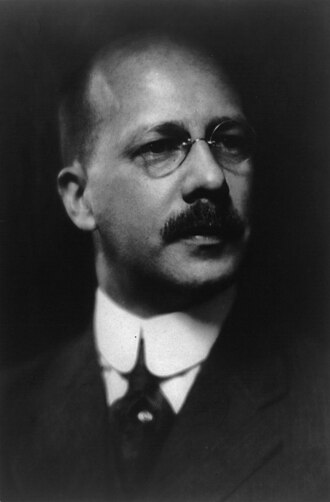
Overview
William Armstrong Fairburn is the rare industrialist remembered for two opposite acts: giving an invention away, and then cornering an entire industry. A self-taught naval architect from Yorkshire who had designed steamships before he was twenty-five, he came to the Diamond Match Company in 1909 to fix a chemical problem and stayed to run the company for thirty-eight years [1][2][6]. The problem was white phosphorus, the cheap, luminous poison in every match head, which rotted the jawbones of match workers in a disfiguring affliction known as "phossy jaw" and killed children who swallowed the matches [4][5]. Fairburn, working with Diamond's chemists, substituted a compound called phosphorus sesquisulphide, producing a match that was non-poisonous, non-explosive, and easy to strike [2][6].
What Diamond did next made Fairburn briefly a national hero. Rather than hoard the patent and monopolize the safer match, the company, at the personal urging of President William Howard Taft, dedicated its patent to public use in 1911, free to every competitor [4][5][8]. Congress then taxed the old white-phosphorus matches out of existence with the White Phosphorus Match Act of 1912, and an industrial disease that had crippled match workers for two generations was eradicated in America [5]. For the work, Fairburn was decorated with the Dr. Louis Livingston Seaman gold medal as president of Diamond Match [8].
He became president in 1915, and almost immediately the First World War handed him a crisis that revealed his real gift [6]. Germany had been the world's only source of the potash from which the chlorate in every match head was derived, and the embargo threatened to shut Diamond down [6]. Fairburn's chemists found three new domestic sources, at Lawrence, Massachusetts; Wilmington, California; and Burmester, Utah, and he built a plant on the California coast to wring potash from kelp dredged off the Palos Verdes beds [6][7]. Diamond not only supplied itself but sold chlorate to its rivals, and the price of a box of matches never rose [6].
Over the next two decades Fairburn turned that chemical leverage into something close to total control of the industry, and here the hero becomes the monopolist [3][6]. He out-maneuvered the Swedish "Match King" Ivar Kreuger himself: when he learned Kreuger wanted the Ohio Match Company, Fairburn bought it first for $7 million, then sold Kreuger a half-interest for $6 million, eliminating his chief competitor in strike-anywhere matches for a net $1 million [3]. Through subsidiaries and a holding company, the Pan-American Match Corporation of Delaware, he swept up Lion, West Virginia, Federal, and Universal match companies, several of them picked from the wreckage of Kreuger's 1932 collapse [3]. By 1939, when Fortune devoted thirteen pages to the company, Diamond was making roughly 90 percent of all matches sold in the United States [3].
Fairburn was a Gilded-Age archetype born a generation late: a paternalistic autocrat who wrote dozens of dense volumes on the management of men, Human Chemistry, Life and Work, Organization and Success, in which he cast workers as "human chemicals" and the manager as the "human chemist" who combines them, and which were sometimes required reading for his own employees [1][2]. He guarded his privacy fiercely from estates in Ojai, Morristown, and the Maine woods, where a company seaplane ferried him to a lakeside compound few outsiders ever saw [2]. Time magazine, in 1944, simply called him "secretive" [2]. He ran Diamond Match until the day he died, in 1947, and was succeeded by his own son [1][2][6].
Early Life & Path
Fairburn was born on October 12, 1876, in Huddersfield, in the West Riding of Yorkshire, the son of Thomas Fairburn, a Hull-born ship fitter and shipyard foreman, and Elizabeth Jemima Frosdick [1][2]. The trade of building ships was in the family, and in May 1891, Fairburn not yet fifteen, Thomas brought his wife and children across the Atlantic from Liverpool aboard the S.S. Servia, settling in Bath, Maine, the shipbuilding town on the Kennebec [1][2]. The boy apprenticed himself to the Bath Iron Works, attended the local public schools, and rose with startling speed; by eighteen he was a master mechanic [1][2].
He spent a year, around 1896, studying naval architecture and marine engineering at the University of Glasgow, then returned to Bath and to the drawing board [1]. The claim his biographers repeat is striking: that at the age of twenty-three Fairburn designed the first all-steel cargo freighter built in America, and went on to draw the lines of some of the largest cargo steamships of the day [1][2]. By 1900 he had set up as an independent consulting engineer, and his reputation as an analytical mind for hire spread well beyond shipyards, he was reportedly in Europe studying Diesel engines for the railroad magnates James J. Hill and Edward H. Harriman when Diamond Match came calling [2][3].
The ship work also produced the scholarship for which he is still cited: a monumental, multi-volume history of American wooden shipbuilding, Merchant Sail, compiled over a lifetime and published posthumously through the Fairburn Marine Educational Foundation he endowed in Maine [1][2]. It was the obsession of a man who left the shipyards for the chemistry of matchsticks but never stopped thinking of himself as a builder of ships.
Career Timeline
- 1876Born October 12 in Huddersfield, Yorkshire, England, into a shipbuilding family [1][2].
- 1891Emigrates in May aboard the S.S. Servia; family settles in Bath, Maine, where he apprentices at the Bath Iron Works [1][2].
- c. 1896Studies naval architecture and marine engineering for a year at the University of Glasgow [1].
- c. 1899–1900Reputedly designs the first all-steel cargo freighter built in America at age 23; sets up as an independent consulting engineer [1][2].
- 1909Joins the Diamond Match Company as general superintendent to solve its white-phosphorus problem [2][6].
- 1911Diamond, having perfected a non-poisonous sesquisulphide match, dedicates the patent to public use at President Taft's urging [4][5][8].
- 1912Congress passes the White Phosphorus Match Act, taxing the toxic matches out of existence and ending 'phossy jaw' in America [5].
- 1915Becomes president of the Diamond Match Company; awarded the Dr. Louis Livingston Seaman gold medal [6][8].
- 1915–1918Wartime potash embargo: Fairburn's chemists find new domestic potash sources and build a kelp-processing plant at Wilmington, California, keeping match prices stable [6][7].
- 1928Buys the Ohio Match Co. for $7 million, then sells Kreuger a half-interest for $6 million, ousting his chief rival for a net $1 million [3].
- 1937Forms the Pan-American Match Corporation of Delaware, which absorbs Federal, West Virginia, and other makers from the Kreuger bankruptcy auctions [3].
- 1938Universal Match, Diamond's biggest book-match rival, sells control to Pan-American, all but completing the consolidation [3].
- 1939Fortune devotes thirteen pages to Diamond Match, then producing about 90 percent of all U.S. matches [3].
- 1947Dies October 1 at his Westways estate on Kezar Lake, Maine; succeeded as president by his son Robert Gordon Fairburn [1][2][6].
Key Ventures & Innovations
The non-poisonous sesquisulphide match (1911)
Brought in to cure Diamond's white-phosphorus problem, Fairburn and the company chemists substituted phosphorus sesquisulphide with chlorate of potash to make a match that was non-toxic, non-explosive, and easy to strike, the formula still used today [2][6].
Dedicating the patent to the public (1911)
Rather than monopolize the safer match, Diamond surrendered its patent for free public use at President Taft's personal appeal; with the 1912 White Phosphorus Match Act, the move eradicated 'phossy jaw' as an American industrial disease [4][5][8].
The wartime potash and kelp operation (1915–1918)
When the war cut off German potash, Fairburn's chemists opened domestic sources and built a coastal plant to extract potash from kelp at Wilmington, California, letting Diamond supply both itself and its rivals while match prices held steady [6][7].
Out-dealing the Match King (1928)
Learning that Ivar Kreuger coveted the Ohio Match Co., Fairburn bought it for $7 million and resold Kreuger half for $6 million, removing his strongest strike-anywhere competitor for a net outlay of $1 million [3].
The Pan-American consolidation (1937–1939)
Through subsidiaries and the Pan-American Match Corporation, Fairburn absorbed Lion, Federal, West Virginia, and Universal, several from the Kreuger collapse, until Diamond made roughly 90 percent of all U.S. matches by 1939 [3].
“Few ever got the best of Ivar Kreuger, but even Ivar was outmatched by W.A. Fairburn.”
From the Record
“Few ever got the best of Ivar Kreuger, but even Ivar was outmatched by W.A. Fairburn.”
“In the classic style of the late 19th and early 20th Century industrialist, Fairburn was every bit the paternalistic, authoritarian figure who harbored no doubts about his wisdom or abilities.”
“He went to work for the Diamond Match Company in 1909 as a chemical engineer, inventing and patenting the first non-poisonous wooden match in 1913, and by 1915 was president and owner of the company.”
What Operators Can Learn
- 01
Giving away the crown jewel can be the smartest move you make
Surrendering the sesquisulphide patent cost Diamond a monopoly on paper but bought it something more durable: the reputation of the company that ended phossy jaw, and the goodwill that let it dominate by other means.
- 02
Control the input, control the industry
Fairburn's real leverage was never the match itself but the chemistry behind it. By cornering the cheapest potash and chlorate supply, he made every competitor a customer and bent the whole industry around Diamond.
- 03
Patience and information beat a richer rival
Against the vastly wealthier Ivar Kreuger, Fairburn won by knowing what Kreuger wanted before Kreuger could act, buying Ohio Match first and reselling it at a premium to neutralize a competitor for almost nothing.
- 04
A founder's certainty cuts both ways
The same absolute self-assurance that let Fairburn give away a patent and out-bluff the Match King also made him an autocrat who handed his workers his own books as required reading and ran Diamond as a private kingdom until his death.
Legacy
Fairburn's most enduring monument is invisible: the ordinary, safe, strike-anywhere match. The sesquisulphide formula his team perfected and Diamond gave to the world is essentially the one still in matchbooks today, and the elimination of white phosphorus, sealed by the 1912 Match Act, ended one of the era's ugliest occupational diseases [2][5][6]. That a single industrialist could be credited both with eradicating a workplace plague and with building a 90-percent monopoly captures the contradictions of the Progressive-era capitalist better than almost any contemporary [3][5].
The empire itself did not long outlive him. His son Robert ran and expanded Diamond Match before selling it in 1957, and the great Maine and California timber and chemical holdings were eventually broken up and dispersed [2]. What survives of Fairburn the man is oddly literary: the dozens of earnest, now-forgotten books on the "chemistry" of human organization, and above all Merchant Sail, the exhaustive history of American wooden shipbuilding he labored over for decades and endowed a foundation to publish, the work of an engineer who spent his life among matchsticks but measured himself by ships [1][2].
Further Reading
William Armstrong Fairburn: A Factor in Human Progress, Herbert Manchester (1940)
The admiring contemporary account of Fairburn's career, published in his lifetime, partial, but the fullest single portrait of the man.
Merchant Sail (6 vols.), William Armstrong Fairburn (1945–1955)
Fairburn's own monumental, posthumously completed history of American wooden shipbuilding, the lifework of the shipwright behind the match king.
Human Chemistry, William Armstrong Fairburn (1914)
His short, telling tract casting workers as 'human chemicals' and managers as 'human chemists', the philosophy he imposed on his own employees.
Biographical Dictionary of American Business Leaders, Vol. 1, A–G, John N. Ingham (1983)
A concise, reliable scholarly entry placing Fairburn among the major American industrialists of his generation.
Kreuger: Genius and Swindler, Robert Shaplen (1960)
The classic account of Ivar Kreuger, the Swedish Match King whom Fairburn out-maneuvered, essential context for the consolidation of the match industry.
Sources
- 1.William A. Wagnon Jr., "Fairburn, William Armstrong," in Dictionary of American Biography, Supplement Four (1946–1950), Charles Scribner's Sons, 1974, book
- 2.David F. Woods, "William Armstrong Fairburn and Westways" (Yesterday's News, Vol. 20, No. 3), Lovell Historical Society, Summer 2013, journal
- 3."The Diamond Monopoly of 1939" (RMS Bulletin, No. 462), recounting the Fortune, May 1939 profile of Diamond Match, Rathkamp Matchcover Society, Sept./Oct. 1996, journal
- 4.John N. Ingham, Biographical Dictionary of American Business Leaders, Vol. 1, A–G, Greenwood Press, 1983, book
- 5."A historical review of 'phossy jaw'" (on white-phosphorus matches, sesquisulphide, and the 1912 Match Act), British Dental Journal (PMC10250189), 2023, journal
- 6.“Diamond Match Company (history of Fairburn, the sesquisulphide match, the Taft patent dedication, and the wartime potash discoveries)”, Academic Dictionaries and Encyclopedias (en-academic.com), 2024
- 7.“"The Diamond Match Company's innovative potash operation in Wilmington didn't last"”, San Pedro Bay Historical Society blog, 2024, archive
- 8.“"William A. Fairburn, President of the Diamond Match Co., and winner of the Dr. Louis Livingston Seaman Medal" (photographic portrait)”, Library of Congress, Prints & Photographs Division (Bain Collection), c. 1915, archive
- 9.Herbert Manchester, William Armstrong Fairburn: A Factor in Human Progress, The Blanchard Press, 1940, book
Researched and written with Claude + live web search.