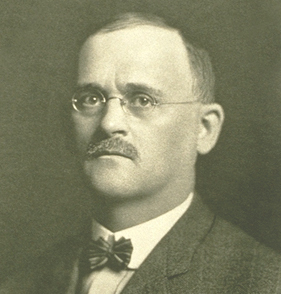
Overview
For the first forty-six years of his life, Will Keith Kellogg was a footnote to his own family, the dutiful, underpaid younger brother of the famous Dr. John Harvey Kellogg, who ran the Battle Creek Sanitarium that drew the rich and famous of America to its water cures and vegetarian regimens [1][6]. Will kept the books, ran the errands, managed the kitchens, and worked fifteen-hour days for a salary that topped out around twenty-five dollars a week; in an 1884 diary entry he confessed he was "afraid that I will always be a poor man" [3][6]. What rescued him was an accident in the Sanitarium kitchen. Around 1894, while trying to make a more digestible bread substitute for patients, the brothers left a batch of boiled wheat standing for hours; when they forced the stale, tempered dough through the rollers, it broke into thin, individual flakes instead of a single sheet [1][6]. Will, the relentless tinkerer, recognized he had stumbled onto something, refined the process, and found that corn made a crisper, more palatable flake [6][7].
The brothers' partnership could not survive their opposite temperaments. John Harvey, the puritan physician, wanted the flake kept plain and medicinal and the company small; Will saw a mass-market breakfast food and wanted to add sugar and malt for flavor and to advertise it aggressively [1][4]. In February 1906, at the age of forty-six, Will Kellogg broke away to incorporate the Battle Creek Toasted Corn Flake Company, raising roughly $200,000 in capital, though he had to hand his brother a controlling block of stock to win his cooperation, then spent years buying the company back, share by share [4][6].
What Will Kellogg understood, and his brother never did, was advertising. He poured money into it when the conventional wisdom said a food sold itself: his very first national ad cheekily opened by admitting "this announcement violates all the rules of good advertising" [4]. He bought billboards, including what was billed as the world's largest electric sign in Times Square, printed a children's premium called the Funny Jungleland Moving Pictures Book, and dreamed up stunts like "Wink Day," which told New York housewives to wink at their grocer for a free sample and sent the city's monthly orders from two carloads to more than thirty [4][7]. Above all he stamped his own red signature on every box beneath the warning "Beware of Imitations", a personal guarantee against the dozens of copycats, including C. W. Post, who had swarmed Battle Creek [6][7].
The split with John Harvey ended in court. When the doctor began marketing his own cereals under the Kellogg name, Will sued; after litigation running from 1910 into 1920, Will secured the exclusive commercial right to the name Kellogg, and the brothers, once inseparable, barely spoke for the rest of their lives [1][6]. By then the younger brother was the wealthy one and the famous one, a reversal that defined both men.
Kellogg ran his company with a paternalist's instincts. During the Great Depression he split his Battle Creek plant into four six-hour shifts instead of three eight-hour ones, deliberately hiring more men to spread the work and the wages, a decision he tied to both compassion and productivity [8][9]. But his most consequential act came in 1930, when he was seventy and his eyesight was beginning to fail, and he resolved to give his fortune away [8][9].
Early Life & Path
Will Keith Kellogg was born on April 7, 1860, in Battle Creek, Michigan, into a large, devout Seventh-day Adventist family, by most accounts the seventh of sixteen children of John Preston Kellogg, a broom manufacturer [6][7]. The Adventist faith shaped everything: it filled the household with strict notions of diet and self-denial, and it would later supply the Battle Creek Sanitarium with both its mission and its patients. Will was a poor and unhappy student, left school young, and went to work in his father's broom trade, even traveling to Texas as a teenage broom salesman before being summoned home [6].
In 1880 he joined his brother John Harvey, eight years his senior and newly minted as a physician, at the Battle Creek Sanitarium, the sprawling Adventist health resort the doctor would make world-famous. For the next quarter-century Will was the institution's invisible engine: bookkeeper, business manager, shipping clerk, and personal factotum. Howard Markel's biography recounts the indignities, Will jogging alongside the doctor's bicycle to take dictation, summoned to take notes even while his brother sat on the toilet [1]. He worked staggering hours for meager pay, married Ella Davis in 1880, and supported a family while watching his brilliant brother bask in fame [3][6].
It was inside that subordinate role that the cereal was born. The Sanitarium's experimental kitchen was always cooking up health foods, and Will did the practical labor of turning the doctor's ideas into edible products through the Sanitas Food Company [1][6]. The flaking accident of around 1894 was the hinge of his life: the discovery that tempered grain would break into flakes became the foundation of an entire industry, and the moment the overlooked younger brother began, slowly, to imagine a destiny of his own [6][7].
Career Timeline
- 1860Born April 7 in Battle Creek, Michigan, into a large Seventh-day Adventist family [6][7].
- 1880Joins his brother Dr. John Harvey Kellogg at the Battle Creek Sanitarium, beginning roughly 25 years as its underpaid business manager [1][6].
- 1894The brothers accidentally discover the wheat-flaking (tempering) process while making a digestible food for patients [1][6].
- 1906Incorporates the Battle Creek Toasted Corn Flake Company in February, raising about $200,000 in capital [4][6].
- 1907Stages the "Wink Day" promotion in New York, lifting the city's monthly orders from 2 carloads to more than 30 [4][7].
- 1910Begins the legal fight against John Harvey over the right to use the Kellogg name [1][6].
- 1912Erects a giant electric advertising sign in New York and pushes the advertising budget toward $1 million [6][7].
- 1925Buys 377 acres near Pomona, California, for $250,000 and founds the Kellogg Arabian Horse Ranch [2][7].
- 1930Establishes the W. K. Kellogg Child Welfare Foundation (soon the W. K. Kellogg Foundation) in June [8][9].
- 1932Donates the Pomona Arabian horse ranch to the state of California for educational use, requiring the breeding program and Sunday shows to continue [2].
- 1934Transfers more than $66 million in Kellogg Company stock and investments to the Kellogg Trust to endow the foundation [8][9].
- 1937Diagnosed with glaucoma; his sight fails and he is largely blind for the last decade of his life [6][7].
- 1938Retires from active management of the Kellogg Company, remaining chairman of the board [6][7].
- 1951Dies October 6 in Battle Creek at age 91 after a long circulatory illness [5][6].
Key Ventures & Innovations
The Battle Creek Toasted Corn Flake Company (1906)
Founded when Will, at 46, broke from his brother to sell a sweetened, mass-market flake. He capitalized it at roughly $200,000, conceded controlling stock to John Harvey to secure his cooperation, then bought the company back piece by piece until it was his own [4][6].
The corn-flaking process
Grew out of the 1894 accident in which stale, tempered wheat broke into individual flakes under the rollers. Will refined the tempering technique and switched from wheat to corn for a crisper flake, the technical foundation of the entire ready-to-eat cereal industry [1][6][7].
Mass-market advertising and the signature box
Kellogg treated advertising as the product's engine: billboards, the world's-largest electric sign, the Funny Jungleland children's premium, and the "Wink Day" stunt. He printed his red signature on every box under "Beware of Imitations" to fend off copycats like C. W. Post [4][6][7].
The Kellogg Arabian Horse Ranch (1925)
On 377 acres near Pomona, California, Kellogg built one of America's premier Arabian breeding operations, importing stock from England's Crabbet stud; its horses appeared in Hollywood films. He gave the ranch to the state in 1932, and it ultimately became part of Cal Poly Pomona [2][7].
The W. K. Kellogg Foundation (1930)
Endowed with more than $66 million in company stock, it was directed to the health, education, and welfare of children. It grew into one of the largest philanthropic foundations in the world and remains the controlling shareholder of the Kellogg companies' legacy [8][9].
“I'll invest my money in people.”
From the Record
“I feel kind of blue. Am afraid that I will always be a poor man the way things look now.”
“This announcement violates all the rules of good advertising.”
“W.K. Kellogg, 91, Dead in Michigan. Breakfast Food Manufacturer Set Up Multi-Million Dollar Welfare Foundation in '30.”
What Operators Can Learn
- 01
The person doing the work often sees the opportunity first
It was Will, the hands-on manager grinding through the Sanitarium's experiments, not his celebrated physician brother, who grasped that a flaked health food could become a national breakfast. Proximity to the actual labor, not the title, produced the insight.
- 02
A commodity becomes a brand through advertising and a guarantee
Anyone in Battle Creek could flake corn; dozens did. Kellogg won by spending lavishly on advertising the conventional wisdom said was wasteful, and by stamping his personal signature on the box as a promise the others could not copy.
- 03
Control of the name can be worth more than the recipe
The decade-long lawsuit against his own brother was not about the cereal but about the word 'Kellogg.' Securing exclusive rights to the family name was the asset that protected everything else.
- 04
Wealth without an heir to your values needs a vehicle of its own
Estranged from his brother and disappointed in parts of his family, the aging, near-blind Kellogg built a foundation to carry his fortune into the future on his own terms, investing, as he put it, in people rather than monuments.
Legacy
Will Kellogg's commercial legacy is on nearly every breakfast table: he did not merely build a company but helped invent the ready-to-eat cereal category and the consumer-advertising playbook that sells it, turning a Sanitarium experiment into a global industry [1][6][7]. The Kellogg Company he founded in 1906 became the dominant force in packaged breakfast food for the rest of the twentieth century, and the conventions he pioneered, the signature trademark, the in-box prize, the saturation ad campaign, became standard practice across packaged goods [6][7].
His deeper legacy, though, is philanthropic. Having spent half his life feeling overshadowed and underpaid, Kellogg gave away the bulk of his fortune through the W. K. Kellogg Foundation, endowing it with more than $66 million and aiming it squarely at the health, education, and welfare of children [8][9]. Today it stands among the largest foundations in the world, with assets in the billions [8]. His gift of the Pomona Arabian horse ranch seeded what became Cal Poly Pomona [2].
The Kellogg story endures partly as a parable of brotherhood gone wrong, two gifted men who together created something neither could have alone, then spent their later decades in lawsuits and silence [1]. Howard Markel's 2017 biography revived that drama for a new generation, but the steadier verdict is the one a near-blind old man reached himself: that the best use of a self-made fortune was to invest it, quietly and at scale, in the children who would outlive him [1][8][9].
Further Reading
The Kelloggs: The Battling Brothers of Battle Creek, Howard Markel (2017)
The definitive modern dual biography of Will and John Harvey Kellogg, rich on the rivalry, the Sanitarium, and the cereal wars; a National Book Critics Circle finalist.
The Original Has This Signature, W. K. Kellogg, Horace B. Powell (1956)
The authorized, document-grounded biography commissioned around the company and foundation, the foundational source for Kellogg's diaries, salary, and business decisions.
The First Twenty-Five Years: A History of the W. K. Kellogg Foundation, Emory W. Morris (1956)
An institutional history of the foundation's first quarter-century by its longtime president, detailing how Kellogg's gift was structured and spent.
Dr. John Harvey Kellogg and the Religion of Biologic Living, Brian C. Wilson (2014)
A scholarly study of the brother and the Adventist-medical world that produced the Sanitarium, useful context for Will's formative decades.
Cornflake Crusade, Gerald Carson (1957)
A lively narrative history of Battle Creek's cereal boom, the health-food movement, and the swarm of companies that surrounded the Kelloggs and C. W. Post.
Sources
- 1.Howard Markel, The Kelloggs: The Battling Brothers of Battle Creek, Pantheon Books, 2017, book
- 2.“W. K. Kellogg Arabian Horse Ranch Records, 1910–1949 (finding aid); "Kellogg Legacy"”, California State Polytechnic University, Pomona / Online Archive of California, 1925–1949, archive
- 3.Horace B. Powell, The Original Has This Signature, W. K. Kellogg: The Story of a Pioneer in Industry and Philanthropy, Prentice-Hall, 1956, 358 pp., book
- 4.Lawrence W. Reed, “Will Kellogg: King of Corn Flakes”, Foundation for Economic Education (FEE), 2016
- 5.Associated Press, “"W.K. Kellogg, 91, Dead in Michigan; Breakfast Food Manufacturer Set Up Multi-Million Dollar Welfare Foundation in '30"”, The New York Times, October 7, 1951, newspaper
- 6.Gerald Carson, Cornflake Crusade, Rinehart & Company, 1957, book
- 7.“W. K. Kellogg, The Original Corn Flake; Cereal Success”, Reference for Business (Encyclopedia of Business), 2011
- 8.“W. K. Kellogg Foundation, Founding and History (est. June 1930)”, W. K. Kellogg Foundation (wkkf.org), 1930, archive
- 9.“W. K. Kellogg (Hall of Fame profile)”, The Philanthropy Roundtable, 2020
Researched and written with Claude + live web search.