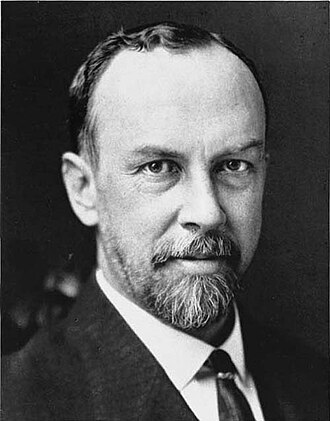
Overview
Washington Atlee Burpee never became the physician his father wanted, and he never grew a single seed by his own hand at industrial scale. What he did instead was rarer: he understood that the United States was a nation of recent farmers, German, Dutch, Scandinavian, English, who longed for the vegetables of "the old country," and that the cheapest way to reach them was not by shipping livestock but by shipping seed and a catalog through the mail [4][6]. From a Philadelphia storefront and a $1,000 loan from his mother, he built W. Atlee Burpee & Company into the largest mail-order seed enterprise on earth, mailing more than a million catalogs a year and taking some 10,000 orders a day by the time he died in 1915 [2][5].
Burpee began in 1876 with a partner, selling chickens, geese, and turkeys by post; he dropped the partner and incorporated the business under his own name in 1878 [1][2][7]. The pivot that made him was a customer's suggestion. Buyers of his poultry kept asking where they might get good seed and feed, and Burpee grasped that a packet of cabbage or cucumber seed weighed almost nothing, cost little to mail, and could be sold to every immigrant farmer who missed the cabbages of home [4][6]. Within a few years seeds had eclipsed the livestock, though poultry lingered in the catalog into the 1940s [3].
The instrument of the business was the catalog itself, and Burpee treated it as both science and seduction. He wrote much of the copy personally, pioneered the use of photographic engravings in 1891, coined the durable slogan "Burpee's Seeds Grow" around 1890, and backed every packet with a money-back guarantee [3][5]. He toured Europe almost every year, keeping field notebooks as he hunted out the best vegetable breeders of Germany and the Low Countries and the great English flower men, then bulked their stock up on American soil and sold it back across the Atlantic, by the First World War Burpee was outselling British houses on sweet peas in England itself [4][8].
What distinguished him from a mere reseller was Fordhook. In 1888 he bought a several-hundred-acre farm near Doylestown, in Bucks County, Pennsylvania, and turned it into a famous experimental ground where varieties were grown out, trialed, and improved before they ever reached a customer [1][6]. To Fordhook he later added Floradale Farms at Lompoc, California, in 1909 for sweet peas, and Sunnybrook Farms near Swedesboro, New Jersey, for tomatoes, peppers, and squash [1][2]. Out of this trial-ground system came introductions that are still planted today: Iceberg lettuce in 1894, Golden Bantam sweet corn around 1902, and, most famous of all, the bush-habit Fordhook lima bean, developed from a single hardy plant Burpee acquired from a Pennsylvania farmer named Asa Palmer [1][2].
By the 1890s Burpee was a household name and his company the biggest of its kind in the world [4][6]. He died at Fordhook on November 26, 1915, at fifty-seven, of cirrhosis of the liver, leaving roughly 300 employees and a catalog that reached into a million American homes [2][5]. Control passed to his twenty-two-year-old son David, who would carry the firm, and its flowers, especially the marigold, deep into the twentieth century [4][6]. The achievement was not a single invention but a system: trial it on the farm, photograph it, describe it honestly, guarantee it, and deliver it by mail to anyone, anywhere, who could fill out an order blank [3][9].
Early Life & Path
He was born Washington Atlee Burpee on April 5, 1858, in Sheffield, New Brunswick, then a colony of British North America, into a family steeped in medicine; his father David and his forebears were physicians, and through his mother, Anne Catherine Atlee, he was descended from the prominent Atlee line of Pennsylvania jurists and doctors [2][7]. The family moved to Philadelphia in his early childhood, and Atlee, as he was always called, was raised to follow his father into surgery [2][6].
The boy's real passion was breeding. By fourteen he was raising chickens, geese, and turkeys, corresponding with poultry fanciers around the world and publishing articles in the fancier's journals, knowledge he would later distill into his 1895 manual The Poultry Yard [2][3]. He enrolled at the University of Pennsylvania to study medicine but left after about two years, against his father's wishes, to pursue the breeding and selling of animals he found far more interesting than anatomy [4][6].
In 1876, the year of the great Centennial Exposition in his adopted city, the eighteen-year-old borrowed $1,000 from his mother and launched a mail-order poultry and livestock business with a partner [1][4]. He bred and sold not only fowl but dogs, sheep, hogs, and goats, advertising and fulfilling everything by post [4][6]. Two years later he shed the partner and put his own name over the door, W. Atlee Burpee & Company, 1878, the date the modern firm still counts as its founding [1][7]. He was barely twenty, twice over a disappointment to his father, and about to discover that the future lay not in the animals but in the feed and seed he shipped alongside them [4][6].
Career Timeline
- 1858Born April 5 in Sheffield, New Brunswick; family soon relocates to Philadelphia [2][7].
- 1872By about age fourteen is breeding poultry and corresponding with fanciers worldwide [2][3].
- 1876At eighteen, borrows $1,000 from his mother to start a mail-order poultry and livestock business with a partner [1][4].
- 1878Drops the partner and founds W. Atlee Burpee & Company under his own name in Philadelphia [1][7].
- 1880sShifts the catalog's emphasis from livestock to vegetable and flower seed for immigrant farmers [4][6].
- 1888Buys a several-hundred-acre farm near Doylestown, Pennsylvania, naming it Fordhook and making it his experimental trial ground [1][6].
- 1890Adopts the slogan "Burpee's Seeds Grow"; pioneers photographic engravings in the catalog the following year [3][5].
- 1894Introduces Iceberg lettuce, named for its crispness [1][2].
- 1895Publishes The Poultry Yard: How to Furnish and Manage It [3].
- 1902Popularizes Golden Bantam sweet corn through the catalog [1][2].
- 1907The bush-habit Fordhook lima bean, bred from Asa Palmer's plant, becomes a home-garden favorite [1][2].
- 1909Establishes Floradale Farms at Lompoc, California, for sweet peas and Sunnybrook Farms in New Jersey for vine crops [1][2].
- 1915Dies November 26 at Fordhook of cirrhosis of the liver, age 57; company has ~300 employees and mails over a million catalogs a year [2][5].
- 1915Twenty-two-year-old son David Burpee assumes control of the world's largest seed house [4][6].
Key Ventures & Innovations
The mail-order pivot from poultry to seed
Burpee began in 1876 selling chickens and livestock by post, but realized that seed and feed were cheaper to ship and irresistible to immigrant farmers craving the vegetables of "the old country." The insight turned a fowl business into a seed empire within a few years [4][6].
Fordhook Farm (1888) and the trial-ground system
He bought a Bucks County farm and made it a world-famous experimental garden where every variety was grown out, tested, and improved before sale, later joined by Floradale in California and Sunnybrook in New Jersey, a three-coast network of trial grounds [1][6].
The Burpee catalog as a marketing machine
Burpee wrote much of the copy himself, introduced photographic engravings in 1891, coined "Burpee's Seeds Grow," guaranteed satisfaction, and grew the book from 48 pages to roughly 200, mailing more than a million copies a year [3][5].
European seed-hunting and the sweet pea
He toured Europe almost yearly, sourcing stock from continental vegetable breeders and English flower men like Henry Eckford, then bulked it on American farms, eventually outselling British houses on sweet peas in England itself [4][8].
Signature introductions
Iceberg lettuce (1894), Golden Bantam sweet corn (c. 1902), and above all the Fordhook lima bean, bred from a single cutworm-hardy plant acquired from farmer Asa Palmer, became staples still grown today [1][2].
“Burpee's Seeds Grow.”
From the Record
“If you buy seeds from Burpee Of Philadelphia, you are reasonably sure to receive the best seeds that it has been possible to produce.”
“We are acknowledged as Headquarters for Sweet Peas in America.”
“the largest mail-order seed company in the world.”
What Operators Can Learn
- 01
Listen to what customers ask for next
Burpee did not set out to sell seed; his poultry buyers kept asking where to get good seed and feed. He let the demand redraw the business, and the lighter, cheaper-to-ship product became the empire.
- 02
Own the proof, not just the product
Fordhook and its sister trial grounds let Burpee test and improve varieties before promising them in print. The guarantee and the catalog claims were credible because the farm stood behind them.
- 03
The catalog is the store
With no shop to walk into, Burpee made the printed page do everything, describe, illustrate with real photographs, reassure with a guarantee, and persuade in his own voice. The medium was the merchandising.
- 04
Source globally, sell locally
By hunting Europe's best breeders and then bulking their stock on American soil, Burpee delivered old-world quality to new-world gardeners, and eventually sold it back across the ocean.
Legacy
Burpee's lasting invention was a method more than a plant: the integrated mail-order seed business that trialed its varieties on its own farms, photographed and described them honestly, guaranteed them, and delivered them by post to anyone in the country [3][6]. That model rode the expansion of the U.S. postal system, city delivery and then Rural Free Delivery, to put a serious vegetable and flower garden within reach of ordinary households far from any seed store [5][6]. The varieties he introduced, from Iceberg lettuce to Golden Bantam corn to the Fordhook lima, remain fixtures of American gardens more than a century later [1][2].
The company he left to his son David in 1915 was the largest of its kind in the world, and David extended the legacy into flowers, making the marigold an American favorite and carrying the Burpee name to the firm's 1970 sale [4][6]. The archive of the enterprise, roughly 200 boxes of correspondence, catalogs, photographs, and business records donated to the Smithsonian in 2016, has since become the basis for scholarly history connecting one Philadelphia family to the larger American stories of agriculture, plant science, mail order, advertising, and labor [4][5].
Burpee himself is best remembered not as the "Sweet Pea King" (a title that belonged to the Scottish breeder Henry Eckford) but as the man who industrialized trust at a distance: the seedsman whose name on a packet, mailed to a stranger he would never meet, meant the seeds would grow [3][8].
Further Reading
Garden to Order: The Story of Mr. Burpee's Seeds and How They Grow, Ken Kraft (1963)
The classic narrative history of the firm, with a foreword by Pearl S. Buck, the most readable account of Atlee and David Burpee.
The Burpee Seed Company: Planting U.S. History since the Nineteenth Century, Christopher M. DeMairo (2025)
A Smithsonian Scholarly Press history grounded in the company's own archive, situating Burpee within agriculture, mail order, advertising, and labor.
The Poultry Yard: How to Furnish and Manage It, Washington Atlee Burpee (1895)
Burpee in his own words on the breeding craft that launched him, a window into the obsessions of the future seedsman.
Encyclopedia of Pennsylvania Biography, Illustrated, John W. Jordan (ed.) (1916)
A near-contemporary biographical entry on Burpee, useful for family lineage and the arc of his Philadelphia career.
Burpee's Annual (seed catalogs, 1880s–1920s), W. Atlee Burpee & Company (1921)
The catalogs themselves are the central primary source, the marketing voice, guarantees, and varieties in Burpee's own pages.
Sources
- 1.Ken Kraft (foreword by Pearl S. Buck), Garden to Order: The Story of Mr. Burpee's Seeds and How They Grow, Doubleday & Company, 1963, book
- 2.John W. Jordan (ed.), Encyclopedia of Pennsylvania Biography, Illustrated, Lewis Historical Publishing Company, 1916, book
- 3.Washington Atlee Burpee, The Poultry Yard: How to Furnish and Manage It, W. Atlee Burpee & Co., 1895, book
- 4.Christopher M. DeMairo, The Burpee Seed Company: Planting U.S. History since the Nineteenth Century, Smithsonian Institution Scholarly Press, 2025, book
- 5.“W. Atlee Burpee & Company Records (AAG.BUR)”, Smithsonian Institution, Archives of American Gardens, 2016, archive
- 6.“W. Atlee Burpee Company, America's Mailing Industry”, Smithsonian National Postal Museum, 2015, archive
- 7.“W. Atlee Burpee”, Encyclopaedia Britannica, 2024
- 8.“The Sweet Pea and Its King (Henry Eckford and W. Atlee Burpee)”, The Garden History Blog, 2015
- 9.W. Atlee Burpee & Company, Burpee's Annual, 1921: The Leading American Seed Catalog (Classic Reprint), Forgotten Books (reprint of 1921 catalog), 1921, book
- 10.“W. Atlee Burpee, Seedsman, Dies (obituary)”, The New York Times, November 28, 1915, newspaper
Researched and written with Claude + live web search.