Overview
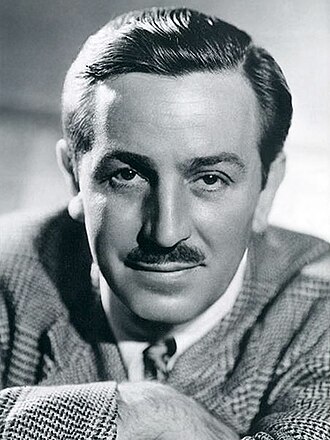
Walter Elias Disney did not invent animation, the cartoon, or the amusement park, and he could barely draw the characters his name became synonymous with [1][3]. What he possessed was rarer: a refusal to stand still, an instinct for technology in the service of feeling, and a willingness to gamble the entire company on the next, larger thing, sound, color, the feature film, the theme park, television, long before the previous bet had paid off [1][2]. From a one-room studio behind a Hollywood real-estate office in 1923, he and his older brother Roy built an entertainment enterprise that, by his death in 1966, had reshaped how the twentieth century told stories to children and adults alike [1][6].
The founding trauma that defined Disney's whole career came in early 1928. His first successful character, Oswald the Lucky Rabbit, was owned not by him but by his distributor; when he traveled to New York to ask Charles Mintz for a larger budget, he discovered Mintz had quietly signed away most of his animators and held the rights to Oswald outright [2][9]. Disney walked out with nothing. On the train back to California he and his indispensable collaborator Ub Iwerks conceived a replacement mouse, and this time Disney made certain he owned it [2][9]. That mouse, given a synchronized soundtrack in Steamboat Willie (November 1928), made him famous; the lesson about owning what you create governed everything that followed [1][2].
Disney's defining trait as a businessman was that he ran the studio as a furnace for his own ambition, not as a profit machine [1][3]. In 1934 he announced he would make a feature-length animated film of Snow White, an idea the trade press dubbed "Disney's Folly", and poured roughly $1.49 million into it, mortgaging his own house when the money ran out [2][5]. Released in December 1937, it earned more than $8 million on first release and briefly became the highest-grossing sound film ever made [5]. The profits built a sprawling new studio in Burbank, which Disney filled with the ambitious failures and triumphs of the early 1940s, Pinocchio, Fantasia, Bambi, works of staggering craft that mostly lost money [1][3].
The Burbank studio also produced the deepest wound of his life. In 1941 his animators, chafing at an opaque and unequal pay structure and the loss of profit-sharing bonuses, struck for union recognition [4]. Disney, who saw himself as a benevolent father to a family of artists, experienced the walkout as a personal betrayal; pickets carried a mock guillotine, and Disney took out advertisements blaming "Communistic agitation" [4]. The strike was settled while he was conveniently out of the country, but the bitterness never left him, six years later he appeared as a friendly witness before the House Un-American Activities Committee, naming the union leader Herbert Sorrell and former employees as Communists on evidence historians have found unpersuasive [4][7].
The last and largest gamble was Disneyland. Convinced that a clean, narrative, controlled environment could give families what shabby carnivals could not, Disney mortgaged his life insurance, formed a separate company, and struck a deal with the fledgling ABC television network, they would help finance the park in exchange for a weekly Disney program [1][6]. The park opened on July 17, 1955, on a chaotic day staff later called "Black Sunday," with counterfeit tickets, jammed crowds, and asphalt soft in the heat [6]. It became one of the most profitable enterprises in American leisure, and the model for an industry [1][6].
By the time he died of lung cancer in December 1966, Disney was already consumed by an even grander idea: a planned "Experimental Prototype Community of Tomorrow" on forty-three square miles of central Florida swamp [1][8]. He was a tangle of contradictions, a sentimentalist who could be cold to collaborators, a self-styled common man who exercised near-total control, a visionary whose name outgrew the man [1][3]. But the through-line is unmistakable: he kept spending the proceeds of his last success to chase the next impossible one [1][2].
Early Life & Path
He was born on December 5, 1901, in Chicago, the fourth of five children of Elias Disney, an itinerant and often stern farmer and contractor, and Flora Call Disney [1]. When Walt was four the family moved to a farm near Marceline, Missouri, a small railroad town whose tidy main street he would later enshrine, idealized, as the "Main Street, U.S.A." of Disneyland [1][3]. The farm failed within a few years, and the family moved to Kansas City, where Elias bought a newspaper distributorship and put his sons to work delivering papers before dawn in all weather, unpaid, a grueling childhood that historians read as the source of both Disney's relentless drive and his lifelong hunger for an orderly, benevolent world he could control [1].
After a stint drawing for a Kansas City film-advertising company, the twenty-year-old Disney started his own venture, Laugh-O-Gram Films, in 1922, making short animated fairy tales [1]. A New York distributor stiffed him; the company collapsed into bankruptcy in 1923 [1]. With an unfinished reel of Alice's Wonderland, a live-action girl in a cartoon world, in his suitcase and a few dollars in his pocket, Disney boarded a train for Hollywood that summer to start over [1].
There, in October 1923, he and his older brother Roy O. Disney formed a partnership, scraping together about $500 and a contract from the New York distributor Margaret Winkler for a series of Alice Comedies [1][9]. The arrangement that would define the company was set from the start: Walt as the creative force, Roy as the cautious money man who kept the lights on and the loans current [1]. They called it the Disney Brothers Studio; at Roy's suggestion it soon became the Walt Disney Studio, and in 1926 moved to a purpose-built lot on Hyperion Avenue [1].
Career Timeline
- 1901Born December 5 in Chicago to Elias and Flora Disney [1].
- 1906Family moves to a farm near Marceline, Missouri, the later model for Disneyland's Main Street, U.S.A. [1][3].
- 1922–1923Founds Laugh-O-Gram Films in Kansas City; it goes bankrupt, and he heads to Hollywood [1].
- 1923Forms a partnership with brother Roy in October on about $500 and an Alice Comedies contract, the founding of the Disney company [1][9].
- 1928Loses Oswald the Lucky Rabbit and his animators to distributor Charles Mintz; conceives Mickey Mouse on the train home and releases the sound cartoon Steamboat Willie in November [2][9].
- 1934–1937Bets the company on the feature Snow White and the Seven Dwarfs, "Disney's Folly", at a cost of about $1.49 million [2][5].
- 1937Snow White premieres December 21 at the Carthay Circle Theatre and becomes briefly the highest-grossing sound film ever, earning over $8 million [5].
- 1941Disney animators strike for union recognition; Disney calls it "Communistic agitation" and the bitterness shapes him for life [4].
- 1947Testifies as a friendly witness before HUAC on October 24, naming union leader Herbert Sorrell as a Communist [4][7].
- 1954Launches the weekly ABC television program Disneyland to help finance the park, telling viewers "it was all started by a mouse" [6][1].
- 1955Disneyland opens July 17 in Anaheim, a $17 million gamble, amid an opening-day fiasco later dubbed "Black Sunday" [6].
- 1964Mary Poppins premieres in August; its profits help fund the secret purchase of land in central Florida [8].
- 1965Publicly announces the Florida "Disney World" project, centered on his city of the future, EPCOT [1][8].
- 1966Dies December 15 of lung cancer at St. Joseph's Hospital, Burbank, ten days after his 65th birthday [1].
Key Ventures & Innovations
Mickey Mouse and synchronized sound (1928)
After losing Oswald the Lucky Rabbit to a distributor who owned the rights, Disney conceived a replacement character he would own outright. Steamboat Willie, released in November 1928, married the mouse to a tightly synchronized soundtrack and made Disney a national name, and taught him to never again build a hit on property he did not control [2][9].
Snow White and the Seven Dwarfs (1937)
Derided in the trade as "Disney's Folly," the first full-length animated feature cost roughly $1.49 million, Disney mortgaged his house to finish it, and returned more than $8 million on first release, financing the move to a large new Burbank studio [2][5].
The Burbank studio and the feature era
Flush with Snow White money, Disney built an industrial-scale animation campus and produced Pinocchio, Fantasia, and Bambi, technically dazzling films that largely lost money, and a rigid hierarchy that helped trigger the 1941 strike [3][4].
Television and the ABC alliance (1954)
Unable to finance a theme park conventionally, Disney sold ABC a weekly program in exchange for the network's investment in Disneyland, turning broadcast television, which other studios feared, into both a marketing engine and a source of capital [1][6].
Disneyland (1955)
A clean, story-driven, totally controlled environment, financed by mortgaging his life insurance and a new company. Despite the "Black Sunday" opening of July 17, 1955, the $17 million park became enormously profitable and created the modern themed-entertainment industry [1][6].
The Florida Project / EPCOT (1965–66)
Using profits from films like Mary Poppins, Disney secretly assembled tens of thousands of acres near Orlando for a project anchored not by rides but by a planned "Experimental Prototype Community of Tomorrow", an actual city of the future he did not live to build [1][8].
“I only hope that we never lose sight of one thing, that it was all started by a mouse.”
From the Record
“I believed at that time that Mr. Sorrell was a Communist because of all the things that I had heard and having seen his name appearing on a number of Commie front things.”
“He said he would make a dust bowl out of my plant if he chose to.”
“To all who come to this happy place: welcome. Disneyland is your land. Here age relives fond memories of the past... and here youth may savor the challenge and promise of the future.”
What Operators Can Learn
- 01
Own what you create
The Oswald disaster, losing a hit character and his own animators because the rights sat with a distributor, was the formative wound of Disney's career. From Mickey onward he insisted on controlling the property, the brand, and increasingly the entire experience.
- 02
Spend the last success on the next impossible thing
Disney repeatedly reinvested the proceeds of one triumph into a larger, riskier venture before the previous one was secure, sound, then color, then the feature, then the park. He ran the company as an engine for ambition rather than for dividends.
- 03
Control is a strength that can curdle
The same total command that produced unprecedented quality and coherence also bred a rigid hierarchy and a paternalism that exploded in the 1941 strike. Disney never fully reckoned with the gap between the family he imagined and the workplace he ran.
- 04
Use the new medium your rivals fear
While the major studios treated television as the enemy, Disney made it a partner, financing Disneyland and marketing his films through the very technology Hollywood was fighting.
Legacy
Disney's influence runs deeper than any single film or park. He turned animation from a novelty into a serious narrative art, established the feature-length cartoon as a viable form, and invented the immersive, controlled theme park that now anchors a global industry [1][5][6]. The company he and Roy built became, decades after his death, one of the largest media enterprises on earth, and the storytelling vocabulary he established, from the wholesome family entertainment to the merchandising flywheel, remains the industry's default grammar [1][6].
Historians render a divided verdict, and the best biographies hold both halves at once [1][3]. Disney was a genuine visionary who widened the imaginative world of millions and pushed technology relentlessly in service of feeling; he was also an autocrat whose anti-union campaign and HUAC testimony damaged real people on thin evidence, and whose insistence on control left little room for the collaborators who made the magic possible [1][3][4]. The myth he cultivated of a folksy genius has had to be steadily corrected by the archive [1].
What endures most cleanly is the method: a founder who treated every success as seed capital for a bigger, stranger gamble, who married emerging technology to emotion, and who built durable systems, the studio, the park, the television franchise, around stories. He died chasing a city of the future he would never see, which is, fittingly, the most Disney ending of all [1][8].
Further Reading
Walt Disney: The Triumph of the American Imagination, Neal Gabler (2006)
The first biography written with full access to the Disney archives; the most detailed and even-handed life of Disney yet published.
Walt Disney: An American Original, Bob Thomas (1976)
The authorized biography, written with the family's cooperation; long regarded as the definitive narrative of Disney's career.
Building a Company: Roy O. Disney and the Creation of an Entertainment Empire, Bob Thomas (1998)
The essential companion volume on Walt's brother and business partner, who made the financial machine run.
The Disney Revolt: The Great Labor War of Animation's Golden Age, Jake S. Friedman (2022)
A deeply researched account of the 1941 strike and the rupture between Disney and animator Art Babbitt.
The Magic Kingdom: Walt Disney and the American Way of Life, Steven Watts (1997)
A cultural history situating Disney's work within twentieth-century American politics, taste, and ideology.
The Animated Man: A Life of Walt Disney, Michael Barrier (2007)
A rigorous, archive-driven biography especially strong on Disney's actual creative process and the studio's craft.
Sources
- 1.Neal Gabler, Walt Disney: The Triumph of the American Imagination, Alfred A. Knopf, 2006, book
- 2.Bob Thomas, Walt Disney: An American Original, Simon & Schuster, 1976, book
- 3.Pat Williams with Jim Denney, How to Be Like Walt: Capturing the Disney Magic Every Day of Your Life, Health Communications, 2004, book
- 4.Jake S. Friedman, The Disney Revolt: The Great Labor War of Animation's Golden Age, Chicago Review Press, 2022, book
- 5.“"Snow White and the Seven Dwarfs" production cost and box-office record (premiere December 21, 1937, Carthay Circle Theatre)”, Variety / contemporary trade coverage as compiled in The Numbers, December 1937, newspaper
- 6.“Disneyland's Disastrous Opening Day, July 17, 1955 ("Black Sunday")”, HISTORY (A&E), 1955, archive
- 7.Walt Disney, “The Testimony of Walter E. Disney Before the House Committee on Un-American Activities, 24 October 1947”, U.S. House Committee on Un-American Activities (transcript, via Encyclopedia.com), 1947, archive
- 8.“EPCOT (concept) and the Florida Project, 1964–1966”, Wikipedia (used to index primary press-conference material), 1965
- 9.“Oswald the Lucky Rabbit and the 1928 break with Charles Mintz”, San Francisco Silent Film Festival, 1927–1928, archive
- 10.Walt Disney, “Disneyland Dedication Plaque, Town Square, Main Street, U.S.A.”, The Walt Disney Company (dedication, July 17, 1955), 1955, archive
Researched and written with Claude + live web search.