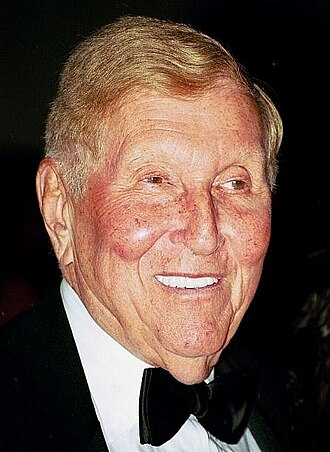
Overview
Sumner Redstone did not invent the media conglomerate, and for the first six decades of his life almost no one outside New England had heard of him. He was a lawyer turned operator of his father's chain of drive-in movie theaters, a regional exhibitor who collected admission at the gate and watched studios treat men like him as the bottom of the food chain [2]. What set him apart was a single conviction, repeated until it became a slogan of the age, "content is king", and a will to win so total that colleagues and biographers struggled to find the bottom of it [2][5]. Beginning in 1987, when he was already sixty-three, Redstone used that conviction and a family theater company called National Amusements to assemble one of the largest entertainment empires on earth: MTV, Nickelodeon, Paramount Pictures, Blockbuster, Simon & Schuster, and finally CBS [2][6].
The foundation was laid quietly. His father, a Boston entrepreneur born Max Rothstein, built the Northeast Drive-In Theatre Corporation, reincorporated in 1959 as National Amusements [3]. Sumner left a lucrative Washington law practice in 1954, his salary collapsing from roughly $100,000 to $5,000, to join the family business, where he pioneered the suburban multiplex and coined the very word "multiplex" for the multi-screen theaters National Amusements pushed across the country [2][3]. For thirty years he was a successful but obscure exhibitor. Then, in 1987, he turned predator.
His instrument of conquest was the leveraged hostile takeover. In a four-month war he wrested control of Viacom, owner of MTV, Nickelodeon, and Showtime, away from its own management and the corporate raider Carl Icahn, winning on March 4, 1987 with a bid valuing the company at about $3.4 billion and saddling National Amusements with crushing debt [4][6]. "I bet the company," he liked to say, and he had [2]. The cable networks he had bought as cash machines became the cultural furnace of a generation, and the bet paid off many times over [2][5].
The defining campaign came in 1993–1994, when Redstone fought a brutal, publicly traded bidding war against Barry Diller's QVC for control of Paramount Communications [6]. To finance the escalation he bought Wayne Huizenga's Blockbuster video chain in an $8.4 billion deal and borrowed against its cash flow, finally taking Paramount in July 1994 for roughly $10 billion [6][2]. The studio he had once approached as a supplicant was now his. Five years later he went further still: in September 1999 Viacom agreed to buy CBS in a deal valued near $35 billion, completed in May 2000, at the time the largest media merger ever, and a poetic inversion, since Viacom had been born in 1971 as a syndication unit spun off from CBS itself [6].
Redstone ran his empire as a personal fiefdom. He split Viacom and CBS back into two companies at the end of 2005, controlling both through National Amusements; he publicly fired Tom Cruise's production deal at Paramount in 2006; and he insisted, well into his nineties, that he would never relinquish control and might never die [1][6]. The final act was Shakespearean: a frail, near-mute old man fought in open court over his fortune, his companions, and his mind, while his daughter Shari and a succession of executives maneuvered for the throne he refused to vacate [5][7].
He was a study in extremes, a brilliant antitrust lawyer who became the most litigious man in show business, a doting father who feuded with nearly every relative, a survivor who measured every relationship by loyalty and every deal by victory [2][5]. But the core insight outlasted the man and the melodrama: in a converging world of cable, satellite, video, and eventually the internet, the company that owned the programming held the power. Redstone said it first and loudest, and then spent a fortune proving it true [2][5].
Early Life & Path
He was born Sumner Murray Rothstein on May 27, 1923, in a Boston tenement, the elder son of Michael "Mickey" Rothstein, a self-made entrepreneur, and Belle Ostrovsky [2][3]. The family name was later changed to Redstone, a literal translation of "Rothstein", at Sumner's urging, in part to distance the family from the notorious gambler Arnold Rothstein [3]. His father sold linoleum, ran the Boston nightclub the Latin Quarter, and built a string of drive-in movie theaters that would become the family's fortune [2][3]. Sumner grew up driven and intense, pushed relentlessly toward achievement.
The achievement came. He graduated first in his class from the elite Boston Latin School in 1940, entered Harvard on scholarship, and finished his degree in roughly three years [2]. During World War II he was recruited into a U.S. Army Signal Intelligence unit at Arlington Hall that broke Japanese military and diplomatic codes, work for which he received military commendations [2]. He went on to Harvard Law School, then to the U.S. Department of Justice and a Washington law firm, where as a young appellate lawyer he argued cases up to the U.S. Supreme Court and worked on antitrust and tax matters, including issues flowing from the landmark studio-divestiture case United States v. Paramount Pictures [2].
Then, in 1954, he made the decision that set the rest of his life: he walked away from the law to join his father at the Northeast Drive-In Theatre Corporation, taking a savage pay cut to learn the exhibition business from the box office up [2][3]. The pivot from courtroom to drive-in screen would define everything that followed, he never stopped being a litigator, and he never stopped being a movie man.
Career Timeline
- 1923Born Sumner Murray Rothstein on May 27 in Boston, son of theater entrepreneur Michael "Mickey" Redstone [2][3].
- 1940Graduates first in his class from Boston Latin School; enters Harvard on scholarship [2].
- 1943–1945Serves in a U.S. Army code-breaking unit at Arlington Hall, working on Japanese military codes during World War II [2].
- 1948–1951Works at the U.S. Justice Department, then enters private practice as an appellate lawyer arguing antitrust and tax cases [2].
- 1954Leaves the law to join his father's drive-in theater business, his pay falling from about $100,000 to $5,000 [2][3].
- 1959The family's Northeast Drive-In chain is reincorporated as National Amusements, Inc. [3].
- 1979Survives a deadly arson fire at Boston's Copley Plaza Hotel, hanging from a third-floor ledge with burns over 45% of his body [1][8].
- 1987Wins a four-month hostile takeover of Viacom on March 4, beating Carl Icahn, in a deal valuing it near $3.4 billion [4][6].
- 1994Buys Blockbuster for about $8.4 billion and uses it to finance the roughly $10 billion conquest of Paramount [6].
- 1999–2000Viacom agrees to acquire CBS for about $35 billion (Sept. 1999), completing the largest media merger then ever in May 2000 [6].
- 2005–2006Splits the empire back into two public companies, Viacom and CBS, both controlled through National Amusements [6].
- 2006Publicly ends Tom Cruise's production deal at Paramount, citing the star's off-screen behavior [6].
- 2016A Los Angeles judge dismisses ex-companion Manuela Herzer's challenge to his mental competency after viewing his deposition [7].
- 2020Dies August 11 at age 97; daughter Shari Redstone consolidates control of the empire [5][6].
Key Ventures & Innovations
National Amusements and the multiplex
Redstone transformed his father's drive-in chain into a national exhibitor, championing the multi-screen suburban theater and popularizing the term "multiplex." National Amusements remained the private holding company through which he controlled everything that came after [2][3].
The Viacom takeover (1987)
In a four-month leveraged hostile bid, Redstone seized Viacom, owner of MTV, Nickelodeon, and Showtime, for about $3.4 billion, defeating management and raider Carl Icahn and taking on enormous debt. The cable networks became the engine of his fortune [4][6].
Blockbuster and the Paramount war (1993–1994)
To outlast Barry Diller's QVC in the bidding war for Paramount, Redstone bought Wayne Huizenga's Blockbuster for roughly $8.4 billion and borrowed against its cash flow, finally winning Paramount Pictures for about $10 billion in July 1994 [6][2].
The CBS merger (1999–2000)
Viacom's roughly $35 billion acquisition of CBS, completed in May 2000, was the largest media merger of its time, a striking reversal, since Viacom had been spun off from CBS in 1971. Redstone became chairman and CEO of the combined giant [6].
Simon & Schuster
Acquired with Paramount, the publisher became part of the Viacom content portfolio, and, fittingly, the imprint that published Redstone's own 2001 memoir, A Passion to Win [2][6].
“Content is king.”
From the Record
“The pain was excruciating but I refused to let go. That way was death. I began counting one to ten, one to ten, hoping that a fire engine would come save me.”
“I have a passion to win, and the will to win is the will to survive.”
“Redstone's testimony has ultimately defeated her case. Though Herzer may have believed that Redstone would not be able to say anything, or be able to understand the questions, he did both.”
What Operators Can Learn
- 01
Own the content, not the pipe
Redstone bet that as distribution multiplied, cable, video, satellite, eventually the internet, value would concentrate in the programming everyone needed to fill those channels. "Content is king" was not a slogan but an investment thesis he wagered billions on.
- 02
Leverage is a weapon and a wager
He won Viacom and Paramount by borrowing more than rivals dared, using one asset's cash flow to buy the next. It built an empire fast, and meant any stumble in cash flow could have buried him. He called it "betting the company," accurately.
- 03
Control is the asset you never sell
Through National Amusements and a dual-class share structure, Redstone kept absolute voting control of his public companies. It let him act decisively for decades, and meant that, as he aged, no board could check him or plan an orderly succession.
- 04
The thing that builds you can consume you
The same refusal to ever lose or let go that powered his rise turned his final years into open warfare over his mind and money. A will to win with no off-switch made succession a courtroom drama instead of a plan.
Legacy
Redstone's wager on programming reshaped the modern media landscape. The networks he gathered, MTV, Nickelodeon, BET, Comedy Central, Paramount, CBS, defined the cultural diet of late-twentieth-century America, and the conviction he packaged as "content is king" became the governing assumption of every streaming-era boardroom that followed [2][5]. He demonstrated that an outsider with leverage, nerve, and a holding company could vault from regional obscurity to the commanding heights of Hollywood in a single decade [2][6].
Yet his legacy is inseparable from its warnings. By keeping iron personal control to the very end, he made his own decline a corporate crisis, a near-mute nonagenarian fought over by companions, executives, and his daughter Shari, the saga of elder-abuse claims and competency trials that journalists and a Broadway-sized cast of lawyers chronicled in books like The King of Content and Unscripted [5][7]. The dysfunction was lurid enough to help inspire television's own portrait of a media dynasty in decline [5].
The institutions endure in altered form: Paramount, the CBS networks, and the cable brands he assembled continued under his daughter's control after his death in 2020, and the Sumner M. Redstone Burn Center at Massachusetts General Hospital, funded after the fire that nearly killed him, bears his name [1][8]. He is remembered as the man who proved that stories were the most valuable property in the new media economy, and as a cautionary study in what happens when a founder cannot imagine the empire surviving without him [5][6].
Further Reading
The King of Content: Sumner Redstone's Battle for Viacom, CBS, and Everlasting Control of His Media Empire, Keach Hagey (2018)
The definitive modern biography by a Wall Street Journal media reporter, tracing the rise from drive-ins to the late-life battle for control.
Unscripted: The Epic Battle for a Media Empire and the Redstone Family Legacy, James B. Stewart and Rachel Abrams (2023)
A deeply reported account of the dynastic war over the empire in Redstone's final years and Shari Redstone's eventual takeover.
A Passion to Win, Sumner Redstone with Peter Knobler (2001)
Redstone in his own (co-written) words, the fire, the takeovers, and the self-mythology, an essential if self-serving primary source.
Master of the Game: Steve Ross and the Creation of Time Warner, Connie Bruck (1994)
Not about Redstone, but the indispensable companion portrait of the dealmaking era and rival empire-building that defined his industry.
Three Blind Mice: How the TV Networks Lost Their Way, Ken Auletta (1991)
Context on the upheaval in network television that made Redstone's later conquest of CBS possible.
Sources
- 1.Sumner Redstone with Peter Knobler, A Passion to Win, Simon & Schuster, 2001, book
- 2.Keach Hagey, The King of Content: Sumner Redstone's Battle for Viacom, CBS, and Everlasting Control of His Media Empire, HarperBusiness, 2018, book
- 3.“Mickey Redstone (biographical record of Michael Redstone and the founding of National Amusements)”, The West End Museum, Boston, 2020, archive
- 4.The Man with the Iron Grasp, Time, 1994, journal
- 5.“Sumner Redstone, Tenacious Media Mogul, Dies at 97”, The Hollywood Reporter, August 12, 2020, newspaper
- 6.Cynthia Littleton and Brian Steinberg, “Sumner Redstone, Towering Media Mogul Who Helped Shape Modern Entertainment Industry, Dies at 97”, Variety, August 12, 2020, newspaper
- 7.“Herzer v. Redstone, mental competency petition dismissed (Los Angeles Superior Court, Cowan, J.)”, ABA Journal, May 9, 2016, archive
- 8.“In 1979, a deadly hotel fire nearly cost Sumner Redstone his life. Here's what happened”, The Boston Globe, August 12, 2020, newspaper
- 9.James B. Stewart and Rachel Abrams, Unscripted: The Epic Battle for a Media Empire and the Redstone Family Legacy, Penguin Press, 2023, book
Researched and written with Claude + live web search.