Overview
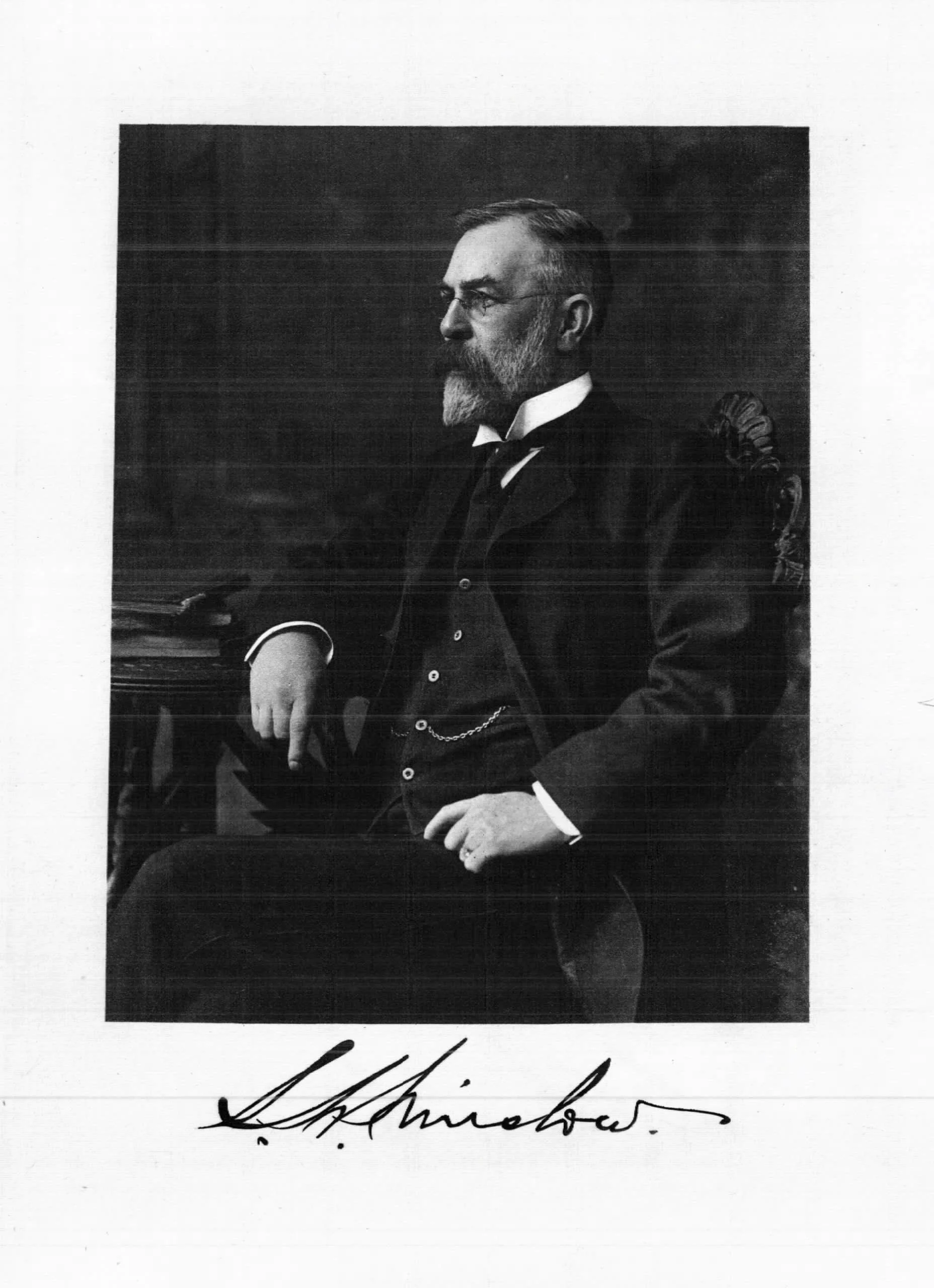
Sidney Wilmot Winslow is the most consequential industrialist almost no one remembers. He invented no famous machine and courted no headlines, yet by the time he died in 1917 the company he had stitched together controlled roughly 85 percent of the machinery on which America made its shoes, and collected a royalty on a vast share of the pairs that shod the nation [3][7]. He did it not by building a better factory but by assembling a portfolio of patents and binding the entire shoe industry to it through a single, brilliant, and ultimately illegal instrument: the lease [3][6].
Winslow's insight came from the shop floor. He had spent fourteen years in his father's Salem shoe factory and understood the maddening reality of late-nineteenth-century shoemaking, that a manufacturer had to cobble together machines for lasting, welting, sewing, and finishing from a dozen rival firms whose tools, patents, and royalties did not fit together [1][2]. In 1899 Winslow engineered the consolidation that solved that problem in his own favor, merging the Goodyear Shoe Machinery Company, the Consolidated McKay Lasting Machine Company, and the McKay Shoe Machinery Company into the United Shoe Machinery Company, capitalized at $25 million and offering, for the first time, a complete and coordinated line of shoe machinery under one roof [3][7].
The genius, and the trap, was that United did not sell its machines. It leased them, on long contracts whose clauses required that a lessee use United machines for connected operations, buy United supplies, and forgo competitors' equipment on pain of forfeiting the whole shop's machinery [3][6]. A small manufacturer could enter the trade with little capital, which made the system genuinely popular; but once inside it, he could almost never leave [6]. United took a fraction of a cent on operation after operation, and the pennies, multiplied across more than a billion pairs of shoes a year, built one of the great American fortunes [3][7].
The federal government came after Winslow personally. In 1911 the Justice Department indicted him and four associates under the Sherman Act, arguing that putting "from 70 to 80 per cent of all the shoe machinery business" into a single hand was a criminal restraint of trade [4]. In United States v. Winslow (1913), Justice Oliver Wendell Holmes wrote for a unanimous Court that the merged firms had not been competitors, so combining them broke no law, "It is as lawful for one corporation to make every part of a steam engine, and to put the machine together, as it would be for one to make the boilers and another to make the wheels" [4]. Winslow won. The leases were a harder target, and after his death the government would chase them through the courts for half a century [6][8].
Winslow built his empire from a single immense plant in Beverly, Massachusetts, raised between 1903 and 1906 and considered on completion among the most advanced industrial works in the world, employing some 9,000 people [3][5]. He ran it with a planner's mind and a chess player's patience, chess was his game, and a paternalist's hand, layering pensions, insurance, and welfare programs onto a workforce he meant to keep loyal [2][5]. The contemporary press called him a "New England financial Colossus," and at his death his company's assets stood above $74 million [1][7].
The verdict history finally rendered was the one Winslow's own structure invited. In 1953, decades after he was gone, Judge Charles Wyzanski ruled in United States v. United Shoe Machinery Corporation that the company had illegally monopolized the trade, its dominance built, the court found, on the very leasing practices Winslow had perfected, a decision affirmed by the Supreme Court in 1954 and dissected in Carl Kaysen's classic study of the case [8]. Winslow had built a machine for extracting rent from an entire industry, and it ran, lucratively and lawfully enough, for two generations after his death.
Early Life & Path
Sidney Wilmot Winslow was born on September 20, 1854, in Brewster, on Cape Cod, to Freeman and Lucy H. (Rogers) Winslow, old New England stock, descended on his mother's side from the Mayflower passenger Thomas Rogers and on his father's from Kenelm Winslow, an early Cape Cod settler [1][2]. His father was a shoe manufacturer and an inventor of shoe machinery, so the boy grew up, as one account put it, familiar with the tools of St. Crispin, the patron saint of shoemakers [1].
The family moved to Salem, Massachusetts, where Winslow graduated from Salem High School and then went to work in his father's shoe factory. He stayed fourteen years, rising to foreman, and it was on that shop floor that he absorbed the lesson that would make him rich: the small manufacturer was at the mercy of a fragmented machinery trade, forced to assemble incompatible machines and pay tribute to a scattering of patent holders for each separate operation in making a shoe [1][2]. He married Georgiana Buxton, daughter of George Buxton of Peabody, in 1877, and they had four children [1][2].
His path into machinery ran through his own family's inventions and a famous outside one. In 1883 he secured a controlling interest in the Naumkeag buffing machine, devised by his father, and in the early 1890s he moved to commercialize the lasting machine of Jan Ernst Matzeliger, the Surinamese-born inventor whose device, perfected through the McKay interests Winslow would soon control, could shape and fasten the upper of a shoe to its sole far faster than any hand laster [1][3][10]. Matzeliger's machine, joined to the McKay and Goodyear sewing processes, gave Winslow the technical core of an industry [10]. By the late 1890s he had stopped thinking like a manufacturer and started thinking like a consolidator, in the great wave of combination then reshaping American industry [2][11].
Career Timeline
- 1854Born September 20 in Brewster, Massachusetts, son of shoe manufacturer Freeman Winslow [1][2].
- 1870sWorks fourteen years in his father's Salem shoe factory, rising to foreman and learning the trade's machinery problem firsthand [1][2].
- 1877Marries Georgiana Buxton of Peabody, Massachusetts; the couple will have four children [1][2].
- 1883Secures a controlling interest in the Naumkeag buffing machine, his father's invention, his first machinery venture [1].
- 1890sAcquires and commercializes the lasting machine of Jan Ernst Matzeliger through the McKay interests, gaining a key piece of shoemaking technology [1][3].
- 1899Organizes the consolidation of the Goodyear, Consolidated McKay Lasting, and McKay Shoe Machinery companies into the United Shoe Machinery Company, capitalized at $25 million; becomes first president [3][7].
- 1903–1906Builds United's vast Beverly, Massachusetts works, considered on completion among the most advanced industrial plants in the world [3][5].
- 1911Indicted with four associates under the Sherman Antitrust Act for criminally monopolizing the shoe machinery trade [4].
- 1913Wins United States v. Winslow before the Supreme Court; Justice Holmes holds the 1899 merger lawful because the constituent firms had not competed [4].
- 1915Company assets and lease income swell as United's machines run under most of America's shoe output; it becomes one of the nation's largest machine producers [3][7].
- 1917Dies June 18 at Beverly, Massachusetts, in his 63rd year, of heart failure; company assets stand above $74 million [1][7].
- 1922Five years after his death, the Supreme Court strikes down United's restrictive lease clauses under the Clayton Act in United Shoe Machinery Corp. v. United States [6].
- 1947–1954The government's great monopolization suit, United States v. United Shoe Machinery Corp., ends in Judge Wyzanski's 1953 ruling against the company, affirmed by the Supreme Court in 1954 [8].
Key Ventures & Innovations
The 1899 consolidation
Winslow merged the Goodyear, Consolidated McKay Lasting, and McKay Shoe Machinery companies, non-competing firms whose patents complemented one another, into the United Shoe Machinery Company, capitalized at $25 million, eliminating conflicting patents and offering a single coordinated line of machines for every shoemaking operation [3][7].
The leasing system
United's defining instrument: it leased rather than sold its machines on long contracts whose tying and exclusive-use clauses required lessees to use United machines for connected operations and buy United supplies, forfeiting their machinery if they strayed. It let manufacturers start cheaply but locked them in for life [3][6].
The Matzeliger lasting machine
Winslow acquired and commercialized Jan Matzeliger's lasting machine, which mechanized the trickiest hand operation in shoemaking and, joined to the McKay and Goodyear sewing processes, formed the technical heart of United's near-total command of shoe production technology [1][3].
The Beverly works
Between 1903 and 1906 Winslow concentrated production in a single immense Beverly, Massachusetts plant, regarded as one of the most advanced industrial facilities in the world, employing some 9,000 workers and paired with pensions, insurance, and welfare programs to bind the labor force [3][5].
Defending the monopoly in court
Personally indicted under the Sherman Act, Winslow took United States v. Winslow to the Supreme Court and won in 1913, with Holmes ruling that combining non-competing patent holders was lawful, a victory that preserved the structure for decades after his death [4].
“It is as lawful for one corporation to make every part of a steam engine, and to put the machine together, as it would be for one to make the boilers and another to make the wheels.”
From the Record
“It is as lawful for one corporation to make every part of a steam engine, and to put the machine together, as it would be for one to make the boilers and another to make the wheels.”
“It is said that from 70 to 80 per cent of all the shoe machinery business was put into a single hand.”
“Sidney Wilmot Winslow was organizer and president of the United Shoe Machinery Company since its formation in 1899.”
What Operators Can Learn
- 01
Own the bottleneck, not the product
Winslow never tried to make shoes. He saw that whoever controlled the patented machinery, the chokepoint every manufacturer had to pass through, could tax the entire industry without ever competing in it. Find the bottleneck and sit on it.
- 02
A pricing model can be a moat
Leasing instead of selling looked generous: low entry cost let small shops in. But the lease's tying clauses turned customers into captives. The business model itself, not any single machine, was the durable competitive advantage.
- 03
Combine the complementary, not the competing
Winslow's 1899 merger united firms that did not compete with one another, which is exactly why Holmes let it stand. He built dominance out of pieces that, separately, no court could call a restraint of trade.
- 04
Structure outlives the founder, for better and worse
The leasing machine Winslow built kept generating profit and litigation for fifty years after he died. The same design that made the fortune is what eventually drew the monopolization ruling of 1953. What you architect, you bequeath.
Legacy
Winslow's legacy is a paradox: he is forgotten precisely because he succeeded so completely. United Shoe Machinery became so thoroughly the infrastructure of an industry that it disappeared into the background, an invisible toll on a daily American necessity. At its height the company employed some 9,000 people, made about 85 percent of the country's shoe machinery, and reached him a fortune that left the firm with assets above $74 million at his death in 1917, and the Beverly works he built later lived on as the Cummings Center [3][7].
His deeper bequest was to the law. United Shoe Machinery became one of the defining antitrust matters of the twentieth century. The 1913 Holmes opinion in United States v. Winslow is still taught for its reasoning on combinations of non-competitors; the 1922 Clayton Act ruling against the tying leases reshaped the law of exclusive dealing; and Judge Wyzanski's 1953 monopolization decision, affirmed in 1954 and immortalized in Carl Kaysen's economic study, became a touchstone for how courts think about market power built on patents and lease practices [4][6][8], including the bundling of "free" service into United's leases that later scholars singled out as a tool of dominance [9].
Winslow himself remains a study in the quiet, systemic capitalist: no Carnegie-style mythology, no Ford-style fame, just a chess player who understood that the man who owns the indispensable machine need never make the product at all. He showed how thoroughly an entire industry could be captured through patents and contracts rather than factories and prices, and how long such a structure can run before the law catches up [3][8].
Further Reading
United States v. United Shoe Machinery Corporation: An Economic Analysis of an Anti-Trust Case, Carl Kaysen (1956)
The classic close study of the great monopolization case, by Judge Wyzanski's law clerk, essential on how Winslow's leasing structure became an antitrust landmark.
The Whitin Machine Works Since 1831 / studies of New England machinery firms, Thomas R. Navin (1950)
Context on the New England capital-goods firms among which United Shoe Machinery rose to dominate the shoe trade.
The Organization of the Boot and Shoe Industry in Massachusetts Before 1875, Blanche E. Hazard (1921)
The foundational economic history of the Massachusetts shoe industry Winslow grew up in and ultimately came to control.
The Path to Mechanized Shoe Production in the United States, Ross Thomson (1989)
Definitive technological history of shoemaking machinery, the McKay and Goodyear processes, and Matzeliger's lasting machine.
The Visible Hand: The Managerial Revolution in American Business, Alfred D. Chandler Jr. (1977)
The framing classic on the era of consolidation and managerial capitalism in which Winslow built United Shoe Machinery.
Sources
- 1.C. T. Williams, “Sidney Wilmot Winslow, Organizer and First President of the United Shoe Machinery Co. (quoting his June 1917 obituary)”, ct-williams.com (genealogical/historical research), 2020, archive
- 2.“Long Before That Famous Guy at GE, Salem Had Sidney Wilmot Winslow”, Historic Salem, Inc., 2021
- 3.“United Shoe Machinery Corporation Records, NMAH.AC.0277 (finding aid and historical note)”, Archives Center, National Museum of American History, Smithsonian Institution, records 1887–2001, archive
- 4.U.S. Supreme Court, “United States v. Winslow et al., 227 U.S. 202 (opinion of Holmes, J.)”, Cornell Legal Information Institute, 1913, archive
- 5.Various, “Lasting Impressions”, Harvard Magazine, September 2000
- 6.U.S. Supreme Court, “United Shoe Machinery Corp. v. United States, 258 U.S. 451 (tying-lease clauses under the Clayton Act)”, Cornell Legal Information Institute, 1922, archive
- 7.“Sidney W. Winslow, 20th Century Great American Business Leaders”, Harvard Business School, Leadership database, accessed 2026
- 8.Carl Kaysen, United States v. United Shoe Machinery Corporation: An Economic Analysis of an Anti-Trust Case, Harvard University Press, 1956, xi + 404 pp., book
- 9.United Shoe Machinery and the Antitrust Significance of "Free" Service, Review of Industrial Organization (Springer), 1998, journal
- 10.Ross Thomson, The Path to Mechanized Shoe Production in the United States, University of North Carolina Press, 1989, book
- 11.Alfred D. Chandler Jr., The Visible Hand: The Managerial Revolution in American Business, Belknap Press of Harvard University Press, 1977, book
Researched and written with Claude + live web search.