Overview
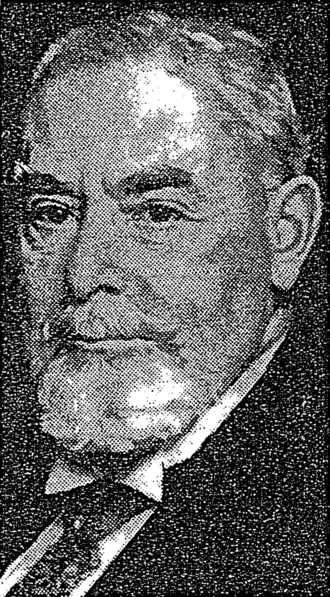
Samuel Sachs did not found Goldman, Sachs & Co., his father-in-law Marcus Goldman did, in 1869, peddling merchants' promissory notes from a one-room office on Pine Street [4][5]. What Sachs did was harder to dramatize and more lasting: he supplied the discipline, the bookkeeping, the foreign alliances, and the reputation for caution that let a tiny family note-broker survive long enough to become an investment bank [1][3]. Invited into the partnership in 1882 after marrying Goldman's daughter Louisa, he bought his interest for $15,000 payable in installments, a debt his mother-in-law insisted be forgiven when the couple's third son was born [6]. In 1885 the firm took the name it still bears, Goldman, Sachs & Co. [6].
For the next two decades Sachs ran what was, by the 1890s, the nation's largest dealer in commercial paper, the short-term IOUs of merchants who could not easily get bank credit [3][6]. The firm joined the New York Stock Exchange in 1896 [3]. In 1897 Sachs sailed to London with a letter of introduction and forged the alliance that defined his half of the business, a partnership with the merchant bank Kleinwort, Sons & Co. that gave Goldman Sachs a transatlantic franchise in foreign exchange and arbitrage between the London and New York money markets [3][2]. Sachs was the firm's Europe-minded, methodical conservative; his profits came from low-risk spreads, not big bets [2].
That temperament collided, again and again, with his brother-in-law Henry Goldman, Marcus's son, who joined in 1885 and after Marcus's death in 1904 became co-senior partner alongside Sachs [1][2]. Goldman "was itching to get out of the commercial paper business and transform Goldman Sachs into an investment bank that underwrote securities, marketed bonds to the public, and orchestrated corporate consolidations", exactly the risk Sachs distrusted [2]. The defining test came in 1906, when Goldman, working with Lehman Brothers, took Sears, Roebuck and Co. public in a $40 million offering, $10 million preferred, $30 million common, and priced it not on factory bricks and inventory but on a radical new yardstick, the company's earning power [7][1]. Sachs resisted; by one account he agreed only after Kleinwort in London blessed the deal [2]. It became the first great American retail IPO and remade what investment banks could do [7].
The partnership held together for another decade on the strength of family and a shared name, but the First World War broke it. Henry Goldman, German by sympathy, refused in 1915 to let the firm join the House of Morgan's enormous Anglo-French war loan; Sachs, who backed the Allies and personally subscribed to the loan and to Liberty Bonds, was appalled [2]. The quarrel was irreconcilable, and in 1917 Henry Goldman resigned after thirty-five years, "the last Goldman to work at Goldman Sachs" [2]. Control passed to the Sachs side of the house: Sachs and his sons Arthur, Paul, and Walter [1][8].
Samuel Sachs retired from active management in 1928, at seventy-seven, and lived to see the firm he had steadied for caution nearly destroyed by the recklessness he had warned against, the Goldman Sachs Trading Corporation, a leveraged investment trust launched that same year by the younger partner Waddill Catchings, which was obliterated in the Crash of 1929 [9][1]. Sachs died in 1935; the conservative house he built outlasted both the speculation and the men who indulged it [1][9].
Early Life & Path
Samuel Sachs was born July 28, 1851, in Maryland, the son of Sophie (née Baer) and Joseph Sachs, Bavarian-Jewish immigrants [9]. Joseph Sachs and Marcus Goldman had been friends in the old country, and the families' fortunes would entwine for generations; Samuel's older brother Julius became a noted educator, and the household prized learning [6][9]. But Joseph Sachs died young, and the family's means were thin. Samuel went to work at fifteen as a bookkeeper, then ran a modest dry-goods business of his own [3][6].
It was that small enterprise that caught Marcus Goldman's eye. According to the firm's history, Goldman admired "the resolve and ethics Sam had displayed in operating a small dry goods business" after his father's death, and at his own sixtieth-birthday gathering invited the young man into his note-brokering firm [6]. Sachs had also married into the family, his wife was Louisa, Goldman's youngest daughter, so the partnership, formalized in 1882, was both a business and a dynastic arrangement [3][6].
The terms reveal the modesty of the firm's beginnings: Sachs bought his share for $15,000, payable in three installments, a sum Marcus's wife Bertha had forgiven when the couple's third son arrived [6]. From that family hearth came a banking house in which, for nearly half a century, every partner was a Goldman or a Sachs by blood or marriage, a closed circle of "our crowd," the German-Jewish elite of New York chronicled by Stephen Birmingham [10].
Career Timeline
- 1851Born July 28 in Maryland to Bavarian-Jewish immigrants Joseph and Sophie Sachs [9].
- 1866Begins work at fifteen as a bookkeeper, later running a small dry-goods business [3][6].
- 1882Marries Louisa Goldman and is invited into Marcus Goldman's firm, buying a partnership share for $15,000 [3][6].
- 1885The firm is renamed Goldman, Sachs & Co.; Henry Goldman joins as a partner [6].
- 1896Goldman Sachs joins the New York Stock Exchange [3].
- 1897Sachs travels to London and forges the Kleinwort, Sons & Co. alliance, giving the firm a transatlantic franchise [3][2].
- 1904Marcus Goldman dies; Samuel Sachs and Henry Goldman become co-senior partners [1][2].
- 1906With Lehman Brothers, the firm floats the $40 million Sears, Roebuck IPO priced on 'earning power', over Sachs's initial objection [7][2].
- 1915Henry Goldman, pro-German, blocks the firm from the Anglo-French war loan; Sachs backs the Allies and subscribes personally [2].
- 1917Henry Goldman resigns after thirty-five years; control passes to the Sachs branch [2][1].
- 1920sSachs's sons Arthur, Paul, and Walter help lead the firm; Walter is first trained in Europe [8].
- 1928Samuel Sachs retires from active management at seventy-seven; Goldman Sachs Trading Corporation is launched by Waddill Catchings [9][8].
- 1929The Crash wipes out the Trading Corporation, validating Sachs's lifelong caution [9][1].
- 1935Dies March 2 in New York City, aged 83 [9].
Key Ventures & Innovations
The commercial paper franchise
Sachs ran what by the 1890s was the country's largest dealer in commercial paper, the short-term notes of merchants shut out of bank credit. It was an unglamorous, low-margin, high-trust business, and he stayed loyal to it even as Henry Goldman pushed toward underwriting [3][6][4].
The Kleinwort alliance (1897)
Carrying a letter of introduction to London's Kleinwort, Sons & Co., Sachs built the firm's transatlantic backbone: foreign exchange, stock arbitrage between London and New York, and a credibility-by-association that a young Jewish house could not otherwise buy [3][2].
The Sears, Roebuck IPO (1906)
A $40 million offering, $10 million preferred, $30 million common, and the first great American retail flotation. Its breakthrough was pricing on 'earning power' rather than tangible assets. Sachs resisted the risk and reportedly assented only after Kleinwort approved [7][2][1].
Steering the firm through the Goldman break (1917)
When Henry Goldman's pro-German stance fractured the partnership during the war, Sachs and his sons held the firm together and took over its direction, the moment the house became, in effect, a Sachs firm [2][1].
From the Record
“Unlike Sachs, Goldman wanted to focus on the domestic economy and not international mercantile exchange. And unlike Sachs, Goldman was itching to get out of the commercial paper business and transform Goldman Sachs into an investment bank that underwrote securities, marketed bonds to the public, and orchestrated corporate consolidations.”
“Henry Goldman – the man who had transformed Goldman Sachs into one of the most powerful investment banks in the world – was forced to resign. He would be the last Goldman to work at Goldman Sachs.”
“Samuel Sachs had an early and enduring impact on the firm through his measured and thoughtful approach to growing the business, his efforts to drive the firm's expansion into foreign markets and his acute client focus.”
What Operators Can Learn
- 01
The boring discipline is the moat
Sachs's bookkeeping, caution, and devotion to an unglamorous commercial-paper trade are exactly what kept a tiny family note-shop alive long enough to matter. Reputation and survival, not flair, compounded into a great house.
- 02
Borrow credibility before you have your own
A young Jewish firm could not command trust on Wall Street by asking for it. The 1897 Kleinwort alliance let Goldman Sachs rent the standing of an established London bank until it had earned its own.
- 03
A partnership can be a productive argument
For two decades the tension between cautious Sachs and aggressive Henry Goldman was the firm's engine: Goldman's daring opened underwriting, Sachs's restraint kept it solvent. The danger was that the argument could also tear it apart, and over the war, it did.
- 04
Caution is only vindicated in the crash
Sachs spent thirty years being out-argued by bolder men. The 1929 destruction of the Goldman Sachs Trading Corporation, launched the year he retired, proved that the conservative who looks timid in the boom is the one who keeps the firm standing afterward.
Legacy
Samuel Sachs is the quietest of the great Wall Street founders, and that is precisely the point. He invented no instrument and chased no headline; he supplied the ballast. The commercial-paper business he stewarded, the European alliances he negotiated, and the reputation for caution he guarded were the conditions under which Goldman Sachs could afford the bolder experiments, the Sears IPO, the move into underwriting, that his brother-in-law Henry Goldman drove [1][3][7]. When the partnership broke in 1917, it was Sachs's name, capital, and sons who carried the firm forward; the modern Goldman Sachs descends from the Sachs branch he held together [2][1].
His vindication came posthumously and brutally. The Goldman Sachs Trading Corporation, the leveraged speculation launched in 1928 by a new generation, evaporated in the Crash of 1929 and nearly took the firm with it, the exact category of risk Sachs had distrusted his whole career [9][1]. The house survived because the culture he had embedded, and the steadying hand of his son Walter, outlasted the gamble [8][9]. Beyond the firm, Sachs belongs to the larger story of the German-Jewish banking families, the Goldmans, Sachses, Lehmans, Seligmans, who built parallel financial dynasties while excluded from gentile society, the world Stephen Birmingham called "our crowd" [10].
Further Reading
The Partnership: The Making of Goldman Sachs, Charles D. Ellis (2008)
The definitive modern history of the firm, with deep treatment of the founding Goldman and Sachs partners.
Goldman Sachs: The Culture of Success, Lisa Endlich (1999)
A former insider's account tracing the firm's culture from Marcus Goldman and Sam Sachs through the late 1990s.
"Our Crowd": The Great Jewish Families of New York, Stephen Birmingham (1967)
The classic social history of the German-Jewish banking dynasties, Goldmans, Sachses, Lehmans, Seligmans, that produced Samuel Sachs.
Money and Power: How Goldman Sachs Came to Rule the World, William D. Cohan (2011)
A sweeping narrative history of the firm, useful for the long arc from the founding partnership to the modern era.
Sources
- 1.Charles D. Ellis, The Partnership: The Making of Goldman Sachs, Penguin Press, 2008, book
- 2.Eli Cook, Henry Goldman: Immigrant Outsider as Empire Builder, Immigrant Entrepreneurship, German Historical Institute, 2015, journal
- 3.Lisa Endlich, Goldman Sachs: The Culture of Success, Alfred A. Knopf, 1999, book
- 4.Sheri J. Caplan, Marcus Goldman, Immigrant Entrepreneurship, German Historical Institute, 2012, journal
- 5.“A New Partner Joins the Family Business (firm history, 1882)”, Goldman Sachs, 1882, archive
- 6.“Entrepreneurialism and Grit Inspire Marcus Goldman to Launch his Business / The Sachs Family Helps Shape a Nascent Goldman Sachs”, Goldman Sachs (firm history), 2019, archive
- 7.“Landmark IPO Helps an American Retailing Icon Achieve the Next Level of Growth (Sears, Roebuck IPO, 1906)”, Goldman Sachs (firm history), 1906, archive
- 8.Walter E. Sachs, “Reminiscences of Walter E. Sachs (oral history)”, Columbia Center for Oral History, Columbia University, 1956, archive
- 9.“"Samuel Sachs, Banker, Philanthropist, Dies"”, The Oakland Tribune, March 3, 1935, newspaper
- 10.Stephen Birmingham, "Our Crowd": The Great Jewish Families of New York, Harper & Row, 1967, book
Researched and written with Claude + live web search.