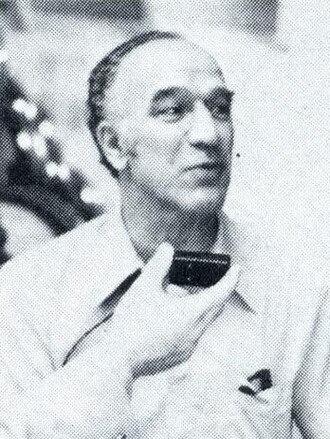
Overview
Robert Mondavi did not invent Napa Valley, and he did not make the first great California wine. What he did was rarer: he refused to believe that American wine was condemned to be cheap, sweet, and second-rate, and he spent forty years, and at the start, his own banished, middle-aged reputation, proving the point until the rest of the world conceded it [1][2]. When he opened the Robert Mondavi Winery in Oakville in 1966, it was the first major new winery built in the Napa Valley since the repeal of Prohibition, and Mondavi was fifty-two years old, freshly thrown out of his own family's business [1][3][6].
The expulsion is the hinge of the whole story. For more than two decades Robert and his younger brother Peter had run Charles Krug, the St. Helena winery their immigrant father Cesare had bought in 1943 for $75,000 [4][6]. Robert was the salesman and visionary; Peter was the cautious cellarmaster. The two temperaments ground against each other for years until, in November 1965, a quarrel touched off partly by a mink coat Robert's wife had worn to a White House dinner exploded into a fistfight between the brothers [2][6]. Robert's mother Rosa banished him from the family company. Rather than retire, he borrowed against everything he had, raised roughly $200,000 from partners and lenders, and built a winery of his own [1][6].
Mondavi had already found his religion. On a 1962 tour through the great cellars of Bordeaux and Burgundy he had seen techniques, aging in small French oak barrels, gentler handling of the fruit, the discipline of estate winemaking, that California producers were ignoring [1][3]. He came home convinced that the Napa Valley, with its soils and sun, could make wines fit to stand beside the first growths of France, and he set about importing both the methods and the swagger [1][3]. His Oakville winery, with its Spanish-mission arch and bell tower designed by Cliff May, was conceived as much as a stage as a cellar, a place to teach Americans that wine belonged on the dinner table and in the culture [1][6].
He was a marketer of genius. When the unloved Sauvignon Blanc grape was languishing on California shelves, Mondavi in 1968 dried the wine out, aged it in oak, and rechristened it "Fumé Blanc", an evocation of France's Pouilly-Fumé, and demand exploded; tellingly, he never trademarked the name, letting rivals use it and thereby creating a whole category [1][3][11]. In 1979 he sealed the alliance that crowned his reputation: a fifty-fifty joint venture with Baron Philippe de Rothschild of Château Mouton Rothschild to make a single Bordeaux-style wine in Oakville, christened Opus One [5][7]. Its first releases sold for around $50 a bottle, then the highest price ever asked for an American wine, proof, in a single price tag, that Napa had arrived [5][7].
The empire kept growing, Woodbridge for everyday drinking, ventures in Chile and Italy, the Napa Valley Wine Auction he helped launch in 1981, and in June 1993 the Robert Mondavi Corporation went public on NASDAQ, the first major American winery to do so [3][8]. But scale and family discord eventually consumed it. The publicly traded company, debt-laden and pulled between premium ambition and mass-market reality, was sold to Constellation Brands in 2004 for roughly $1.36 billion, ending the family's control of the name [9]. Robert Mondavi, by then in his nineties and largely sidelined from the company that bore his name, did not want the sale; it was the second time a Mondavi family business had been wrenched away from him [2][9].
He died in 2008 at ninety-four, the most famous winemaker America had produced, a relentless, sometimes overbearing evangelist whose real product was not chardonnay but a belief: that the United States could be a country that took wine, and the gracious table around it, seriously [10][2].
Early Life & Path
Robert Gerald Mondavi was born June 18, 1913, in Virginia, Minnesota, an Iron Range mining town, the son of Cesare Mondavi and Rosa Grassi, immigrants from Sassoferrato in Italy's Marche region [1][2]. Cesare ran a grocery and saloon, then moved into shipping California wine grapes east to the immigrant home-winemakers who, even during Prohibition, were permitted to make a limited quantity for their own use [2][6]. Around 1923 the family followed the trade west to Lodi, California, where Cesare built a fruit-packing business, C. Mondavi & Sons, and Robert grew up amid the smell of crushed grapes and the cadence of a hard-working, food-centered Italian household presided over by his mother Rosa [2][6].
Mondavi attended Stanford University, graduating in 1937 with a focus on economics and business administration, having taken chemistry courses with an eye, at his father's urging, on the wine trade that Repeal had just reopened [1][3]. He went to work in the family's winery operations, learning the cellar from the ground up. In 1943 Cesare bought the historic but run-down Charles Krug Winery in St. Helena for about $75,000, and Robert, with his brother Peter, set out to rebuild it into a quality producer [4][6].
For twenty years the brothers made Charles Krug one of Napa's leading names, but their visions diverged. Robert wanted to spend aggressively, on French oak, on travel, on promotion, on reaching ever higher, while Peter, the trained enologist, favored prudence and volume [2][6]. The 1962 European trip lit the fuse: Robert returned evangelical about world-class wine and impatient with the family's caution, and the friction that had simmered for years finally boiled over into the 1965 confrontation that ended his time at Krug and, at fifty-two, sent him to start over [1][2][6].
Career Timeline
- 1913Born June 18 in Virginia, Minnesota, to Italian immigrants Cesare and Rosa Mondavi [1][2].
- 1937Graduates from Stanford University, then enters the family wine-grape business [1][3].
- 1943Cesare Mondavi buys the Charles Krug Winery in St. Helena for about $75,000; Robert and Peter run it [4][6].
- 1962Tours the great cellars of France, returning determined to make world-class wine in Napa [1][3].
- 1965A fistfight with brother Peter, after a long-simmering feud, leads Rosa to banish Robert from the family company [2][6].
- 1966Opens the Robert Mondavi Winery in Oakville, Napa's first major new winery since Prohibition, at age 52 [1][6].
- 1968Renames a dried-out, oak-aged Sauvignon Blanc "Fumé Blanc," creating a category and a hit [1][3].
- 1976Wins his suit against the family; a court orders Charles Krug sold, ultimately leaving him sole owner of his Oakville winery [2][6].
- 1979Launches a 50/50 joint venture with Baron Philippe de Rothschild that becomes Opus One [5][7].
- 1981Helps found the Napa Valley Wine Auction, which becomes a leading charity wine event [3][10].
- 1984The first Opus One vintages are released at about $50 a bottle, the highest U.S. wine price to date [5][7].
- 1993Takes the Robert Mondavi Corporation public on NASDAQ in June, the first major U.S. winery IPO [3][8].
- 2004Constellation Brands buys the Mondavi company for roughly $1.36 billion, ending family control [9].
- 2008Dies May 16 at his home in Yountville, California, aged 94 [10][2].
Key Ventures & Innovations
Robert Mondavi Winery, Oakville (1966)
Built at age 52 after his banishment from Charles Krug, with roughly $200,000 raised from partners and lenders. Its Cliff May-designed mission arch made it a destination, and inside Mondavi imported French-oak aging and estate discipline to chase first-growth quality [1][6].
Fumé Blanc (1968)
A marketing masterstroke: he took the unloved Sauvignon Blanc, fermented it dry, aged it in oak, and gave it a French-sounding name evoking Pouilly-Fumé. Demand soared, and by declining to trademark the term he turned a single wine into an American category [1][3].
Opus One (1979)
A fifty-fifty partnership with Baron Philippe de Rothschild of Château Mouton Rothschild to make one Bordeaux-style red in Oakville. First released around $50 a bottle, then a record for American wine, it was the symbolic seal on Napa's arrival among the world's great regions [5][7].
Woodbridge and the public company (1979/1993)
The Woodbridge label brought affordable, well-made varietal wine to a mass American audience, funding the premium ambitions above it. In 1993 the Robert Mondavi Corporation became the first major U.S. winery to go public, listing on NASDAQ [3][8].
The Napa Valley Wine Auction (1981)
Mondavi was a driving force behind the charity auction that gathered the valley's vintners, raised millions for local causes, and projected Napa as a unified, glamorous wine region to the world [3][10].
“Wine to me is passion. It's family and friends. It's warmth of heart and generosity of spirit.”
From the Record
“Wine to me is passion. It's family and friends. It's warmth of heart and generosity of spirit.”
“When it was all over, there were no apologies and no handshake.”
“Constellation Brands... agreed to acquire all of the outstanding shares of The Robert Mondavi Corporation for $56.50 per share in cash for the Class A Common Stock and $65.82 per share in cash for the Class B Common Stock.”
What Operators Can Learn
- 01
A new category beats a better product
Mondavi could not sell Sauvignon Blanc, so he stopped competing on a crowded shelf and invented a name and a style, Fumé Blanc, that drinkers wanted. Reframing the product did what improving it alone could not.
- 02
Borrow the prestige you have not yet earned
By aligning with Rothschild on Opus One and openly chasing the first growths of France, Mondavi imported credibility before Napa had it, then lived up to the standard he had publicly claimed.
- 03
Evangelism is a business strategy
He sold not just bottles but the idea of wine at the American table. Tasting rooms, the wine auction, relentless missionary travel, he grew the whole market, knowing his winery would ride the rising tide.
- 04
The thing that built it can take it away
Family ambition and conflict made Mondavi twice, and unmade him twice. Banished from Krug, then watching his public company be sold out from under him, he learned that control and legacy are not the same thing.
Legacy
Robert Mondavi's monument is not a single wine but a changed national palate. When he started, American wine meant jugs and sweetness; by the time he died, California Cabernet and Chardonnay were taken seriously around the world, Napa was a global luxury destination, and varietal labeling and oak-aged whites were industry norms, all causes he had pushed for decades [1][3][10]. The 1976 Judgment of Paris tasting, in which California wines beat French rivals, vindicated a faith he had been preaching since 1962, and Opus One's record price gave that faith a market value [5][7][12].
His generosity outran his winery. He helped launch the Napa Valley Wine Auction, gave tens of millions to the University of California, Davis for its wine and food institute and to the arts, and bankrolled the Copia cultural center in Napa to teach Americans the pleasures of the table [3][10]. The cautionary half of the story endures alongside the triumph: the family feuds that twice cost him a company, and the 2004 sale to Constellation that took his name out of family hands and into a global drinks portfolio [2][9]. Yet the verdict the wine world settled on is the one he chased his whole life, that an immigrant grocer's son from the Iron Range had made the United States a serious wine country [10][2].
Further Reading
Harvests of Joy: How the Good Life Became Great Business, Robert Mondavi with Paul Chutkow (1998)
Mondavi in his own words, the founding mission, the family rupture, and the philosophy of wine as culture; essential primary source.
The House of Mondavi: The Rise and Fall of an American Wine Dynasty, Julia Flynn Siler (2007)
The definitive, reported saga of three generations, the feuds, the empire, and the loss of the company to Constellation.
American Vintage: The Rise of American Wine, Paul Lukacs (2000)
Places Mondavi within the broader story of how the United States became a serious wine-producing nation.
Judgment of Paris: California vs. France and the Historic 1976 Paris Tasting, George M. Taber (2005)
The tasting that vindicated Mondavi's faith that Napa could beat the French, by the only journalist in the room.
Napa: The Story of an American Eden, James Conaway (1990)
A vivid social history of the valley Mondavi did so much to transform, including the Mondavi family drama.
Sources
- 1.Robert Mondavi with Paul Chutkow, Harvests of Joy: How the Good Life Became Great Business, Harcourt Brace, 1998, book
- 2.Julia Flynn Siler, The House of Mondavi: The Rise and Fall of an American Wine Dynasty, Gotham Books, 2007, book
- 3.“History of Robert Mondavi Corporation”, FundingUniverse / International Directory of Company Histories
- 4.“Robert Mondavi (biography)”, Encyclopaedia Britannica
- 5.“Opus One Winery (history of the Mondavi-Rothschild joint venture)”, Wikipedia
- 6.“The Family Feud that Juiced the Rise of the Napa Valley”, Vivino Wine News
- 7.Jane Anson, The origin story of Opus One: 'Phil and Bob's Big Red', Inside Bordeaux (janeanson.com), journal
- 8.“Mondavi set to go public”, United Press International, June 9, 1993, newspaper
- 9.Constellation Brands, Inc., “Constellation Brands, Inc., Form 8-K, merger agreement to acquire The Robert Mondavi Corporation”, U.S. Securities and Exchange Commission (EDGAR), November 3, 2004, archive
- 10.“Robert Mondavi Dies at Age of 94”, Wine Spectator, May 16, 2008, newspaper
- 11.Paul Lukacs, American Vintage: The Rise of American Wine, Houghton Mifflin, 2000, book
- 12.George M. Taber, Judgment of Paris: California vs. France and the Historic 1976 Paris Tasting That Revolutionized Wine, Scribner, 2005, book
Researched and written with Claude + live web search.