Overview
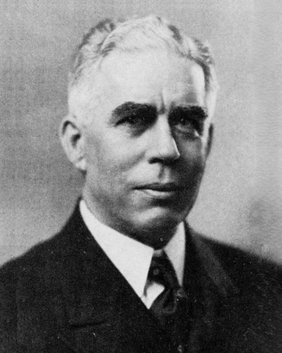
Robert Crooks Stanley is the rare industrial founder whose name attaches less to a company than to a metal. When he joined the New Jersey works of the International Nickel Company in 1902, nickel was essentially a single-purpose substance: hardened into armor plate and gun steel, it lived and died by the world's appetite for war [5][1]. When Stanley died as Inco's chairman in 1951, nickel was in stainless cutlery, automobile bumpers, jet engines, kitchen sinks, and the five-cent coin that bore its name, and Inco produced roughly nine-tenths of the world's supply [4][1]. The distance between those two facts is, in large part, the work of one man.
He was a metallurgist before he was an executive, and that order mattered. In 1905, working at Inco's Orford refinery, Stanley developed Monel, a tough, corrosion-resistant nickel-copper alloy smelted almost directly from Sudbury ore, and it became the first great commercial argument that nickel had a life beyond the battlefield [2][9]. Named for Inco's then-president Ambrose Monell (an "L" dropped because trademark law barred family surnames), Monel was the seed of an idea Stanley would spend three decades scaling: that the way to make a cyclical, war-dependent commodity safe was to manufacture demand for it in peacetime [9][1].
Stanley took the presidency in 1922, the first chief executive in Inco's history to rise from nickel rather than from the U.S. Steel side of the J. P. Morgan house that had assembled the company in 1902 [5]. He inherited a wreck. The post–World War I collapse had cut nickel production by half in 1919 and then by some seventy percent over the following two years; cash was low and the Sudbury mines stood shut [5]. Company lore holds, with justification, that Stanley saved Inco, not by cutting, but by building a Development and Research division whose entire purpose was to invent new uses for the metal and then sell them [5][1]. By the mid-1920s the automobile industry alone absorbed more than a third of all nickel; production soared more than sixfold between 1922 and 1929 [5].
The defining corporate act of his tenure came in 1928. Inco and the British-based Mond Nickel Company each owned half of the richest nickel deposit on earth, the Frood, in the Sudbury basin, and rather than fight over it they merged through an exchange of stock, creating International Nickel Company of Canada and a near-total world monopoly [5][7]. In the same stroke the firm re-incorporated in Canada, a move its lawyers at Sullivan & Cromwell are said to have urged precisely so that the Morgan-descended giant would sit beyond the reach of the U.S. Sherman Antitrust Act [5][3]. Stanley had effectively engineered a global monopoly and then walked it out of the jurisdiction most likely to break it up.
That monopoly was tested in fire. Inco rode the Great Depression brutally, its stock fell more than ninety-four percent between 1929 and 1932, worse than almost any major Canadian issue, but Stanley used cheap money to expand, and the rearmament of the 1930s pulled the company back [5]. By World War II, Inco and its Mond subsidiary refined essentially the entire Allied nickel supply outside Cuba, some 1.5 billion pounds in all forms, the indispensable stiffening in armor, aero-engines, and gun barrels [5]. Yet the same dominance drew Washington's fire: in 1946 the U.S. Justice Department sued Inco's American arm under the Sherman Act, settling by consent decree in 1948 [5].
Stanley's contradictions are the contradictions of the metal itself. He was a brilliant alloy chemist who became a "supersalesman," a man who genuinely diversified nickel away from munitions yet built a monopoly that the U.S. government and Fortune magazine alike regarded with deep suspicion [5][6]. He relinquished the presidency in 1949 and remained chairman until his death two years later, having compiled the longest and most consequential run of any leader in the nickel industry's history [4][5].
Early Life & Path
He was born August 1, 1876, in Little Falls, New Jersey, and grew up in Montclair, where he played football at the local high school and, by some accounts, taught manual training there before his own schooling was finished [3][2]. His was an engineer's education, taken in two stages: a degree in mechanical engineering from the Stevens Institute of Technology in Hoboken in 1899, followed by the rigorous Engineer of Mines degree from Columbia University's School of Mines in 1901 [3][2]. The pairing, the machine shop and the assay furnace, fixed the cast of his whole career; he would always be as comfortable with a smelting process as with a balance sheet.
His first work took him far from a boardroom. For the S. S. White Dental Manufacturing Company he went prospecting platinum-bearing placer sands in British Columbia, learning metallurgy in the field [3]. In 1902 he joined the International Nickel Company, newly assembled that January out of the Canadian Copper Company and the Orford Copper Company by J. P. Morgan's U.S. Steel, as a superintendent at the Orford works in New Jersey [5][3]. It was there, in 1905, that the young engineer made the discovery that would launch both the metal and the man: Monel, a corrosion-proof nickel-copper alloy that could be reduced almost directly from Sudbury ore [9][2].
From that bench he climbed steadily and entirely from within. He became general superintendent of the Orford works during 1914–1918, vice-president of all Inco operations from 1918, and in 1922, on the death of president W. A. Bostwick, the company turned to the metallurgist rather than to another financier, the first time it had done so [3][5]. He had married Alma Guyon Timolat in 1912; he was an avid salmon fisherman; and by 1922 he was, at forty-six, in command of a company that was nearly broke [3][5].
Career Timeline
- 1876Born August 1 in Little Falls, New Jersey; raised in Montclair [3][2].
- 1899Graduates in mechanical engineering from the Stevens Institute of Technology [3].
- 1901Earns the Engineer of Mines degree from Columbia University's School of Mines [3].
- 1902Joins the newly formed International Nickel Company as a superintendent at the Orford works in New Jersey [5][3].
- 1905Develops Monel, the nickel-copper alloy named for Inco president Ambrose Monell; patented 1906 [9][2].
- 1914–1918Serves as general superintendent of the Orford works through World War I, when Inco is nearly the sole supplier of Allied nickel [3][5].
- 1918Becomes vice-president of all International Nickel operations [3].
- 1922Elected president on the death of W. A. Bostwick, the first Inco chief to rise from nickel rather than steel, amid the post-war collapse [5].
- 1920sBuilds a Development and Research division to create peacetime markets; by mid-decade autos absorb over a third of nickel and output rises more than sixfold to 1929 [5].
- 1928Merges Inco with Britain's Mond Nickel Company (owners of the other half of the Frood), forming International Nickel of Canada and re-incorporating in Canada, out of reach of U.S. antitrust law [5][7][3].
- 1929–1932Through the Crash, Inco stock falls about 94 percent; Stanley uses cheap assets to expand through the Depression [5].
- 1937Becomes chairman of the board while remaining president [3].
- 1939–1945Inco and Mond refine essentially the entire Allied nickel supply outside Cuba, about 1.5 billion pounds in all forms [5].
- 1946–1948U.S. Justice Department sues Inco's American subsidiary under the Sherman Act; settled by consent decree in 1948 [5].
- 1949Relinquishes the presidency, remaining chairman of the board [3].
- 1951Dies February 12 of a stroke at his home in Dongan Hills, Staten Island, with Inco producing some 90 percent of the world's nickel [4][8].
Key Ventures & Innovations
Monel alloy (1905)
Stanley's bench discovery, a tough, corrosion-resistant alloy of roughly two-thirds nickel and one-third copper, smelted almost directly from Sudbury ore. Named for president Ambrose Monell (with a dropped 'L' to satisfy trademark law), it was the first durable proof that nickel had a profitable life outside armaments [9][2].
The Development and Research division (1920s)
Stanley's strategic masterstroke: after the post-war collapse he stood up a research arm whose explicit job was to invent peacetime uses for nickel, stainless steels, plating, alloys, consumer goods, and then market them. It turned a cyclical war commodity into an industrial staple and is widely credited with saving the company [5][1].
The Mond merger and Canadian re-incorporation (1928)
By merging with Britain's Mond Nickel Company, Inco united the two halves of the Frood orebody and seized worldwide dominance, about 90 percent of supply. Simultaneously re-incorporating in Canada placed the Morgan-descended giant beyond the Sherman Antitrust Act, on the advice of Sullivan & Cromwell [5][7][3].
Surviving and exploiting the Depression
Where Inco stock collapsed 94 percent, Stanley bought into weakness, modernized plants at Copper Cliff and elsewhere, and positioned the firm for the rearmament demand of the late 1930s, the discipline that let Inco dominate World War II nickel [5].
Arming the Allies (1939–1945)
Under Stanley, Inco and its Mond subsidiary refined essentially all Allied nickel outside Cuba, some 1.5 billion pounds in all forms, the hardening agent in armor plate, aero-engines, and gun steels, while also supplying vast tonnages of copper and platinum [5].
“The introduction of nickel-steel into armaments was the single most important factor in the development of the nickel industry.”
From the Record
“The introduction of nickel-steel into armaments was the single most important factor in the development of the nickel industry.”
“The acceptance of nickel by the automobile industry had a far greater impact than any armament race.”
“Foreseeing the trend of world affairs is not part of Inco's business.”
What Operators Can Learn
- 01
If your market is cyclical, manufacture a new one
Stanley refused to let nickel remain hostage to war. By funding research whose only job was to invent peacetime uses, and then selling them hard, he converted a boom-and-bust munitions commodity into an everyday industrial metal.
- 02
A founder can be the chemist and the salesman both
He invented Monel at the furnace and then spent thirty years marketing the metal it proved out. The technical insight and the commercial nerve were the same instinct: find what nickel can do that nothing else can, then create the demand.
- 03
Control the choke point, then move it out of reach
Merging with Mond gave Inco the whole Frood orebody and near-total world supply; re-incorporating in Canada put that monopoly beyond U.S. antitrust law. Powerful, and a standing reminder that dominance invites the regulators it tries to dodge.
- 04
Buy when everyone else is forced to sell
Inco's stock fell 94 percent in the Crash, yet Stanley used the Depression's cheap assets to expand and modernize, emerging ready for the rearmament demand that followed.
Legacy
Stanley's monument is not a building but a habit of thought: that a commodity producer's job is to create demand, not merely to dig and refine. The Development and Research model he built, a metals company that behaved like a manufacturer hunting end-uses, became standard practice across the materials industries, and it carried nickel from armor plate into the ordinary furniture of modern life [5][1]. Harvard Business School later named him among its "Great American Business Leaders of the 20th Century," crediting him with spearheading technological innovation in metals and growing Inco into the world's largest nickel company, producing roughly 90 percent of global supply by 1951 [4][5]. Canada inducted him into its Mining Hall of Fame in 1990 as the man who built Inco into the largest nickel enterprise on earth [4].
The shadow is the monopoly. Stanley's Inco was an unregulated near-monopoly that, by Canadian re-incorporation, sat outside the Sherman Act even as its offices stayed on Wall Street, a structure that drew a 1946 Justice Department suit and pointed criticism from Fortune, which judged that the company could "do just about anything it pleased" [5][6][3]. His tolerance of the upstart Falconbridge, which O. W. Main argued may not have served Inco's long-term interest, and the wartime export of Canadian nickel that critics linked to German rearmament in the 1930s, complicate any simple celebration [5]. He was, in the end, the grandfather of the nickel industry: the metallurgist who freed nickel from war and the monopolist who made it indispensable [4][5].
Further Reading
For the Years to Come: A Story of International Nickel of Canada, John F. Thompson and Norman Beasley (1960)
The authorized, semi-autobiographical company history by Stanley's successor as chairman, the foundational narrative of Inco, to be read with awareness of its house-history sympathies.
The Canadian Nickel Industry, O. W. Main (1955)
The standard scholarly economic history of the industry Stanley dominated, clear-eyed about Inco's monopoly and its limits.
Northern Enterprise: Five Centuries of Canadian Business, Michael Bliss (1987)
Places Inco and Stanley within the sweep of Canadian business history, sharp on the company's foreign ownership and Depression-era survival.
Nickel Past and Present, Robert C. Stanley (1934)
Stanley in his own words, a slim, chart-laden survey of the metal's history he helped write, and a window onto how he sold nickel to the world.
Mining in World History, Martin Lynch (2002)
Useful global context on nickel-steel, armaments, and the Sudbury basin, including the strategic stakes that shaped Stanley's industry.
Sources
- 1.John F. Thompson and Norman Beasley, For the Years to Come: A Story of International Nickel of Canada, G. P. Putnam's Sons / Longmans, Green & Co., 1960, book
- 2.“Robert Crooks Stanley (1876–1951)”, Canadian Mining Hall of Fame, 1990, archive
- 3.Joe Martin, The Advent of Nickel: From Discovery to Mid-20th Century (background reading for the Inco case, MGT 2917 Canadian Business History), Joseph L. Rotman School of Management, University of Toronto, 2005, journal
- 4.“Great American Business Leaders of the 20th Century, Robert C. Stanley, International Nickel”, Harvard Business School, 2003, archive
- 5.O. W. Main, International Nickel: The First Fifty Years, in Canadian Business History: Selected Studies, ed. David S. Macmillan, McClelland and Stewart, 1972, pp. 255–261, book
- 6."The Squeeze on Nickel", Fortune, November 1950, p. 93, journal
- 7.Michael Bliss, Northern Enterprise: Five Centuries of Canadian Business, McClelland and Stewart, 1987, pp. 316, 421, book
- 8.“Obituary of Robert Crooks Stanley, chairman of International Nickel”, Daily News (New York), February 13, 1951, newspaper
- 9.Robert C. Stanley, Nickel Past and Present, The International Nickel Company, 1934, book
- 10.Paul D. Merica, Obituary: Robert Crooks Stanley, Journal of the Institute of Metals, 1951, journal
Researched and written with Claude + live web search.