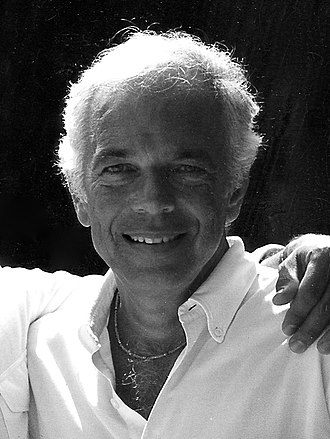
Overview
Ralph Lauren built one of the largest fashion empires on earth out of a commodity nobody thought of as fashion: the necktie [1][3]. In 1967 he was a twenty-seven-year-old salesman named Ralph Lifshitz, working the necktie trade, when he talked the maker Beau Brummell into letting him produce his own line of wide, flamboyant ties under the name Polo, handmade, four-and-a-half inches across, the deliberate opposite of the skinny dark neckwear of the moment [1][3][6]. The following year, with a $50,000 loan from the Manhattan clothier Norman Hilton, he incorporated Polo Fashions and pushed beyond ties into a full men's line [3]. He ran it out of a single drawer in a showroom and delivered the goods himself [6].
What distinguished Lauren from the start was not tailoring but a faculty for fantasy. He was not, by his own admission, a trained designer; he was a stylist of an entire way of living [2]. "I saw things as they should have been, not as they were," he told Time in 1986, a sentence that is as close to a thesis statement as American consumer culture has produced [2]. From English country houses, Ivy League quadrangles he never attended, the dusty romance of the American West, and Gatsby-era Long Island, he assembled a coherent dream world and sold it back to a public hungry to belong to it [2][7].
The brand metastasized across categories with rare discipline. Womenswear arrived in 1971 and did $10 million in its first year; the now-ubiquitous mesh Polo shirt with its embroidered polo-player, offered in two dozen colors, launched in 1972; the Home Collection, sheets, towels, an entire domestic universe, came in 1983; fragrances, eyewear, and luggage followed [3]. He dressed Robert Redford's Jay Gatsby in 1974 and Diane Keaton's menswear in Annie Hall in 1977, fusing his clothes with the movies in the public mind [7]. By the mid-1980s, observers were calling it "the decade of Ralph Lauren" [3].
The machine nearly broke early. In 1972, overextended and badly managed, Polo came close to collapse; Lauren poured in $100,000 of his own savings, brought in Peter Strom as a partner, and pivoted from owning factories to licensing his name, a model that let the brand expand faster than its capital ever could [3][10]. The 1986 opening of the Rhinelander Mansion flagship on Madison Avenue, a $14-million restoration of a Gilded Age townhouse, turned shopping itself into a stage set for the fantasy [3]. By the time the company went public on the New York Stock Exchange on June 13, 1997, the IPO raised about $767 million; Lauren sold shares worth hundreds of millions yet kept commanding voting control through a special class of stock [4][8].
Lauren is also a study in the gap between image and origin. Biographer Michael Gross, in his unauthorized 2003 portrait, drew a man of two halves, the serene, soft-spoken oracle of good taste in public, and inside the company a sometimes anxious, controlling perfectionist [1]. The deepest paradox is the one Lauren himself names: a Jewish kid from the Bronx, son of an immigrant house painter from Pinsk, who became the foremost merchant of Anglo-Saxon, old-money Americana [1]. "People ask how can a Jewish kid from the Bronx do preppy clothes?" he once said. "It has to do with dreams" [1].
Early Life & Path
He was born Ralph Rueben Lifshitz on October 14, 1939, in the Bronx, the youngest of four children of Frank and Frieda Lifshitz, Ashkenazi Jewish immigrants; his father, from Pinsk in present-day Belarus, was a house painter and artist [1][5]. The family was not poor in spirit but it was tight in means, and the boy grew up acutely aware of a more polished world beyond the apartment, the world of magazines, movies, and the well-dressed men he studied on the street [1][2]. By his own telling, the gap between what he saw around him and what he longed for became the engine of his imagination: "Maybe because I didn't have it, I always reached for it" [5].
The name went first. As a teenager, taunted at school for a surname whose first syllable invited cruelty, Ralph and his brother followed their eldest brother Jerry in shedding Lifshitz for Lauren [1][5]. He attended DeWitt Clinton High School in the Bronx, graduating in 1957, and took night classes in business at City College without finishing a degree [5]. He served in the U.S. Army from 1962 to 1964 [5].
The apprenticeship that mattered was in selling, not sewing. After a stint as a stock boy and salesman at Brooks Brothers, he sold ties for Rivetz and then Beau Brummell, absorbing the rituals of the WASP wardrobe he would later mythologize [1][5][6]. When he proposed his own line of bold, wide ties, the tie maker Abe Rivetz reportedly told him the world wasn't ready; Beau Brummell let him try, and the gamble launched a career [3][6]. He married Ricky Anne Loew-Beer in 1964; they would have three children [5].
Career Timeline
- 1939Born Ralph Rueben Lifshitz on October 14 in the Bronx, New York, son of immigrant house painter Frank Lifshitz [1][5].
- 1957Graduates from DeWitt Clinton High School; later takes night business classes at City College [5].
- 1962Begins two years of U.S. Army service (1962–1964); afterward sells ties for Rivetz and Beau Brummell [5][6].
- 1967Persuades Beau Brummell to let him produce wide, handmade ties under the name Polo [3][6].
- 1968Incorporates Polo Fashions with a $50,000 loan from clothier Norman Hilton and expands into a full menswear line [3].
- 1970Wins the Coty American Fashion Critics' Award for menswear design [3].
- 1971Launches womenswear, reaching $10 million in sales within a year; opens his first freestanding store, in Beverly Hills [3].
- 1972Introduces the mesh Polo shirt with the embroidered polo-player logo in 24 colors; the same year the overextended company nearly collapses and restructures around licensing [3].
- 1974Dresses the men of the film The Great Gatsby, cementing the "Gatsby look" in the public imagination [7].
- 1977His menswear on Diane Keaton defines the look of Woody Allen's Annie Hall [7].
- 1983Launches the Ralph Lauren Home Collection, extending the brand into an entire domestic lifestyle [3].
- 1986Opens the Rhinelander Mansion flagship on Madison Avenue; Time profiles him in "Selling a Dream of Elegance and the Good Life" [2][3].
- 1997Takes Polo Ralph Lauren public on the NYSE on June 13; the IPO raises about $767 million [4][8].
- 2015Steps down as chief executive, recruiting Stefan Larsson as CEO while remaining executive chairman and chief creative officer [5].
Key Ventures & Innovations
The wide Polo tie (1967)
Lauren's entry point was a handmade necktie nearly twice the width of the prevailing style, sold under a name evoking aristocratic sport. It defied the trend, sold briskly to Bloomingdale's and others, and proved his core instinct: people buy the association as much as the object [1][3][6].
Polo Fashions and the licensing pivot (1968–1972)
Founded on a $50,000 loan from Norman Hilton, the company grew so fast it nearly imploded by 1972. Lauren reinvested his own savings, took on partner Peter Strom, and shifted from owning manufacturing to licensing the name, the model that let a single aesthetic expand across dozens of product categories [3][10].
The mesh Polo shirt (1972)
A cotton-mesh shirt in 24 colors, marked by the small embroidered polo-player, became the brand's signature garment and a permanent fixture of the American "preppy" wardrobe, worn, as commentators noted, from country clubs to city housing projects [3].
Dressing the movies (1974, 1977)
Outfitting the male cast of The Great Gatsby in 1974 and Diane Keaton in Annie Hall in 1977 welded Lauren's clothes to cinematic fantasy and gave his lifestyle vision a national stage [7].
The Rhinelander Mansion and lifestyle retail (1986)
Lauren spent roughly $14 million restoring a Gilded Age townhouse on Madison Avenue into a flagship that sold not merchandise but a world, mahogany, worn leather, sporting prints, pioneering the immersive retail environment now standard in luxury [3].
The 1997 public offering
Polo Ralph Lauren's NYSE debut on June 13, 1997 raised about $767 million, valuing the company in the billions while Lauren retained control through high-vote stock, converting a private design house into a global public corporation without surrendering the founder's hand [4][8].
“I saw things as they should have been, not as they were.”
From the Record
“I saw things as they should have been, not as they were.”
“People ask how can a Jewish kid from the Bronx do preppy clothes? Does it have to do with class and money? It has to do with dreams.”
“I didn't sell out; I didn't wine and dine anybody. I just learned how to kiss on both cheeks.”
What Operators Can Learn
- 01
Sell the world, not the product
Lauren grasped that a tie, a shirt, or a sheet is a ticket into an imagined life. He built that life first, the houses, the heroes, the history, and let the merchandise be its souvenirs.
- 02
A coherent fantasy can stretch across any category
Because the underlying dream was consistent, Lauren could move from ties to suits to perfume to bed linens to paint without diluting the brand. The vision, not the factory, was the asset.
- 03
Licensing trades control for reach, use it deliberately
The near-collapse of 1972 taught Lauren to stop owning every link of the chain. Licensing his name let the aesthetic travel farther than his capital ever could, at the cost of policing quality and image relentlessly.
- 04
Distance from your origins can be the source of your vision
The outsider's longing, a Bronx kid reaching for a world he wasn't born into, was not a handicap but the wellspring of the fantasy he sold. What he lacked, he idealized, and millions wanted to buy the idealization.
Legacy
Ralph Lauren did more than dress America; he taught the fashion industry to sell lifestyle rather than garments. The total-world store, the multi-page aspirational advertising campaign, the brand as a coherent dream spanning clothing, home, and fragrance, these became the default grammar of modern luxury, imitated by everyone from Tommy Hilfiger to the houses of Europe [2][3]. He is the only designer to have won all of the Council of Fashion Designers of America's highest honors, and in 2010 France made him a Chevalier of the Legion of Honor [5][9].
The figure himself remains layered. The serene public oracle of taste coexists, in the fullest accounts, with a demanding and sometimes insecure perfectionist, and the whole enterprise rests on a profound irony, the immigrant's son who became the world's leading merchant of inherited Anglo-American gentility [1]. That tension is precisely the point: Lauren proved that the American Dream and the selling of it are the same transaction, and that a fantasy assembled by an outsider can feel more authentically "American" than the real thing it imitates [1][2]. The kid from the Bronx with the wide ties built, out of longing and discipline, one of the most valuable and instantly legible brands in the world [3][4].
Further Reading
Genuine Authentic: The Real Life of Ralph Lauren, Michael Gross (2003)
The exhaustively researched unauthorized biography, the indispensable, warts-and-all account of the man behind the image.
Ralph Lauren (Revised and Expanded Anniversary Edition), Ralph Lauren (2007)
The designer's own lavish Rizzoli monograph, organized around Living, Movies, Heroines, and History, primary self-portraiture of the brand's fantasy.
Ralph Lauren: The Man, the Vision, the Style, Colombe Pringle (2012)
A career-spanning visual and narrative survey of Lauren's aesthetic and its sources.
Ralph Lauren: The Man Behind the Mystique, Jeffrey A. Trachtenberg (1988)
Built on 150-plus interviews including with Lauren and partner Peter Strom, the essential early account of the empire's formative decades.
Sources
- 1.Michael Gross, Genuine Authentic: The Real Life of Ralph Lauren, HarperCollins, 2003, book
- 2.Stephen Koepp, “"Selling a Dream of Elegance and the Good Life"”, Time, September 1, 1986, newspaper
- 3.“Polo Ralph Lauren Corporation, Company History”, FundingUniverse / International Directory of Company Histories, 2004
- 4.“"Polo Ralph Lauren IPO Raises $767 Million"”, The Washington Post, June 13, 1997, newspaper
- 5.“Ralph Lauren, Biography”, Encyclopaedia Britannica, 2024
- 6.“"Moment 34: It Started With Ties"”, Women's Wear Daily (WWD), 2007, newspaper
- 7.Ralph Lauren, intro. by Audrey Hepburn, Ralph Lauren (Revised and Expanded Anniversary Edition), Rizzoli, 2007, book
- 8.Polo Ralph Lauren Corporation, “Polo Ralph Lauren Corporation, Form 424B1 (Initial Public Offering Prospectus)”, U.S. Securities and Exchange Commission (EDGAR), 1997, archive
- 9.“Ralph Lauren, Designer Member Profile and CFDA Honors”, Council of Fashion Designers of America (CFDA), 2019, archive
- 10.Jeffrey A. Trachtenberg, Ralph Lauren: The Man Behind the Mystique, Little, Brown and Company, 1988, book
Researched and written with Claude + live web search.