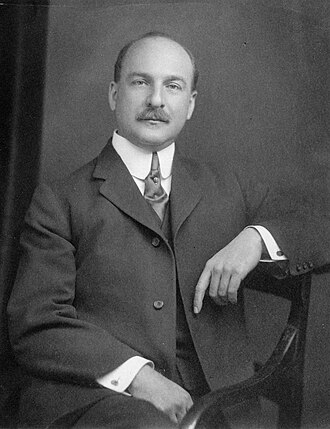
Overview
Pierre Samuel du Pont did not found the company that bears his family's name; it was already a century old when he took it over, and his most lasting invention was not a product at all but a way of running a large enterprise [1]. Trained as a chemist, he became the great-grandson-of-the-founder who imposed system on sentiment, replacing the cousinly, seat-of-the-pants management of a family powder business with consolidated accounting, central financial control, and a single ruthless yardstick he helped pioneer: return on investment [1][4]. The historian Alfred D. Chandler Jr., who with Stephen Salsbury wrote the definitive biography, used du Pont's career as the central case study for how the integrated, professionally managed corporation came into being in America [1].
The transformation began in 1902. When the elderly president Eugene du Pont died and the family's older generation prepared to sell the firm to a competitor, the three young cousins, T. Coleman du Pont, Alfred I. du Pont, and Pierre, bought it instead, in a near-cashless deal that exchanged the assets for $12 million in thirty-year notes while the cousins took a controlling slice of the stock [2][9]. Pierre, installed as treasurer, was the financial brain of the trio. Over the next decade he consolidated the dozens of acquired powder concerns into one corporation, built the accounting and reporting machinery that let headquarters actually see what each unit earned, and recruited a cadre of talented relatives and outsiders, among them his secretary John J. Raskob, who would run American industry for a generation [1][4].
Then the First World War made the company colossal, and made Pierre rich and powerful enough to seize it outright. DuPont supplied roughly 40 percent of the propellant powder fired by the Allied armies; its munitions output, around 12 million pounds a year before the war, rose toward a million pounds a day at peak, and wartime profits ran into the hundreds of millions [3][7]. In February 1915, with Coleman ill and wanting to cash out, Pierre organized a syndicate that bought Coleman's huge block of stock, for himself and a handful of associates rather than for the company, at a moment when the European contracts were sending the shares soaring [2][6]. Alfred I. du Pont, who believed the company itself should have had the chance to buy, sued for breach of trust. The litigation, Du Pont v. Du Pont, dragged through the federal courts in Delaware and ended in Pierre's favor, but it shattered the family: Pierre and Alfred never spoke again [2][6].
Pierre was president of DuPont from 1915 to 1919, and it was in those years that he made the decision that would define the rest of his life and reshape American industry [5][8]. Looking for somewhere to put the war fortune, he and Raskob steered DuPont into the chaotic young automobile business, investing $25 million in General Motors in late 1917 and eventually far more, until DuPont was GM's largest shareholder [5][7]. When the carmaker's founder, William C. Durant, drove the firm to the edge of collapse in the 1920 downturn, Pierre stepped in as president, restored its finances, and, with Alfred P. Sloan Jr., installed the decentralized, multidivisional structure that became the template copied by corporations the world over [1][5].
He spent the back half of his life giving the money away and arranging flowers. He poured millions into rebuilding Delaware's public schools, white and Black alike, financed and led the campaign to repeal Prohibition, and turned a Pennsylvania farm he bought on a whim into Longwood Gardens, one of the great horticultural displays in the world [10][11]. A shy, methodical man who disliked the spotlight, Pierre du Pont left almost no famous sayings and a great many enduring institutions [1][11].
Early Life & Path
He was born January 15, 1870, on the Brandywine near Wilmington, Delaware, the eldest of the eleven children of Lammot du Pont, a gifted chemist and explosives innovator, and named for the family's French émigré patriarch, Pierre Samuel du Pont de Nemours [5][8]. Childhood ended abruptly when he was fourteen: on March 29, 1884, his father was killed in a nitroglycerin explosion at the Repauno works in Gibbstown, New Jersey, a dynamite plant Lammot had founded [8]. As the eldest son Pierre became, in effect, the head of a large fatherless household, a responsibility that pressed an already serious boy toward early gravity and self-reliance [5][8].
He went to the Massachusetts Institute of Technology and took a degree in chemistry in 1890, then returned to the family firm as a young chemist at the Brandywine mills, where he worked on smokeless powder [5][8]. But the old DuPont, run by aging relatives as a clubby partnership, gave an ambitious young man little room. Restless, Pierre left in the 1890s to help run a street-railway and steel venture in Lorain, Ohio, and later in Johnstown, Pennsylvania, the Johnson Company, where he got his real education in modern finance, cost accounting, and corporate organization, and where he first worked alongside John J. Raskob [4][5].
That detour proved decisive. When Eugene du Pont died in 1902 and the senior partners moved to sell the 100-year-old company, it was the thirty-two-year-old Pierre, with his cousins Coleman and Alfred, who had both the nerve and the financial sophistication to keep it in the family, and to remake it into something the founders would not have recognized [1][2].
Career Timeline
- 1870Born January 15 near Wilmington, Delaware, eldest of Lammot du Pont's eleven children [5][8].
- 1884His father Lammot is killed in a nitroglycerin explosion at the Repauno works; Pierre, age 14, becomes head of the household [8].
- 1890Graduates from MIT with a degree in chemistry and joins the family powder mills [5][8].
- 1890sLeaves DuPont for the Johnson Company street-railway and steel ventures in Lorain, Ohio and Johnstown, Pennsylvania, learning modern finance and management [4][5].
- 1902After Eugene du Pont's death, Pierre and cousins Coleman and Alfred buy E. I. du Pont de Nemours for about $12 million in notes; Pierre becomes treasurer [2][9].
- 1903–1904Consolidates dozens of powder firms into one corporation and builds central accounting and return-on-investment controls [1][4].
- 1906Buys the Peirce farm in Kennett Square, Pennsylvania, the future Longwood Gardens, calling it 'an attack of insanity' [11].
- 1915On February 28, organizes a syndicate that buys Coleman's stock for himself and associates; becomes president of DuPont [2][6].
- 1915–1918DuPont supplies roughly 40% of Allied propellant powder; output rises toward a million pounds a day and wartime profits reach the hundreds of millions [3][7].
- 1915–1919Alfred I. du Pont sues in Du Pont v. Du Pont over the stock purchase; the suit is decided in Pierre's favor but ends the cousins' relationship [2][6].
- 1917On December 21, DuPont approves an initial $25 million investment in General Motors and Chevrolet [5][7].
- 1919Steps down as DuPont president (remaining on the board) and turns to Delaware school reform and Longwood [5][10].
- 1920Becomes president of General Motors after William C. Durant's ouster, rescuing the company from financial collapse [1][5].
- 1923Hands the GM presidency to Alfred P. Sloan Jr. after installing the decentralized, multidivisional structure [1][5].
- 1954Dies April 4 in Wilmington, Delaware [5].
Key Ventures & Innovations
The 1902 buyout of E. I. du Pont de Nemours
Rather than let the family sell the century-old firm, the three cousins bought it in a nearly cashless deal, roughly $12 million in thirty-year notes, with the cousins taking control of the new corporation's stock. It was an early leveraged buyout that kept DuPont in the family and put Pierre in charge of its finances [2][9].
Building the modern corporate office (1903–1914)
Pierre consolidated scattered powder companies into one integrated enterprise and, with Raskob and others, built the consolidated accounting, central financial control, and return-on-investment metric that let headquarters manage by the numbers, the organizational machinery Chandler treated as the birth of the modern corporation [1][4].
The First World War munitions boom
DuPont became the arsenal of the Allies, supplying around 40% of their propellant powder; capacity exploded from about 12 million pounds a year to nearly a million pounds a day, and the firm sold well over a billion pounds of explosives, generating enormous profits, and accusations of war profiteering [3][7].
The 1915 stock fight
When Coleman wanted out, Pierre led a syndicate that bought his stock for themselves rather than the company at the height of the war boom. Alfred sued; the courts sided with Pierre in Du Pont v. Du Pont, cementing his control of the corporation but permanently fracturing the family [2][6].
The General Motors investment and rescue
Beginning with $25 million in late 1917 and growing far larger, DuPont's stake made it GM's largest owner. When Durant's overreach nearly sank the carmaker in 1920, Pierre took the presidency, stabilized it, and with Sloan built the divisional structure that became the global model for big-company management [1][5][7].
“I wonder why so many people hang on to their fortune and property instead of having fun watching the distribution process themselves.”
From the Record
“To Pierre S. du Pont must go the credit for the very survival of General Motors and for laying the foundation of its future progress.”
“I have recently experienced what I would formerly have diagnosed as an attack of insanity; that is, I have purchased a small farm.”
“I wonder why so many people hang on to their fortune and property instead of having fun watching the distribution process themselves.”
What Operators Can Learn
- 01
Systems outlast products
Pierre inherited a business that already made the product; what he added was organization, consolidated accounting, central control, and return on investment as the measure of success. The management architecture he built proved more durable and more copied than any powder he ever produced.
- 02
Capital allocation is the founder's real job
The defining move of his career was not making explosives but deciding where the war profits should go. Steering DuPont's fortune into automobiles, and then into rescuing GM, mattered more than any operating decision, and it remade two industries.
- 03
Control has a price, sometimes paid in family
Buying Coleman's stock for himself secured Pierre's grip on the company, but the lawsuit and estrangement from Alfred showed that consolidating power inside a family enterprise can win the firm and lose the kin.
- 04
Decentralize to scale
At GM, Pierre and Sloan resisted the temptation to run everything from the top; the multidivisional structure pushed operating authority down while keeping finance and strategy central. It became the standard answer to the problem of managing a giant, diversified company.
Legacy
Pierre du Pont's deepest mark is structural and largely invisible to the public: the way large companies are run. Through DuPont and then General Motors he helped create the integrated, multidivisional, professionally managed corporation, with central financial controls and return on investment as the governing metric, the model Alfred Chandler used to explain the rise of modern American business, and the system that spread across the industrialized world [1][4]. Sloan, who succeeded him, credited him with nothing less than the survival of GM [8].
His civic legacy is unusually concrete. Convinced that Delaware's schools were a disgrace, he personally financed and drove a sweeping reform, channeling several million dollars through the Delaware School Auxiliary Association to build scores of modern schoolhouses, including a major program for African American children in a segregated state, and he led the national Association Against the Prohibition Amendment that helped end Prohibition [10]. And on a Pennsylvania farm he bought as a lark in 1906, he built Longwood Gardens, the fountains, conservatories, and arboretum that he endowed for the public and that still draw more than a million visitors a year [11].
The shadow on the record is the war. The fortune that funded the schools, the gardens, and the GM rescue came from supplying the explosives of the First World War, and in the 1930s congressional 'merchants of death' inquiries made DuPont a symbol of the arms profiteer [3][7]. Pierre, by then mostly retired, embodied the paradox of his industry, a quiet, philanthropic man whose wealth was inseparable from the machinery of mass killing [1][7].
Further Reading
Pierre S. du Pont and the Making of the Modern Corporation, Alfred D. Chandler Jr. and Stephen Salsbury (1971)
The definitive biography, written with rare access to family and company records, one of the finest business histories ever produced.
Strategy and Structure: Chapters in the History of the Industrial Enterprise, Alfred D. Chandler Jr. (1962)
Chandler's landmark study uses DuPont and GM as central cases for how the multidivisional corporation arose.
My Years with General Motors, Alfred P. Sloan Jr. (1964)
Sloan's classic management memoir, with a firsthand account of Pierre du Pont's rescue and reorganization of GM.
Du Pont: Behind the Nylon Curtain, Gerard Colby Zilg (1974)
A critical, muckraking history of the family and firm, strong on the war profits and the politics of the dynasty.
The du Ponts of Delaware, William H. A. Carr (1964)
A readable narrative history of the family across two centuries, useful background on the cousins' rivalry.
The du Ponts: Portrait of a Dynasty, Marc Duke (1976)
A popular family portrait covering the 1902 buyout, the wartime boom, and the move into General Motors.
Sources
- 1.Alfred D. Chandler Jr. and Stephen Salsbury, Pierre S. du Pont and the Making of the Modern Corporation, Harper & Row, 1971, book
- 2.E. I. du Pont de Nemours & Company (William S. Dutton), Du Pont: The Autobiography of an American Enterprise, Charles Scribner's Sons, 1942, book
- 3.Gerard Colby Zilg, Du Pont: Behind the Nylon Curtain, Prentice-Hall, 1974, book
- 4.Business History Review, The Du Pont Experiments in Scientific Management: Efficiency and Safety, 1911–1919, Cambridge University Press, 1970, journal
- 5.“Pierre Samuel du Pont, Chemical Manufacturing, Business Leader, Philanthropist”, Encyclopaedia Britannica (Britannica Money), 2024
- 6.United States District Court, District of Delaware, “Du Pont v. Du Pont, 251 F. 937 (D. Del. 1918) and 242 F. 98 (D. Del. 1917)”, Federal Reporter, 1917–1918, archive
- 7.“DuPont Company Chronology, 1890–1921”, Hagley Museum and Library, 1921, archive
- 8.Alfred P. Sloan Jr., My Years with General Motors, Doubleday, 1964, book
- 9.“E. I. du Pont de Nemours and Company, Company History”, Encyclopedia.com, 2005
- 10.“(H)our History Lesson: Pierre Samuel Du Pont's Delaware Experiment”, U.S. National Park Service, 2021, archive
- 11.“1906–1916: A Country Place (Longwood Gardens history)”, Longwood Gardens, 2020, archive
Researched and written with Claude + live web search.