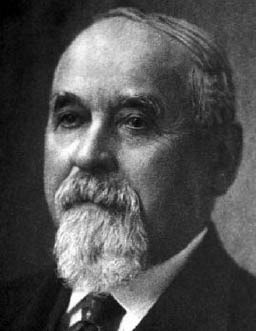
Overview
Philip Lehman inherited a firm built on cotton and ran it for a quarter-century into something entirely new: an investment bank that took the unglamorous merchants of American retailing, mail-order houses, five-and-ten chains, cigar makers, department stores, and floated their shares to the public when no respectable banker would touch them [1][2]. The son of Lehman Brothers co-founder Emanuel Lehman, Philip joined the firm as a partner in the 1880s and took control around 1901, after his father's generation had passed the reins to "a group of restless, eager, ambitious boys" [1]. Of them, Stephen Birmingham wrote, "particularly ingenious when it came to banking was Philip", a man of whom a relative said, "At anything he did, Philip had to win" [1].
The decisive move was an alliance, not an acquisition. Philip's closest friend was Henry Goldman, the dominant partner of Goldman, Sachs & Co.; the two lunched together, toyed with merging into a single house called "Goldman & Lehman," and instead settled on something looser and shrewder, each kept his own firm and family, and they would "go in as partners in underwriting ventures, splitting the profits fifty-fifty" [1]. Goldman, Sachs had the commercial-paper clients; Lehman had the capital and the appetite. Together, from roughly 1906 onward, they co-managed scores of offerings for the merchants who were remaking how Americans bought things [2][3].
The template was set in 1906 with Sears, Roebuck & Co. Julius Rosenwald, who had built the Chicago mail-order house, came to his distant relation Henry Goldman asking for a $5 million loan; Goldman brought him to Philip Lehman, and the two bankers proposed something far more daring, a public stock offering [1]. There had "never before been a mail-order security on the market," and no one knew how the public would take it [1]. The 1906 Sears IPO raised about $40 million, roughly $10 million in preferred and $30 million in common, and to justify the price the bankers leaned not on Sears's modest tangible assets but on its surging sales and earning power, an early use of what would become earnings-based valuation [3]. It worked spectacularly, and a method was born.
What followed was a run of landmark flotations that read like a roster of twentieth-century American commerce: the Underwood typewriter business in 1910, Studebaker in 1911, the F. W. Woolworth Company's five-and-ten empire in 1912, Continental Can in 1913 [1][3]. Birmingham counted "fourteen major securities issues" from the two friends before 1914; Goldman Sachs's own archive tallies the full Lehman–Goldman partnership at well over a hundred offerings across two decades [1][3]. They were, in Birmingham's phrase, "Wall Street's hottest young underwriting team", and Lehman Brothers, a cotton firm a generation earlier, was now a house of issue [1].
The First World War broke the friendship that had built it. Henry Goldman was outspokenly pro-German, refused to back the Anglo-French war loan, quoted Nietzsche, and would not soften his views; in 1917 his own partners accepted his resignation [1][4]. Philip Lehman was "as surprised and distressed about his old friend's feelings" as anyone, and "after an initial meeting on the subject, the two men parted angrily" [1]. The two firms limped on together amid bitter arguments over credit and profits until, around the time Philip handed the firm to his son Robert in 1925, they drafted a formal memorandum of separation, dividing sixty jointly underwritten corporations between them, Goldman, Sachs taking forty-one, Lehman nineteen, with Sears going to Goldman [1].
The rupture, as it turned out, made Lehman Brothers. Forced off the "crutch of Goldman, Sachs," the firm went out hunting business of its own; as one banker put it, the Lehmans "took off their coats, rolled up their sleeves, and went out to get some business... After the dispute they became real go-getters" [1]. By then Philip was largely retired into his other passion, a world-class collection of Italian Renaissance art that his son would one day give to the Metropolitan Museum [5]. He had taken a cotton broker's counting house and left behind one of Wall Street's defining investment banks.
Early Life & Path
Philip Lehman was born November 9, 1861, in New York City, the son of Emanuel Lehman, one of the three Bavarian-immigrant brothers (with Henry and Mayer) whose Montgomery, Alabama, dry-goods store had grown into a cotton-brokerage and then a New York commodities house [1][5]. He came of age inside the tight, intermarried world of German-Jewish banking families that Birmingham would later christen "our crowd," a milieu in which the Lehmans, Goldmans, Sachses, Lewisohns, and Strauses were bound "together with tight matrimonial knots" [1]. In 1884 he married Carrie Lauer; their son, Robert "Bobbie" Lehman, born in 1891, would eventually succeed him at the head of the firm [5].
He joined Lehman Brothers as a partner in the mid-1880s, and when Emanuel Lehman died in 1907 control had already passed firmly to the second generation [1][5]. Philip's first taste of underwriting had been chastening: an early venture tied to the International Steam Pump combination went badly, ran afoul of antitrust concerns, and left the firm wary enough to drop out of underwriting for several years and stick to cotton, coffee, and petroleum futures [1]. But it was "at Philip Lehman's insistence that the firm first began to venture into underwriting, the step that would lead Lehman Brothers into investment banking", a direction he had "often discussed... with his best friend, Henry Goldman" [1].
What set Philip apart was a willingness to bank the merchants his peers disdained. "In an era when no self-respecting private banker would deign to back retail stores, textile manufacturers, clothing or cigarette makers, to say nothing of the indignity of mail-order houses and five-and-ten operations," Birmingham wrote, "Philip Lehman led his cousins directly into such businesses with quickly profitable results" [1]. The snobbery of older Wall Street, where Morgan and the established houses held railroads and steel, left the whole emerging consumer economy unbanked, and Philip simply walked into the opening [2].
Career Timeline
- 1861Born November 9 in New York City, son of Lehman Brothers co-founder Emanuel Lehman [1][5].
- 1884Marries Carrie Lauer; their son Robert, the firm's future head, is born in 1891 [5].
- 1880sJoins Lehman Brothers as a partner as control passes to the founders' sons [1][5].
- 1899Lehman Brothers takes its first steps into investment banking, issuing securities for the International Steam Pump Company [2].
- c. 1901Becomes head of Lehman Brothers, directing the firm until 1925 [2][3].
- 1906With Henry Goldman, takes Sears, Roebuck public in a roughly $40 million offering priced on earning power rather than assets, the first mail-order security on the market [1][3].
- 1906Co-manages the United/General Cigar offering, an early use of price-to-earnings-style valuation for a consumer business [3].
- 1910Lehman and Goldman underwrite an issue for the Underwood (typewriter) Corporation [1].
- 1911The partners bring Studebaker to market [1].
- 1912Float the first shares of the F. W. Woolworth Company, the variety-store chain [1][3].
- 1913Present the Continental Can Company to investors [1].
- 1917Henry Goldman, outspokenly pro-German, resigns from Goldman, Sachs over the Anglo-French war loan; Philip and his old friend part angrily [1][4].
- 1925Hands leadership of Lehman Brothers to his son Robert; the Lehman–Goldman alliance is formally wound down in a memorandum dividing sixty jointly underwritten companies (41 to Goldman, 19 to Lehman) [1].
- 1947Dies March 21 at age 85 at his New York home after a long illness; interred in the Lehman mausoleum at Woodlawn Cemetery [5][10].
Key Ventures & Innovations
The Lehman–Goldman underwriting alliance (c. 1906–1925)
Rather than merge with his friend Henry Goldman's firm, Philip kept Lehman Brothers separate and split underwriting profits with Goldman, Sachs fifty-fifty. The partnership co-managed well over a hundred securities offerings across two decades and made both houses leaders in financing consumer companies [1][3].
The Sears, Roebuck IPO (1906)
When Julius Rosenwald sought a $5 million loan, Lehman and Goldman instead floated Sears stock, about $40 million, roughly $10 million preferred and $30 million common. With no precedent for a mail-order security, they priced it on Sears's surging sales and earning power rather than its assets, pioneering a valuation method that became standard [1][3].
Underwriting consumer America (1910–1913)
The team brought to market a string of household names, Underwood typewriters (1910), Studebaker (1911), F. W. Woolworth's five-and-ten chain (1912), and Continental Can (1913), specializing in helping privately held companies go public, an operation "always heavy with risk" [1][3].
Backing the merchants Wall Street snubbed
While Morgan-era bankers held railroads and steel and looked down on retailers, textile makers, and mail-order houses, Philip Lehman led the firm "directly into such businesses with quickly profitable results," effectively making Lehman Brothers the banker of the emerging retail economy [1][2].
The break that built the bank (1917–1925)
Henry Goldman's wartime pro-German stance ruptured the friendship and, eventually, the firms' alliance. The 1925-era memorandum of separation split sixty companies between them. Forced to compete alone, Lehman Brothers "took off their coats, rolled up their sleeves" and became aggressive go-getters, to its lasting benefit [1].
“At anything he did, Philip had to win.”
From the Record
“In an era when no self-respecting private banker would deign to back retail stores, textile manufacturers, clothing or cigarette makers, to say nothing of the indignity of mail-order houses and five-and-ten operations, Philip Lehman led his cousins directly into such businesses with quickly profitable results.”
“Each house would continue with its specialty, Lehman with commodities, Goldman, Sachs with commercial paper, and the two friends would go in as partners in underwriting ventures, splitting the profits fifty-fifty.”
“I think it's the best thing that ever happened to Lehman because they took off their coats, rolled up their sleeves, and went out to get some business... After the dispute they became real go-getters.”
What Operators Can Learn
- 01
The market everyone ignores is the market worth owning
Philip Lehman banked the retailers, mail-order houses, and chain stores that snobbish Wall Street wouldn't touch. The disdain of competitors was not a warning but an opening, and the whole emerging consumer economy was his to finance.
- 02
Price what a business earns, not just what it owns
The Sears and cigar offerings worked because Lehman and Goldman valued companies on their earning power and growth rather than their tangible assets, an idea that unlocked capital for asset-light merchants and became a permanent feature of finance.
- 03
An alliance can beat a merger
Philip declined to fold his firm into Henry Goldman's. By keeping Lehman Brothers independent and simply splitting underwriting profits, he captured the upside of collaboration without surrendering his house, and kept his options when the partnership later soured.
- 04
Losing a crutch can force you to grow
The bitter split from Goldman, Sachs stripped Lehman of an easy deal pipeline and forced it to originate business on its own. The painful break, in hindsight, was what turned a comfortable family firm into a competitive investment bank.
Legacy
Philip Lehman's quarter-century at the top transformed Lehman Brothers from a cotton-and-coffee commodity house into a full-fledged investment bank, and helped invent the modern business of taking consumer companies public [1][2][3]. The Sears template, valuing a firm on its earning power and floating its shares to a broad public, became one of the foundational techniques of twentieth-century finance, and the names he and Henry Goldman brought to market, Sears, Woolworth, Studebaker, Continental Can, were the scaffolding of America's mass-consumption economy [1][3]. The firm he shaped would underwrite and advise for another eighty years, until its 2008 collapse made "Lehman Brothers" a synonym for financial catastrophe, an ending utterly remote from the cautious, art-loving banker who built its franchise [2]. When Philip died in March 1947, the press remembered him as both financier and art collector, the two halves of a singular life [10].
His second legacy hangs on museum walls. From around 1911 Philip assembled, with advice from connoisseurs including Bernard Berenson, one of the great private collections of Italian Renaissance painting; his son Robert catalogued it, expanded it, and ultimately gave more than a thousand works to the Metropolitan Museum of Art, where the Robert Lehman Wing preserves the family's eye and fortune for the public [5]. Between the bank and the collection, Philip Lehman left a double inheritance, one that financed the American consumer century, and one that adorns it.
Further Reading
"Our Crowd": The Great Jewish Families of New York, Stephen Birmingham (1967)
The classic group portrait of the German-Jewish banking dynasties; its chapters on the Lehmans and Goldmans are the richest narrative source on Philip's alliance with Henry Goldman.
The Last of the Imperious Rich: Lehman Brothers, 1844–2008, Peter Chapman (2010)
A Financial Times journalist's sweeping history of the firm from its Alabama cotton origins to its 2008 collapse, setting Philip's era in the long arc of the house.
Paper Fortunes: Modern Wall Street; Where It's Been and Where It's Going, Roy C. Smith (2010)
A former Goldman partner's history of Wall Street that traces the Goldman–Lehman underwriting relationship and the rise of securities issuance for consumer firms.
Greed and Glory on Wall Street: The Fall of the House of Lehman, Ken Auletta (1986)
Focused on the firm's later internal wars, but valuable for understanding the partnership culture Philip Lehman established and bequeathed to his son Robert.
The Partnership: The Making of Goldman Sachs, Charles D. Ellis (2008)
The definitive history of the other half of the alliance, illuminating Henry Goldman, the Sears deal, and the wartime rupture from the Goldman, Sachs side.
Sources
- 1.Stephen Birmingham, "Our Crowd": The Great Jewish Families of New York, Harper & Row, 1967, ch. "The Rise of a House of Issue", book
- 2.Peter Chapman, The Last of the Imperious Rich: Lehman Brothers, 1844–2008, Portfolio / Penguin, 2010, book
- 3.Baker Library, Harvard Business School, “Investment Banking & Securities Underwriting (Lehman Brothers Collection digital exhibit)”, Harvard Business School, archive
- 4.“Henry Goldman Leaves the Firm (1917)”, Goldman Sachs, Our Firm History, 1917, archive
- 5.Anne Leader, “Art collector and banker Philip Lehman died on 21 March 1947”, Italian Art Society, 2015, archive
- 6.Roy C. Smith, Paper Fortunes: Modern Wall Street; Where It's Been and Where It's Going, St. Martin's Press, 2010, book
- 7.Baker Library, Harvard Business School, “Lehman Brothers Timeline (Lehman Brothers Collection)”, Harvard Business School
- 8.“Landmark IPO Helps an American Retailing Icon Achieve the Next Level of Growth (Sears, Roebuck IPO, 1906)”, Goldman Sachs, Our Firm History, 1906, archive
- 9.“Philip Lehman”, Wikipedia
- 10.“Philip Lehman, Financier & Art Collector (obituary)”, Brooklyn Daily Eagle, March 22, 1947, newspaper
Researched and written with Claude + live web search.