Overview
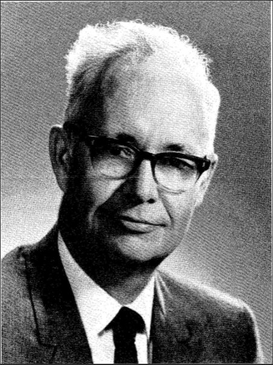
Patrick Eugene Haggerty did not invent the transistor, the silicon transistor, or the integrated circuit, and he was not the founder of the company he is remembered for. What he did was rarer: he saw, earlier and more clearly than almost anyone, that the tiny solid-state amplifier coming out of Bell Labs would remake the world, and he bent a small Dallas geophysical firm around that conviction until it became one of the defining electronics companies of the twentieth century [1][3][6]. When Haggerty arrived in 1945, Geophysical Service, Incorporated, GSI, made instruments to find oil; by the time he stepped down as chairman in 1976, Texas Instruments operated dozens of plants across the globe and had put the first commercial silicon transistor, the first transistor radio, and the first integrated circuit into the historical record [2][3][4].
Haggerty's signature move was to treat technology and the market as a single circuit. In 1952 he paid Western Electric just $25,000 for a license to make germanium transistors, a sum trivial against the wager it represented [2][7]. To create demand for a component nobody yet wanted, he conjured a product: he challenged his engineers in May 1954 to build a working pocket radio within a week, then committed roughly $2 million, close to a tenth of TI's revenue, to commercialize it [4][5]. The Regency TR-1, sold for $49.95 that Christmas, was never meant to make money on radios; it was, in the words of one TI man, "the gimmick" to drive transistor volume up and unit cost down [4][5]. It worked. Some hundred thousand sold in the first year, and the world learned the word "transistor" from a thing in its pocket [4][5].
He was, by the recollection of those who worked for him, a kind of secular prophet. A TI veteran told the historian Chris Miller that Haggerty "seemed like he could predict everything" and that listening to him lay out the future felt "like a messiah speaking from the mountaintop" [1]. He recruited Gordon Teal away from Bell Labs to run TI's research lab, and in 1954 Teal's group produced the first commercial silicon transistor, announced with theatrical flourish at a Dayton conference where Teal reached into his pocket while rival engineers were still calling silicon impossible [2][3][6]. In 1958 Haggerty's lab hired a lanky Kansan named Jack Kilby, who that summer built the first integrated circuit; within months Haggerty was briefing the Pentagon on what it meant [1][3].
Haggerty's other invention was managerial. Convinced that a corporation could be organized to produce innovation deliberately rather than by luck, he built the OST system, Objectives, Strategies, and Tactics, a framework that pushed long-range strategic goals down through every division and separated strategic from operating budgets so that the future was funded on purpose [2][8]. It became one of the most studied management systems of its era, taught in business schools as the archetype of "strategic management" [2][8]. He set TI an audacious public objective, to reach $1 billion in sales, then far beyond, and tied the whole organization to hitting it [2][8].
The same demand-creation instinct drove TI's later coups. In 1965 Haggerty handed Kilby a deceptively simple charge: shrink the electronic calculator until it fit in a coat pocket and could replace the slide rule, a project that produced the prototype that seeded the handheld-calculator industry [3][4]. He pushed TI hard into the military market, betting that the Pentagon would pay to perfect the chip, a bet that paid for the learning curve and helped make TI a pillar of Cold War electronics [1][3].
Haggerty was an engineer who thought like an economist and led like an evangelist, relentless, persuasive, sometimes overbearing in his certainty about where technology was going [1][9]. His monomania about the transistor put a small Texas company at the headwaters of the digital era, and his theories of how to manage innovation outlived him in classrooms and boardrooms long after the germanium had given way to silicon [2][8].
Early Life & Path
He was born March 17, 1914, in the small railroad town of Harvey, North Dakota, the son of Michael Eugene Haggerty, a railroad telegrapher, and Lillian (Evenson) Haggerty [2][6]. The prairie gave the boy two enduring things: the click of the telegraph key, which made electricity feel like a language, and the long-distance reach of radio. As a youth he became a ham radio operator and built a prize-winning set, the kind of hands-on tinkering that, as with so many of his generation of electronics men, pointed straight at a career [2][6].
He entered Marquette University in 1931 on scholarship and graduated summa cum laude from its school of electrical engineering in 1936 [2][6]. His first job was at the Badger Carton Company in Milwaukee, where within a year the young engineer was given responsibility for engineering, manufacturing, and administration, an early sign of the breadth that would mark him [2][6]. During World War II he served as an officer in the U.S. Naval Reserve, working in the Navy's Bureau of Aeronautics in Washington, where he managed the procurement and production of naval airborne electronic equipment and rose to lieutenant [2][6].
It was that wartime work that put electronics, and the men of GSI, in his path. Evaluating contractors for the Navy, Haggerty came to know J. Erik Jonsson and the Dallas geophysical company he helped run, and in November 1945 Haggerty joined GSI as general manager of its newly formed Laboratory and Manufacturing Division [2][6][7]. He was thirty-one, an outsider to oil, and convinced that the company's future lay not in finding petroleum but in building electronics [3][7].
Career Timeline
- 1914Born March 17 in Harvey, North Dakota, son of a railroad telegrapher [2][6].
- 1936Graduates summa cum laude in electrical engineering from Marquette University [2][6].
- 1945Joins Geophysical Service, Incorporated (GSI) in Dallas as general manager of its Laboratory and Manufacturing Division [2][6][7].
- 1951GSI is reorganized as Texas Instruments, Incorporated; Haggerty becomes executive vice president and director [2][6].
- 1952Buys a Western Electric license to make germanium transistors for $25,000, entering the semiconductor business [2][7].
- 1953Recruits Gordon Teal from Bell Labs to lead TI's central research laboratory [2][3][6].
- 1954TI produces the first commercial silicon transistor; Teal announces it in Dayton in May, and the Regency TR-1 transistor radio reaches stores that fall at $49.95 [3][4][5].
- 1958Becomes president of Texas Instruments; that summer the newly hired Jack Kilby builds the first integrated circuit in TI's lab [1][3][6].
- 1965Challenges Kilby to design a calculator small enough for a coat pocket to replace the slide rule [3][4].
- 1966Elected chairman of Texas Instruments [2][6].
- 1967Kilby's team completes the pocket-calculator prototype that seeds the handheld-calculator industry [3][4].
- 1968Receives the IEEE Founders Medal for leadership of the electronics profession; had helped merge the IRE and AIEE into the IEEE in 1962 [2][6].
- 1976Retires as chairman in April after three decades guiding the company [2][6].
- 1980Dies October 1 in Dallas; buried in Calvary Hill Cemetery [2][6][9].
Key Ventures & Innovations
The germanium transistor license (1952)
Haggerty paid Western Electric just $25,000 for the right to make germanium transistors, committing a small geophysical company to a technology whose commercial value was still openly doubted. It was the foundational bet from which everything else flowed [2][7].
The Regency TR-1 transistor radio (1954)
To manufacture demand for transistors, Haggerty pushed engineers to build a pocket radio in a week, then staked roughly $2 million, near a tenth of TI's revenue, on it. Sold at $49.95, about 100,000 moved in the first year. TI did not care about radios; the radio existed to drive transistor volume up and cost down [4][5].
The first commercial silicon transistor (1954)
Haggerty recruited Gordon Teal from Bell Labs, and Teal's group beat the industry to a working silicon transistor, announced in Dayton with Teal pulling samples from his pocket while competitors insisted silicon was hopeless. Silicon's tolerance for heat opened the device to military and industrial use [2][3][6].
Backing Kilby and the integrated circuit (1958)
TI's lab hired Jack Kilby in 1958; that summer he built the first integrated circuit. Haggerty grasped its significance immediately, briefing the Pentagon within months and steering TI toward chips for the military to fund the early learning curve [1][3].
The pocket calculator (1965–1967)
Haggerty asked Kilby's team to shrink the calculator until it fit in a pocket and could replace the slide rule. The resulting prototype helped launch the handheld-calculator market and pushed integrated circuits toward mass consumer use [3][4].
The OST management system
Haggerty engineered the way TI made innovation, building the Objectives-Strategies-Tactics framework that cascaded strategic goals through every division and ring-fenced strategic spending from operating budgets. It became a canonical case study in strategic management [2][8].
“He seemed like he could predict everything. It was like a messiah speaking from the mountaintop.”
From the Record
“Contrary to what my colleagues have told you about the bleak prospects for silicon transistors, I happen to have a few of them here in my pocket.”
“He seemed like he could predict everything. It was like a messiah speaking from the mountaintop.”
“TI's real goal was to make transistors, and the radio was simply the gimmick to get there.”
What Operators Can Learn
- 01
If the market doesn't exist, manufacture it
Nobody was clamoring for transistors in 1954, so Haggerty built the transistor radio to create the demand. He treated a product not as an end but as an instrument for driving a component's volume up and its cost down.
- 02
Price for the future, not the present
Haggerty priced transistors at what they would cost after volume production, not what they cost to make on day one. That forced his own people to chase the learning curve and lured the rest of the industry into a market TI dominated.
- 03
Innovation can be engineered, not just hoped for
The OST system was Haggerty's bet that a company could organize itself to produce breakthroughs on purpose, funding strategy separately from operations so the future never lost the budget fight to the present.
- 04
Find the customer who will pay to perfect the technology
By aiming early chips at the Pentagon, Haggerty let a deep-pocketed customer subsidize the costly early learning curve, then carried the matured technology into consumer markets.
Legacy
Haggerty's largest monument is geographic and industrial: he is a principal reason the semiconductor era has a Texas chapter at all. Under his hand a company that began surveying for oil from the back of a truck became a global electronics power, and the chain of firsts it produced on his watch, the commercial silicon transistor, the transistor radio, the integrated circuit, the pocket calculator, sits at the headwaters of the digital age [2][3][4]. The engineers he backed, Gordon Teal and Jack Kilby, carried home a National Medal of Science and, eventually, a Nobel Prize; the demand-creation logic he practiced became standard doctrine in technology strategy [3][6].
His second legacy is intellectual. The OST system made Texas Instruments a fixture of business-school curricula and helped establish "strategic management" as a discipline; his colleagues at the IEEE remembered him as an engineer-visionary who could persuade an organization to chase a future it could not yet see [2][8][9]. He gave his last lecture on "The Corporation and Innovation" to NASA engineers in February 1980, months before his death, distilling a lifetime's argument that innovation is something institutions can deliberately design for [8].
Haggerty was not without the limits of his certainty, a relentless, sometimes overbearing prophet whose confidence in technology's direction could run ahead of caution, and TI's later stumbles in consumer markets would test the very systems he built [1][9]. But the core conviction held: that the transistor would change everything, and that a company could be built and managed to make that change arrive faster. On both counts, history proved him right [1][3].
Further Reading
The Chip: How Two Americans Invented the Microchip and Launched a Revolution, T. R. Reid (1985)
The classic narrative of Kilby and Noyce and the birth of the integrated circuit, the technology Haggerty's TI brought into the world.
Chip War: The Fight for the World's Most Critical Technology, Chris Miller (2022)
Sweeping geopolitical history of the semiconductor; places Haggerty's TI at the start of the chip's rise and its Cold War significance.
Engineering the World: Stories from the First 75 Years of Texas Instruments, Caleb Pirtle III (2005)
Richly illustrated company history from SMU Press, strong on the founders and the firsts produced under Haggerty.
Management Philosophies and Practices at Texas Instruments Incorporated, Patrick E. Haggerty (1965)
Haggerty in his own words on how to organize a company to innovate, the basis of the OST system.
History of Semiconductor Engineering, Bo Lojek (2007)
Detailed technical history with substantial material on TI, Gordon Teal, and the silicon transistor breakthrough.
Sources
- 1.Chris Miller, Chip War: The Fight for the World's Most Critical Technology, Scribner (Simon & Schuster), 2022, book
- 2.Texas State Historical Association, “Haggerty, Patrick Eugene (Handbook of Texas)”, Texas State Historical Association, 2019, archive
- 3.T. R. Reid, The Chip: How Two Americans Invented the Microchip and Launched a Revolution, Random House, 2001, rev. ed. (orig. Simon & Schuster, 1985), book
- 4.Caleb Pirtle III, Engineering the World: Stories from the First 75 Years of Texas Instruments, Southern Methodist University Press, 2005, book
- 5.Michael F. Wolff (and IEEE Spectrum staff), The First Transistor Radio: Engineering the Regency TR-1, IEEE Spectrum, 2024, journal
- 6.National Academy of Engineering, “Patrick Eugene Haggerty, 1914–1980 (Memorial Tributes, National Academy of Engineering, Vol. 2)”, National Academy of Engineering / National Academies Press, 1984, archive
- 7.“Texas Instruments (history of the Western Electric germanium license and GSI transition)”, Wikipedia, 2025
- 8.Patrick E. Haggerty, The Corporation and Innovation, Strategic Management Journal, Vol. 2, No. 2, pp. 97–118, 1981, journal
- 9.“Patrick E. Haggerty Dies; Headed Texas Instruments”, The New York Times, October 2, 1980, newspaper
Researched and written with Claude + live web search.