Overview
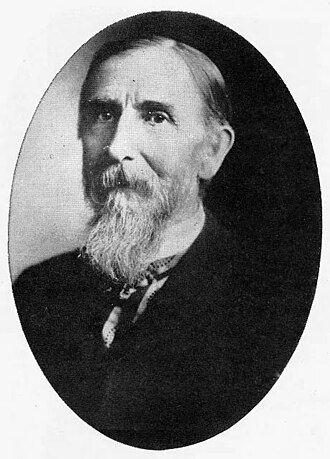
Milton Bradley did not set out to invent an industry. He was a 24-year-old draftsman and patent agent in Springfield, Massachusetts, who had scraped together enough to buy the only lithographic press in the state outside Boston, and his first real hit was a clean-shaven campaign portrait of the Republican nominee Abraham Lincoln in the summer of 1860 [1][7]. Then Lincoln grew his beard. The likeness no longer matched the man, customers demanded their money back, and Bradley, the story his own company always told, burned what remained of the inventory [1][7]. He was, at the threshold of the Civil War, a young printer with an idle press and a failed product.
What he did next created the modern American game business. Borrowing the logic of older European "morality" games but stripping them of overt religion, Bradley laid out a red-and-ivory checkerboard of 64 squares and called it The Checkered Game of Life: a player spun a teetotum, never dice, which smacked of gambling, and steered between squares marked Honesty, Bravery, Perseverance and the snares of Idleness, Disgrace, Gambling and Ruin, racing from Infancy to Happy Old Age [9][4]. He sold it out of a carpetbag on a trip to New York and, by the company's reckoning, moved some 40,000 copies that first winter of 1860–61 [6][7]. He patented the design in 1866 as a "social game" whose purpose, in his own words, was to "forcibly impress upon the minds of youth the great moral principles of virtue and vice" [3].
The war that nearly broke the toy trade made Bradley instead. He packaged compact kits of checkers, chess, backgammon and his own game for soldiers, among the first "travel" games in America, and the orders poured in from the camps [6][7]. By the late 1860s Milton Bradley & Co. was producing dozens of games and amusements, and Bradley personally standardized the rules of croquet for the American market, becoming the first domestic manufacturer of the sets [6][7]. He had backed into being the country's leading game maker.
Then, at the height of his commercial success, Bradley turned much of his energy toward something that lost money for decades. In 1869 he heard the reformer Elizabeth Peabody lecture on Friedrich Froebel's new "kindergarten," and he was converted [6][8]. His firm published Edward Wiebe's The Paradise of Childhood (1869), the first English-language manual of Froebel's method, and began manufacturing the "gifts", the precise wooden blocks, balls and sticks of the kindergarten curriculum [8]. Bradley grew so absorbed in the color science of children's education that he authored his own books, including Color in the Kindergarten (1893), and fixed on six standard pigments, red, orange, yellow, green, blue, violet, that shaped American children's art supplies for generations [6][7].
The kindergarten line and its magazines bled cash year after year; by the company's own account, his partner George Tapley quietly bought out the other shareholders so Bradley could keep the unprofitable educational work alive [7]. It is the central paradox of the man: the founder of a great consumer-products company who treated his most beloved product line as a charitable mission, and who ran a famously informal shop where workers called him by his first name and he might stop the machines for an hour to nap [8]. When he died in 1911, Milton Bradley & Co. was an institution, but its founder was remembered as much for the kindergartens he equipped as for the games he sold [5][6].
Early Life & Path
Milton Bradley was born on November 8, 1836, in Vienna, Maine, the only child of Lewis Bradley, a carpenter and sometime factory hand, and Fannie (Lyford) Bradley [2][8]. His was a household that turned learning into play, his father is said to have taught arithmetic with apples and pebbles, and the family loved chess and checkers while frowning on anything that smacked of gambling, a scruple that would later show up in the design of his most famous game [8]. The potato blight and hard times drove the family around New England through the 1840s before they settled near Lowell and then Haverhill, Massachusetts [8].
Bradley enrolled at the Lawrence Scientific School in Cambridge to study technical drawing but could not afford to finish [2]. He drifted through jobs that all turned on his pencil and his head for mechanism, drawing instructor, stationery salesman, patent-agent's witness (his name appears on patent papers as early as 1854), and finally draftsman at the Wason Manufacturing Company, which built railroad cars, at about $7.50 a week [2][8]. In 1858 he designed a luxury observation car for the Pasha of Egypt; the commission steadied his finances, and the lithographed print he was given of his own design awakened his fascination with the process [2][8].
He went to Providence to learn color lithography, and around 1860 set up a shop in Springfield with the only such press in Massachusetts outside Boston [1][7]. He was newly married, to Vilona Eaton, in November 1860, and freshly in business when the Lincoln portrait failed and pushed him, almost by accident, toward games [2][7].
Career Timeline
- 1836Born November 8 in Vienna, Maine, the only child of Lewis and Fannie Bradley [2][8].
- 1856Settles in Springfield, Massachusetts, working as a draftsman at the Wason railroad-car works [2][8].
- 1858Designs a luxury observation car for the Pasha of Egypt; a lithograph of the design sparks his interest in printing [2][8].
- 1860Sets up Springfield's first color lithography shop; prints a clean-shaven Lincoln portrait that is ruined when Lincoln grows his beard [1][7].
- 1860Devises The Checkered Game of Life and sells roughly 40,000 copies over the first winter [6][7].
- 1861–1865Sells compact game kits to Union soldiers, among the first American 'travel' games, sustaining the firm through the Civil War [6][7].
- 1866Patents the Checkered Game of Life (U.S. Patent No. 53,561) as a 'social game' to teach 'virtue and vice' [3].
- 1860sBecomes the first American manufacturer of croquet sets and standardizes the game's rules [6][7].
- 1869Hears Elizabeth Peabody lecture on Froebel; publishes Wiebe's The Paradise of Childhood and begins making kindergarten 'gifts' [6][8].
- 1882Moves the company into expanded quarters on partner George Tapley's premises in Springfield [6].
- 1893Publishes his own treatise Color in the Kindergarten, part of his campaign to standardize color in children's education [6][7].
- 1906Retires from active management of the company [8].
- 1911Dies May 30 in Springfield at age 74; obituaries run in the Springfield Weekly Republican and Kennebec Journal [5][8].
- 1920After Bradley's death, the company absorbs the game line of McLoughlin Brothers, long the largest U.S. game maker [6].
Key Ventures & Innovations
The Checkered Game of Life (1860)
A secular 'morality' game on a 64-square checkerboard, played with a teetotum rather than dice to avoid the taint of gambling. Players steered between virtues and vices from Infancy to Happy Old Age; it sold about 40,000 copies its first winter and founded an industry [9][6][7].
Civil War soldiers' game kits
Compact, pocketable bundles of checkers, chess, backgammon and his own game, sold to Union troops in camp, among the first 'travel' games in America, and the orders that carried the firm through the war [6][7].
American croquet (mid-1860s)
Bradley became the first U.S. manufacturer of croquet sets and wrote a rulebook that helped standardize the game in America, riding the lawn-game craze of the postwar years [6][7][10].
Kindergarten materials and publishing (from 1869)
Converted by an Elizabeth Peabody lecture, Bradley published The Paradise of Childhood and manufactured Froebel's 'gifts.' The line lost money for years; partner George Tapley bought out other shareholders so Bradley could continue it [8][7].
Color standardization and education books
Bradley authored Color in the Schoolroom (1890), Color in the Kindergarten (1893) and Elementary Color (1895), and fixed six standard pigments that long defined American children's art supplies [6][7].
“it is intended to forcibly impress upon the minds of youth the great moral principles of virtue and vice.”
From the Record
“in addition to the amusement and excitement of the game, it is intended to forcibly impress upon the minds of youth the great moral principles of virtue and vice.”
“The game represents, as indicated by the name, the checkered journey of life ... to gain on his journey that which shall make him the most prosperous, and to shun that which will retard him in his progress.”
What Operators Can Learn
- 01
A dead product can be the seed of a better business
The ruined Lincoln print left Bradley with an idle press and no plan. Instead of chasing the next portrait, he asked what an idle press and a restless winter market actually wanted, and invented a category rather than a product.
- 02
Design around your customers' values, not just their wants
Bradley's refusal to use dice, substituting a teetotum to dodge the stigma of gambling, was a moral and a marketing decision at once. Knowing the scruples of mid-century American families was as important as the gameplay.
- 03
A crisis can be a distribution channel
The Civil War emptied stores and froze the toy trade, but Bradley saw idle soldiers, not a dead market. The same upheaval that should have killed him became his first national audience.
- 04
Mission and margin can coexist if someone protects the mission
The kindergarten line lost money for decades; it survived only because a partner shielded it from the shareholders who would have killed it. Conviction needs an institutional sponsor, or the spreadsheet wins.
Legacy
Milton Bradley is fairly called the father of the American board game. The Checkered Game of Life seeded a company that, across a century and a half, gave the country The Game of Life, Candy Land, Operation, Twister, Battleship and Chutes and Ladders, dominating American play until Hasbro absorbed the firm in 1984 [6][7]. He pioneered the idea that a game could be a mass-manufactured consumer product, nationally branded and sold, and his early travel kits and croquet rulebooks established conventions the trade still follows [6][10].
His quieter legacy may be the larger one. By bankrolling Froebel's kindergarten in America, publishing its first English manual, manufacturing its 'gifts,' subsidizing its magazines, and standardizing the colors children learned with, Bradley helped install the kindergarten as an ordinary feature of American childhood [6][8]. He treated that work less as a market than as a calling, sustaining it through years of loss [7][8].
The combination is what makes him unusual among Gilded Age founders: a successful manufacturer who ran an informal, strike-free shop, gave his name to a great commercial enterprise, and yet is remembered as much for the children he taught to play as for the games he sold them [5][8].
Further Reading
It's All in the Game, James J. Shea, as told to Charles Mercer (1960)
The authorized life of Bradley by a later company president, published for the firm's centennial, the closest thing to a primary account of the founder.
The Milton Bradley Story, James J. Shea (1973)
Shea's company-focused history, tracing the firm from the failed Lincoln print to the modern toy giant.
Games: American Boxed Games and Their Makers, 1822–1992, Bruce Whitehill (1992)
The standard reference on the American game industry, with detailed context on Milton Bradley & Co. and its rivals.
The Paradise of Childhood: A Practical Guide to Kindergartners, Edward Wiebe (1869)
The first English-language manual of Froebel's kindergarten method, published by Bradley, and the spark for his educational mission.
Color in the Kindergarten, Milton Bradley (1893)
Bradley in his own words on color and early education, a window into the cause he cared about more than games.
Sources
- 1.James J. Shea, as told to Charles Mercer, It's All in the Game, G. P. Putnam's Sons, 1960, book
- 2.James J. Shea, The Milton Bradley Story, Milton Bradley Company, 1973, book
- 3.Milton Bradley, “U.S. Patent No. 53,561, "Social Game" (The Checkered Game of Life)”, United States Patent Office (via Google Patents), 1866, archive
- 4.“Game: The Checkered Game of Life (object record)”, National Museum of American History, Smithsonian Institution, 1860s, archive
- 5.“Milton Bradley obituary”, Springfield Weekly Republican (Springfield, Mass.), June 1, 1911, newspaper
- 6.“Milton Bradley Company (company history)”, Encyclopedia.com / International Directory of Company Histories, 2024
- 7.“Milton Bradley Makes His Fortune on Life's Checkered Past”, New England Historical Society, 2023
- 8.“Milton Bradley, Game Designer and Education Champion (subject guide)”, Raymond H. Fogler Library, University of Maine, 2023, archive
- 9.American Enterprise Institute, The Game of Life, AEI, 2019, journal
- 10.Bruce Whitehill, Games: American Boxed Games and Their Makers, 1822–1992, Wallace-Homestead Book Co., 1992, book
Researched and written with Claude + live web search.