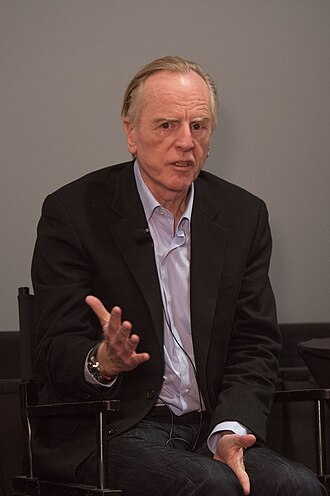
Overview
John Sculley was not a technologist, and he never pretended to be one. He was a marketer of singular gifts, the man who had turned a blind taste test into a national obsession and made Pepsi a credible rival to Coca-Cola, when Steve Jobs courted him away to Apple in the spring of 1983 [1][4]. He arrived as Apple's first professional outside chief executive, a 44-year-old corporate aristocrat dropped into a band of Silicon Valley insurgents, charged with making the Macintosh a mass-market machine the way he had made Pepsi a mass-market drink [1][2].
The pitch that lured him became the most famous recruiting line in business history. After Sculley hesitated over leaving a half-million-dollar Pepsi presidency, Jobs, by Sculley's own account, dropped his head, paused, and asked: do you want to spend the rest of your life selling sugared water, or do you want a chance to change the world [3][1]. Apple paid lavishly to close the deal, a million-dollar salary, a million-dollar signing bonus, a million-dollar golden parachute, and 350,000 shares, and for two years Jobs and Sculley were inseparable, photographed as a "dynamic duo" and finishing each other's sentences [1][4][2].
Then it came apart. As Macintosh sales lagged through early 1985 and Jobs's behavior grew, in Sculley's word, impossible, the relationship curdled into a fight for control of the company [2][7]. In a marathon board confrontation on April 10–11, 1985, Sculley forced the issue: remove Jobs from running the Macintosh division, or find a new CEO [7][8]. The board sided with the executive it had recruited Jobs's own pitchman to be. Jobs was stripped of operating authority and, that September, resigned to found NeXT, nursing a grievance he never fully released [1][7]. Sculley later wrote that he had given Jobs more power than he had ever had and "created a monster" [2].
For a time, the gamble looked vindicated. Through the late 1980s the Macintosh, buoyed by desktop publishing, the LaserWriter, and Sculley's marketing machine, drove Apple's revenue from roughly $800 million in 1983 toward nearly $8 billion a decade later, and 1989–1991 is still remembered as the Mac's "first golden age" [1][6]. Sculley was crowned Silicon Valley's highest-paid executive and feted as a management seer; his 1987 memoir Odyssey was a bestseller and its closing "Knowledge Navigator" video imagined a talking digital assistant decades before Siri [4][6].
But the same restlessness that produced the visionary videos produced the Newton, the handheld "personal digital assistant" Sculley himself named and championed, which he demonstrated to enormous fanfare in 1992 and shipped, late and underbaked, in 1993 [9][1]. As a brutal PC price war crushed Apple's once-fat margins, profits collapsing from over $500 million to under $90 million in fiscal 1993, the board that had backed Sculley against Jobs turned on him in turn [6][5]. In June 1993 he was pushed out as CEO in favor of Michael Spindler; by October he was gone from the company entirely [5][1].
The verdict on Sculley has softened with time but remains divided. Mike Markkula, the investor who hired both Jobs and Sculley, rendered the standard judgment: Sculley did a great job for five years, then "took his eye off the ball" [6]. He grew Apple tenfold and kept it independent and profitable through the era of IBM dominance; he also bet on the wrong chip, shipped the wrong gadget at the wrong time, and is forever the man who exiled the founder who would one day return to make Apple the most valuable company on earth [1][6].
Early Life & Path
John Sculley III was born April 6, 1939, in New York City, into Eastern establishment comfort, the son of John Sculley Jr., a Wall Street lawyer, and Margaret Blackburn Smith, a horticulturist; part of his boyhood was spent in Bermuda before the family returned to New York [1]. He was sent to St. Mark's School in Southborough, Massachusetts, then to Brown University, where he took a degree in architectural design, a training in form and proportion that he later credited for his eye as a marketer [1]. He capped his education with an MBA from the Wharton School of the University of Pennsylvania, class of 1963 [10].
His genius revealed itself not in engineering but in persuasion. He joined the Pepsi-Cola division in 1967 as a trainee and rose with startling speed, becoming, by his early thirties, the youngest marketing vice president in the company's history [1]. He pushed consumer research that produced new packaging, including the two-liter bottle, and in the mid-1970s engineered the campaign that defined him: the Pepsi Challenge, a public blind taste test that dared Coke drinkers to admit they preferred Pepsi [1][4]. The stunt seized market share and made Sculley a marketing celebrity; in 1977 he was named the youngest president in Pepsi's history [1].
It was that reputation, a proven mass-marketer who understood American consumers as instinctively as Apple's founders understood circuit boards, that brought Steve Jobs and Mike Markkula to his door in 1982 and 1983, hunting for the seasoned executive their young company so plainly lacked [1][2]. Sculley had never touched the technology business. That, to Jobs, was almost beside the point; what Apple needed was someone who could make people want a computer the way they wanted a cola [3][1].
Career Timeline
- 1939Born April 6 in New York City, son of a Wall Street lawyer; spends part of his childhood in Bermuda [1].
- 1963Earns an MBA from the Wharton School, University of Pennsylvania, after a Brown degree in architectural design [10][1].
- 1967Joins the Pepsi-Cola division as a trainee, soon becoming its youngest-ever marketing vice president [1].
- 1975Launches the Pepsi Challenge blind taste-test campaign, vaulting Pepsi against Coca-Cola [1][4].
- 1977Named the youngest president in Pepsi-Cola's history [1].
- 1983Recruited by Steve Jobs; on April 8 becomes Apple's CEO with a roughly $1M salary, $1M signing bonus, and 350,000 shares [1][4].
- 1984Oversees the launch of the Macintosh and the landmark '1984' Super Bowl commercial [1][2].
- 1985In an April 10–11 board showdown, forces Steve Jobs out of operating control; Jobs resigns that September to found NeXT [7][8][1].
- 1987Publishes the bestselling memoir 'Odyssey: Pepsi to Apple,' closing with his 'Knowledge Navigator' vision of a digital assistant [4][6].
- 1987Named Silicon Valley's highest-paid executive amid the Macintosh's commercial ascent [1].
- 1989–1991Apple enjoys the Macintosh's 'first golden age'; revenue climbs toward $8 billion [1][6].
- 1992Coins the term 'personal digital assistant' and demonstrates the forthcoming Apple Newton [9][1].
- 1993Ships the Newton MessagePad in August; pushed out as CEO in June as profits collapse in a PC price war [9][6][5].
- 1993Resigns from Apple's board on October 15, ending his decade at the company [1][5].
Key Ventures & Innovations
The Pepsi Challenge (1975)
Sculley's signature marketing coup at Pepsi: a public blind taste test that dared consumers to admit they preferred Pepsi to Coke. It captured share, defined the 'cola wars,' and built the reputation that made Apple come looking for him [1][4].
The Macintosh marketing machine
Sculley raised the Mac's price to fund an aggressive launch, including the famous '1984' Super Bowl ad, and through the late 1980s harnessed desktop publishing and the LaserWriter to drive Apple's revenue from roughly $800 million to nearly $8 billion [1][2][6].
Ousting Steve Jobs (1985)
When the partnership broke down over the failing Macintosh business and control of the company, Sculley issued the board an ultimatum on April 10–11, 1985: strip Jobs of operating power or replace the CEO. The board backed Sculley; Jobs left to found NeXT [7][8][1].
The Knowledge Navigator (1987)
A concept video accompanying his memoir Odyssey, depicting a voice-driven, agent-like digital assistant on a tablet, a strikingly prescient vision of computing that anticipated tablets and voice assistants by a generation [4][6].
The Newton MessagePad (1992–1993)
Sculley coined 'personal digital assistant,' staked his reputation on the handheld Newton, and unveiled it to huge fanfare in 1992. Shipped late in 1993 with unreliable handwriting recognition, it became an emblem of overreach, though its DNA echoes in later mobile devices [9][1].
“I had given Steve greater power than he had ever had and I had created a monster.”
From the Record
“Steve's head dropped as he stared at his feet. After a weighty, uncomfortable pause, he issued a challenge that would haunt me for days. "Do you want to spend the rest of your life selling sugared water, or do you want a chance to change the world?"”
“I had given Steve greater power than he had ever had and I had created a monster.”
“What makes all of this fun is when you are out on the edge. Sure you have the risk of making mistakes and getting the wind knocked out of you. But then you also have the chance to be around when these really cool things are just starting to happen.”
What Operators Can Learn
- 01
Marketing can build a market but not a soul
Sculley proved a consumer-products virtuoso could grow a tech company tenfold. But Apple's identity was bound up with the founder he removed, and no marketing apparatus could supply the product instinct that left with Jobs.
- 02
The person who recruits you may be the one you have to fight
Sculley was hired by Jobs to be his partner and ended up his executioner. Ambiguous power-sharing between a charismatic founder and a hired CEO is a structural conflict, not a personality clash, and it tends to resolve violently.
- 03
Vision videos are cheap; shipping is expensive
The Knowledge Navigator dazzled and the Newton thrilled the press, but applause for a concept is not a product. Sculley's prescience about the future repeatedly outran his organization's ability to build it on time and on quality.
- 04
Yesterday's margins are not a birthright
Apple's premium pricing funded a decade of growth, then evaporated almost overnight when the PC price war hit. A business model built on fat margins is fragile precisely when it feels safest.
Legacy
John Sculley's decade at Apple is remembered through the long shadow of the man he exiled. Because Steve Jobs returned in 1997 and rebuilt Apple into the most valuable company in history, Sculley is fixed in popular memory as the suit who fired the genius, caricatured in films from Pirates of Silicon Valley to Aaron Sorkin's Steve Jobs, where Jeff Daniels played him as the well-meaning antagonist [1]. Sculley himself came to regret the breach, calling the loss of the friendship a great mistake on his part [5].
Yet the harsher caricature undersells the record. Sculley grew Apple's revenue roughly tenfold, kept it independent and profitable through the years of IBM and clone dominance, and presided over the Macintosh's most influential era, when desktop publishing made the Mac indispensable to a generation of designers and writers [1][6]. He was, for a stretch, the most celebrated manager in technology, and his Knowledge Navigator remains a genuinely prophetic artifact [4][6]. He also bet on the PowerPC over Intel, shipped the flawed Newton, and missed the commoditization that gutted Apple's margins, failures that left the company adrift for the rest of the 1990s [1][6][11].
Markkula's epitaph endures because it is fair: a great first five years, then an executive who lost focus [6]. Sculley's career after Apple, a brief, litigious stint at Spectrum Information Technologies, then decades as a venture investor and serial entrepreneur, never recaptured the altitude [1]. His true legacy is a cautionary one about the marriage of founders and professional managers: the limits of marketing genius in a business ultimately governed by the product, and the price a company can pay when it chooses the manager over the maker [1][2].
Further Reading
Odyssey: Pepsi to Apple, John Sculley with John A. Byrne (1987)
Sculley's own account of the Pepsi years, the Jobs partnership and its rupture, essential primary source and a window onto how he wished to be remembered.
Steve Jobs, Walter Isaacson (2011)
The authorized Jobs biography; its chapters on the Sculley recruitment and the 1985 ouster are the most-read narrative of the relationship.
Return to the Little Kingdom: Steve Jobs and the Creation of Apple, Michael Moritz (2009)
Expanded edition of the first inside history of Apple, rich on the early company culture Sculley joined.
Apple Confidential 2.0: The Definitive History of the World's Most Colorful Company, Owen W. Linzmayer (2004)
A meticulous, fact-checked chronicle of Apple's ups and downs, strong on the Sculley-era products and boardroom drama.
Apple: The Inside Story of Intrigue, Egomania, and Business Blunders, Jim Carlton (1997)
A reporter's deeply sourced account of Apple's 1990s decline, including the price wars and politics that ended Sculley's tenure.
Sources
- 1.“John Sculley”, Wikipedia
- 2.John Sculley with John A. Byrne, Odyssey: Pepsi to Apple, A Journey of Adventure, Ideas, and the Future, Harper & Row, 1987, book
- 3.Walter Isaacson, Steve Jobs, Simon & Schuster, 2011, ch. 11 (the recruitment of Sculley), book
- 4.“Steve Jobs' Quiet Odyssey Doesn't Include Publicity”, The Washington Post, October 18, 1987, newspaper
- 5.“John Sculley Steps Down as Apple CEO”, The Washington Post, June 19, 1993, newspaper
- 6.Mike Wuerthele, “25 years ago, Apple's board of directors pushed out CEO John Sculley”, AppleInsider, 2018
- 7.“Showdown at Apple: John Sculley vs. Steve Jobs”, Mac History
- 8.“April 10, 1985: Sculley Versus Steve Jobs, It's Either Him or Me!”, AppleMatters, 1985, archive
- 9.Harry McCracken, “Apple's Newton MessagePad PDA at Twenty”, TIME, 2012
- 10.Marketing Genius for Pepsi and Apple: John Sculley III, WG'63, Wharton Magazine, University of Pennsylvania, journal
- 11.Owen W. Linzmayer, Apple Confidential 2.0: The Definitive History of the World's Most Colorful Company, No Starch Press, 2004, book
Researched and written with Claude + live web search.