Overview
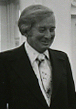
Jay Van Andel was the quieter half of one of the most consequential partnerships in American sales history, the strategist and engineer to Richard DeVos's evangelist. Together the two boyhood friends from the Dutch Reformed enclave of Grand Rapids, Michigan, built Amway, a contraction of "American Way", from the basements of their two houses in 1959 into a multilevel selling empire that, at its 1981 peak, moved $1.2 billion in soap, cosmetics, and household goods through more than a million independent distributors in dozens of countries [4][9]. Where Henry Ford sold a product, Van Andel and DeVos sold a possibility: that any housewife or factory worker could become a capitalist by selling to neighbors and recruiting them to sell in turn [4][9].
The partnership predated the product. Van Andel and DeVos met around 1940 at Grand Rapids Christian High School, where Jay charged Rich a quarter a week to ride to school in his Model A Ford [1][4]. After Army Air Corps service in World War II, they tried a flying school (Wolverine Air Service) and a drive-in restaurant, then in 1948 bought a 38-foot schooner, the Elizabeth, to sail the Caribbean and South America despite barely knowing how to sail, the boat's dried-out hull leaked and she sank off the Cuban coast [1][6]. Rescued, they pressed on to South America by steamer, rail, and plane, an episode they later mythologized as proof that you never quit even when your ship is literally sinking [6].
The real opportunity came back home. In 1949 a cousin introduced them to Nutrilite, a California food-supplement company that paid not only on personal sales but on the sales of recruits, the multilevel model in embryo [1][4]. Operating through their Ja-Ri Corporation (from their first names), they built a Nutrilite organization of some 5,000 distributors by the late 1950s [1][4]. Worried about Nutrilite's stability and internal feuds, in April 1959 they and their top distributors founded the American Way Association and the Amway Sales Corporation to control their own products and rules [1][4]. The first flagship product was a biodegradable concentrate, Frisk, soon renamed L.O.C. (Liquid Organic Cleaner) [4][6].
Growth was explosive: roughly $500,000 in retail sales in 1960, $35 million by 1965, $85 million by 1969 [3]. But the same model that drove the growth drew scrutiny. From 1969 the Federal Trade Commission investigated whether Amway was an illegal pyramid scheme; in a landmark 1979 ruling the Commission held it was not, because distributors made money from real retail sales, not merely from recruiting, protected by buy-back, ten-customer, and seventy-percent rules, while still ordering Amway to stop fixing retail prices and exaggerating distributors' likely earnings [7]. That decision became the legal charter for the entire modern multilevel-marketing industry [7].
Van Andel's public standing peaked as chairman of the U.S. Chamber of Commerce in 1979–1980, a conservative tribune of free enterprise [2][4]. Then came the reckoning that the founders' own memoirs minimize: in 1982 Van Andel, DeVos, and a top executive were criminally indicted in Canada for an elaborate customs fraud, and in November 1983 the corporations pleaded guilty and paid C$25 million, at the time the largest fine in Canadian history, after a scheme of dummy invoices used to underpay import duties between 1965 and 1980 [5][8]. The man who preached the American way had run, in a Canadian court's words, "a premeditated and deliberate course of conduct" [8].
Van Andel spent his last decades giving the fortune away, pouring it into Grand Rapids and into the Van Andel Institute for biomedical research, while Parkinson's disease slowly silenced him [2][10]. He died in December 2004 with a fortune Forbes put above $2 billion, a divisive legacy, and a creed he never abandoned: that wealth was worth making chiefly so that it could be created again and given away [2][9].
Early Life & Path
Jay Van Andel was born June 3, 1924, in Grand Rapids, Michigan, into a tight-knit Dutch Reformed community whose grandparents had emigrated from the Netherlands in 1909 [4][2]. His father, James Van Andel, ran a car dealership; the family worshipped in the Christian Reformed Church, and the twin pillars of Calvinist faith and small-business striving shaped Jay's entire moral vocabulary [4][2]. He attended Grand Rapids Christian High School, where he met Richard DeVos, two years younger, and began ferrying him to school for twenty-five cents a week in his Model A, the first transaction of a sixty-year partnership [1][4].
World War II interrupted everything. Van Andel served as an officer in the U.S. Army Air Corps, training bomber crews; DeVos served too, and both returned to Grand Rapids with the restless ambition of young veterans [2][4]. They went into business together at once, running the Wolverine Air Service flying school and a drive-in restaurant before selling both [1][4]. In 1948 they sank their savings into the schooner Elizabeth and set off to sail the Caribbean and South America, a near-fatal adventure when the vessel went down off Cuba, after which they completed the journey by other means and returned home looking for a business they could build for good [1][6].
That business found them in 1949, when a cousin of Van Andel's introduced the pair to Nutrilite food supplements and its commission-on-recruits selling plan [1][4]. Van Andel, methodical, engineering-minded, the one who drafted the rules and ran the manufacturing, proved the natural complement to the charismatic, platform-speaking DeVos [4][9]. Within a decade the quiet half of the partnership would co-author a wholly new American institution.
Career Timeline
- 1924Born June 3 in Grand Rapids, Michigan, into a Dutch Reformed immigrant family [4][2].
- c.1940Meets Richard DeVos at Grand Rapids Christian High School, charging him a quarter a week for rides [1][4].
- 1940sServes as a U.S. Army Air Corps officer in World War II [2][4].
- 1948He and DeVos buy the schooner Elizabeth; it sinks off Cuba, but they press on to South America [1][6].
- 1949Becomes a Nutrilite distributor with DeVos, building the multilevel selling organization Ja-Ri Corporation [1][4].
- 1959Founds the American Way Association and Amway Sales Corporation in April, from the partners' basements in Ada, Michigan [1][4].
- 1960Amway's first full year reaches roughly $500,000 in estimated retail sales [3].
- 1965Divisions merge into Amway Corporation; sales reach about $35 million [3].
- 1969Sales hit roughly $85 million with about 100,000 distributors; the FTC opens its investigation [3][7].
- 1979The FTC rules Amway is not an illegal pyramid scheme but must stop price fixing and earnings misrepresentation [7].
- 1979–1980Serves as chairman of the U.S. Chamber of Commerce [2][4].
- 1981Amway sales peak at about $1.2 billion with more than a million distributors [9][4].
- 1982–1983Indicted in Canada for customs fraud; the corporations plead guilty in November 1983 and pay a C$25 million fine [5][8].
- 1996Founds the Van Andel Institute for biomedical research in Grand Rapids with his wife, Betty [2][10].
- 2004Dies December 7 in Ada, Michigan, of Parkinson's disease, age 80 [2].
Key Ventures & Innovations
Nutrilite distributorship / Ja-Ri Corporation (1949)
The school they learned the business in. Selling Nutrilite supplements under the Ja-Ri Corporation, Van Andel and DeVos mastered the multilevel model, commissions on both personal sales and the sales of recruits, and built an organization of some 5,000 distributors before founding their own firm [1][4].
Amway Sales Corporation (1959)
Launched from the partners' basements in Ada, Michigan, to give the duo control of their own products and rules. The flagship was the biodegradable concentrate Frisk, renamed L.O.C. (Liquid Organic Cleaner), a real product to anchor the selling plan [1][4][6].
The Amway multilevel selling plan
Van Andel's structural contribution: a system of independent distributors who bought wholesale, sold retail, and earned overrides on the volume of those they sponsored. The 1979 FTC ruling validated it, buttressed by the buy-back, ten-customer, and seventy-percent rules, and made it the template for the entire MLM industry [7][9].
Amway's global expansion
From Canada in 1963 and Hong Kong in 1974, Amway pushed into dozens of countries, with sales peaking near $1.2 billion in 1981 on the backs of more than a million distributors, before the Canadian customs scandal and a 1980s slump checked the momentum [9][4][5].
The Van Andel Institute (1996)
His philanthropic capstone: a Grand Rapids biomedical research institute focused on cancer and neurodegenerative disease, seeded with much of his personal fortune as Parkinson's overtook him, the institutional form of his creed about creating wealth to give it away [2][10][9].
“For me, the greatest pleasure comes not from the endless acquisition of material things, but from creating wealth and giving it away.”
From the Record
“For me, the greatest pleasure comes not from the endless acquisition of material things, but from creating wealth and giving it away.”
“This is more than the history of a corporation, it is a story about the potential of every human who is fortunate enough to live in freedom, who is willing to work hard, and who is not afraid of failure. It is the story of true success.”
“This of course was not a small-type operation or an isolated occurrence, but a premeditated and deliberate course of conduct.”
What Operators Can Learn
- 01
Sell the dream, but anchor it to a product
Amway survived the FTC pyramid inquiry precisely because real goods were retailed to real customers, not because recruiting alone generated income. The aspirational story worked only because there was soap in the box.
- 02
Complementary partners outlast solo founders
Van Andel the methodical engineer and rule-writer paired with DeVos the charismatic evangelist. Neither alone built Amway; the sixty-year partnership, begun with a quarter-a-week carpool, was itself the durable asset.
- 03
A business model is also a legal posture
The rules Van Andel designed, buy-back, ten-customer, seventy-percent, were not bureaucracy but the very features that let the 1979 FTC ruling distinguish Amway from an illegal pyramid. Structure was strategy.
- 04
Preached virtue does not exempt you from the ledger
The same founders who lectured America on integrity and free enterprise ran a deliberate, years-long customs fraud in Canada. The gap between the gospel and the guilty plea is the cautionary half of the legacy.
Legacy
Jay Van Andel's most lasting invention was less a product than a form: the modern multilevel-marketing company, blessed into legality by the 1979 FTC decision that his own firm provoked and won [7]. After Amway, thousands of MLM companies adopted the same architecture of independent distributors, downlines, and overrides, for better and for worse, a structure that has lifted some sellers and ensnared many more in inventory and unmet promises [7][9]. Van Andel also helped make Grand Rapids a redoubt of organized political conservatism; the Van Andel and DeVos fortunes underwrote Republican and free-market causes for decades, a civic and ideological footprint that long outlived him [2].
In his hometown the name is carved into the landscape, the Van Andel Arena, the Van Andel Museum Center, and above all the Van Andel Institute, the biomedical research center he founded in 1996 and endowed with much of a fortune Forbes valued above $2 billion at his death [2][10][9]. Historians and critics render a split verdict that the best account must hold whole: Van Andel was a genuine builder and philanthropist whose model widened the idea of who could be an entrepreneur, and he was a convicted customs fraudster whose company faced enduring questions about whether the dream it sold was, for most distributors, attainable [5][8][7]. He died December 7, 2004, having outlived his wife Betty by months, his voice taken by Parkinson's but his creed intact [2][10].
Further Reading
An Enterprising Life: An Autobiography, Jay Van Andel (1998)
Van Andel in his own words, the founding myth, the Calvinist creed, and the free-enterprise gospel, essential as primary source if read critically.
The Possible Dream: A Candid Look at Amway, Charles Paul Conn (1977)
An admiring early company history, useful for the founding chronology and the texture of distributor culture in Amway's first two decades.
Promises to Keep: The Amway Phenomenon and How It Works, Charles Paul Conn (1985)
Conn's follow-up examining the engine of enthusiasm and growth that powered Amway at its 1980s peak.
Commitment to Excellence: The Remarkable Amway Story, Wilbur Cross and Gordon Olson (1986)
An authorized, illustrated corporate history rich in dates, products, and the founders' partnership.
Amway: The Cult of Free Enterprise, Stephen Butterfield (1985)
The essential dissenting view, a former distributor's critical anatomy of Amway's motivational machinery.
Sources
- 1.Jay Van Andel, An Enterprising Life: An Autobiography, HarperBusiness, 1998, book
- 2.“Amway Co-Founder Jay Van Andel Dies at 80”, The Washington Post, December 8, 2004, newspaper
- 3.Charles Paul Conn, The Possible Dream: A Candid Look at Amway, Fleming H. Revell, 1977, book
- 4.Charles Paul Conn, Promises to Keep: The Amway Phenomenon and How It Works, G. P. Putnam's Sons, 1985, book
- 5.“Amway Corp. and Amway Canada Ltd. were fined $25 million”, United Press International (UPI Archives), November 10, 1983, newspaper
- 6.“Amway founders: Never quit, even if your ship is sinking (the schooner Elizabeth)”, Amway Global Newsroom, 2019, archive
- 7.U.S. Federal Trade Commission, “In the Matter of Amway Corp., Inc., et al., 93 F.T.C. 618 (FTC Decision)”, FTC Commission Decisions, Vol. 93, 1979, archive
- 8.Amway cracks, and pays, Maclean's, November 21, 1983, journal
- 9.Harvard Business School, “Jay Van Andel, 20th Century Great American Business Leaders”, HBS Leadership / Baker Library, n.d.
- 10.“Jay Van Andel, Dutch Americans”, New Netherland Institute, n.d., archive
Researched and written with Claude + live web search.