Overview
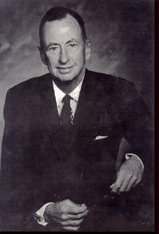
James Spencer Love did not inherit a mill so much as inherit a problem. The grandson of a Gastonia textile pioneer but the son of a Harvard mathematics professor, he came south in 1919 as an outsider, a Cambridge-born, Harvard-trained ex-Army major, to take over a small, struggling cotton operation his family controlled [1][2]. What he built from that beginning was not a bigger cotton mill but a new kind of company: by his death in 1962, Burlington Industries was "the largest textile company in the world," the 48th largest corporation in the United States, with sales of $913 million and some 62,000 employees in 18 states and 7 foreign countries [1][4].
The pivot that made it possible came in 1923. Convinced he could do better starting fresh than nursing the obsolete Gastonia plant, Love secured a $250,000 loan from the Burlington, North Carolina, Chamber of Commerce, a town hungry to revive mills abandoned by the declining Holt family dynasty, sold off his Gastonia assets, and on November 1, 1923, agreed to incorporate a new company [1][3][5]. Burlington Mills opened in 1924 with 200 employees in a single building, and almost immediately Love's first products, flag cloth, bunting, curtain scrim, proved unsellable [3][5]. The company was failing again before it had properly begun.
Love's escape was rayon. Originally sold as "artificial silk," rayon was the only synthetic fiber then available, and most American manufacturers treated it with suspicion [3][5]. Love, a relentless experimenter, gambled on it. His mill wove an experimental lot of viscose rayon into a crinkled cloth and seamed it into full-width bedspreads, a product crude by later standards but cheap, novel, and a hit in the post-war fashion boom [5][6]. By 1935 Love ran the largest rayon-weaving operation in the United States [2][6]. He had found the lever Henry Ford found in the Model T: a single product category, ridden relentlessly, that let a small firm outgrow giants.
The Depression, which gutted the cotton-textile South, became Love's opportunity. While competitors closed, he bought their shuttered mills cheap and re-equipped them with looms that could run rayon, stitching dozens of plants into one expanding enterprise [1][2]. In 1929 he broke with the industry's habit of selling through New York commission houses and opened his own sales office, determined to build a brand that buyers would demand by name [2][7]. In 1937 he reorganized roughly 22 to 30 plants into the Burlington Mills Corporation, with sales near $25 million, and listed the company on the New York Stock Exchange [1][2][5].
What truly distinguished Love was structure, not just scale. As the business sprawled across ribbons, hosiery, draperies, carpets, and apparel fabrics, he adopted a decentralized, multidivisional organization, each product run as its own division with its own distribution, long before most textile men thought in those terms [2]. The 1955 renaming to Burlington Industries advertised the transformation from "mill" to diversified industrial corporation [2]. Love was, in the words of one historian, "a fierce competitor, taking awesome risks," and the risks did not all pay: his attempt to integrate forward into the volatile women's-garment business proved especially dangerous, and he ultimately concluded Burlington should stick to weaving and knitting [2].
He was a hard-driving, restless executive, divorced, twice-married, working from Greensboro, New York, and Palm Springs, who supported a federal minimum wage against his own industry's wishes and asked for clemency for men convicted in a textile strike, even as Burlington built a reputation for keeping unions out of its Southern plants [1][2]. When he died of a heart attack at 65 in January 1962, the company he had improvised out of a cornfield was approaching a billion dollars a year in sales [1][3].
Early Life & Path
James Spencer Love was born July 6, 1896, in Cambridge, Massachusetts, into a family that straddled New England academe and the New South cotton economy [1]. His father, James Lee Love, was a Gastonia, North Carolina, native who became an assistant professor of mathematics and an administrator at Harvard; his mother, Julia Spencer Love, came from a prominent University of North Carolina family, her mother was the writer Cornelia Phillips Spencer [1]. Crucially, his paternal grandfather, Robert Calvin Grier Love, had been a textile pioneer who helped found the Gastonia Cotton Manufacturing Company in 1887 [2]. Spencer Love thus grew up with the cotton mill in his bloodline but the lecture hall at his door.
He was quick and ambitious. After the Cambridge Latin School he took a B.A. at Harvard in three years and added a year at the Harvard Business School [1]. When the United States entered World War I he joined the Army in 1917, served on the headquarters staff of the 78th Division in France, rose to major, and was discharged in 1919, leaving the service, by one account, with about $3,000 in savings [1][7].
Rather than stay north, Love went to the family mill in Gastonia in 1919, reportedly starting low and learning the business from the floor up [1][2]. Within a few years he and his parents bought control of the Gastonia Cotton Manufacturing Company outright with their savings and credit [7]. But Love judged the aging plant a poor foundation. In a decision that defined him, he chose not to prop it up but to liquidate it, carry the best of its machinery to a new town, and begin again, the move to Burlington that would make his name [1][3].
Career Timeline
- 1896Born July 6 in Cambridge, Massachusetts, son of a Harvard mathematics professor with North Carolina textile roots [1].
- 1917Leaves Harvard for the U.S. Army; serves with the 78th Division in France, rising to major [1].
- 1919Discharged from the Army and joins the family's Gastonia Cotton Manufacturing Company in North Carolina [1][2].
- 1923Secures a $250,000 loan from the Burlington Chamber of Commerce and, on November 1, agrees to incorporate a new mill [1][3][5].
- 1924Burlington Mills opens with about 200 employees; early flag cloth and curtain fabrics fail to sell [3][5].
- 1925–1926Pivots to rayon, weaving "artificial silk" bedspreads that rescue the company; opens a second mill in 1926 [5][6].
- 1929Opens his own New York sales office instead of relying on commission houses, building a branded selling strategy [2][7].
- 1933–1935Buys up mills shuttered by the Depression and re-equips them for rayon; by 1935 runs the largest rayon-weaving operation in the U.S. [1][2][6].
- 1937Reorganizes roughly 22–30 plants into Burlington Mills Corporation (sales near $25 million) and lists on the New York Stock Exchange [1][2][5].
- 1942–1945Serves on the War Production Board's Textile, Clothing and Leather Division during World War II [1].
- 1944Marries Martha Eskridge after his 1940 divorce; the partnership runs through the rest of his life [1].
- 1955Renames the firm Burlington Industries to mark its move into nylon, acrylic, polyester, carpets, hosiery, and apparel [1][2].
- 1962Dies January 20 of a heart attack at 65 in Palm Beach, Florida; Burlington is the world's largest textile company, nearing $1 billion in annual sales [1][3][4].
Key Ventures & Innovations
The Burlington gamble (1923–1924)
Rather than nurse the obsolete Gastonia mill, Love liquidated it, took a $250,000 Chamber of Commerce loan from a town eager to fill mills abandoned by the Holt dynasty, and started fresh, opening in 1924 with 200 workers in a single building [1][3][5].
Betting the company on rayon
When his first products went unsold, Love wagered on "artificial silk" that wary competitors avoided, weaving viscose rayon into crinkled, seamed bedspreads. The novelty product saved the firm and, by 1935, made him the largest rayon weaver in America [5][6].
Counter-cyclical acquisition in the Depression
As the cotton-textile South collapsed, Love bought failing mills cheaply and refitted them with rayon looms, converting industry-wide distress into a fast-growing multi-plant enterprise [1][2].
Brand-name selling
Breaking with the industry's reliance on New York commission houses, Love opened his own sales office in 1929 to build a recognized Burlington brand that domestic and foreign buyers would demand by name [2][7].
The decentralized, multidivisional corporation
As Burlington spread into ribbons, hosiery, carpets, draperies, and apparel, Love organized it into semi-autonomous divisions, each running its own manufacturing and distribution, an unusually corporate structure for textiles, signaled by the 1955 rename to Burlington Industries [2].
“In an industry where management usually was described as rigid and conservative, Love would continue to demonstrate a willingness to experiment with new products and ideas.”
From the Record
“He was a fierce competitor, taking awesome risks, diversifying, investing heavily in new technology and new methods to make his mills more efficient and productive, all to keep a half step ahead of a pack in a business that was constantly changing.”
“Burlington Industries was the largest textile company in the world, and the 48th largest U.S. corporation: one that operated in 18 states and 7 foreign countries.”
“Through shrewd product selection, integration, diversification, and a multidivisional structure, Love attempted to make Burlington dominate its industry as major corporations dominated steel, automobiles, and chemicals.”
“During Love's first year in operation (1924) his sales totaled sixty thousand dollars. After turning to rayon weaving in 1927 his sales rose to almost two million dollars; in 1937 he sold over twenty-seven million dollars worth of rayon cloth, bedspreads, and draperies. Burlington was by then the largest company in its industry by far.”
What Operators Can Learn
- 01
Sometimes you start over instead of fixing what you have
Love's defining move was refusing to prop up the failing Gastonia mill. He liquidated it, kept only the best machinery, and rebuilt in a new town, judging that a clean start beat a slow repair.
- 02
Adopt the technology your rivals fear
Rayon spooked most American mill men. Love embraced the very fiber others avoided, and the willingness to be early on a doubted material became the company's whole future.
- 03
Buy when others are forced to sell
The Depression that bankrupted the textile South was Love's growth engine. He acquired shuttered plants cheaply and re-equipped them, turning a downturn into dominance.
- 04
Own the customer, not just the loom
By opening his own sales office and building a brand instead of hiding behind commission houses, Love captured demand directly, a structural edge over commodity competitors.
- 05
Scale needs structure, and not every bet wins
Love's decentralized divisions let Burlington grow without seizing up, but his push into women's garments showed that diversification can also expose you. He learned to retreat to weaving and knitting.
Legacy
Spencer Love's lasting achievement was to prove that a textile maker could be run like a modern industrial corporation. In an industry historians regarded as fragmented, low-margin, and declining, he assembled scale, vertical reach, brand-name marketing, and a decentralized multidivisional structure of the kind associated with steel, autos, and chemicals, and made it the largest textile company on earth [2][8]. Burlington's name became a household word for fabrics, and Love himself was later ranked the single most influential business figure in North Carolina history [1][2].
The inheritance was not all triumph. Burlington's rise rode the rayon revolution that helped industrialize the Piedmont, but the company also exemplified the Southern textile model of keeping unions out, even as Love personally backed a federal minimum wage and sought clemency for jailed strikers [1][2][13]. His philanthropy endured through the Burlington Industries Foundation, the James Lee Love Educational Loan Fund, and the Martha and Spencer Love Foundation, and his name lives on at Elon University's Martha and Spencer Love School of Business [1]. His papers sit in the Southern Historical Collection at UNC-Chapel Hill [3].
The company outlived its founder by decades but not the forces he had ridden in reverse. Global competition and trade liberalization hollowed out American textiles, and in 2001 the colossus Love built filed for bankruptcy; financier Wilbur Ross acquired it in 2004 and folded it into the International Textile Group [4]. The arc from cornfield to billion-dollar giant to bankruptcy is, in its way, the whole twentieth-century story of American manufacturing, and Spencer Love wrote its boldest chapter.
Further Reading
Strategy and Structure in the Textile Industry: Spencer Love and Burlington Mills, 1923–1962 (Business History Review), Annette C. Wright (1995)
The definitive scholarly analysis of how Love built a corporate giant in a fragmented industry through integration, diversification, and a multidivisional structure.
Like a Family: The Making of a Southern Cotton Mill World, Jacquelyn Dowd Hall, James Leloudis, Robert Korstad, et al. (1987)
The landmark social history of the Piedmont textile world Love operated in, essential for understanding the lives behind the looms.
Marketing at Burlington Industries, 1923-1962 (Business and Economic History, vol. 18), Annette Cox (1989)
A focused account of Love's sales machine, the New York office, the rayon numbers, and the Klopman relationship, the source of this profile's hardest figures.
Human Relations in the Industrial Southeast: A Study of the Textile Industry, Glenn Gilman (1956)
A mid-century academic study of Southern textile management and labor, useful context for Burlington's plant culture and anti-union stance.
Dictionary of North Carolina Biography (entry: James Spencer Love), William S. Powell (ed.) (1991)
The authoritative reference biography, concise and document-grounded, with full family, military, and business detail.
Sources
- 1.“James Spencer Love (1896–1962)”, North Carolina History Project encyclopedia
- 2.“James Spencer Love and Burlington Industries”, Textile History, NC State University (College of Textiles)
- 3.“James Spencer Love Papers, 1851–1980 (bulk 1906–1965), Collection #4240”, Southern Historical Collection, Wilson Special Collections Library, University of North Carolina at Chapel Hill, archive
- 4.“Burlington Industries”, NCpedia (State Library of North Carolina)
- 5.William S. Powell (ed.), Dictionary of North Carolina Biography (entry: Love, James Spencer), University of North Carolina Press, 1991, book
- 6.“Rayon Key to Success of Burlington Mills and Spencer Love”, North Carolina Department of Natural and Cultural Resources, 2016
- 7.“NC Business Hall of Fame, James Spencer Love (laureate profile)”, North Carolina Business History (historync.org), archive
- 8.Annette C. Wright, Strategy and Structure in the Textile Industry: Spencer Love and Burlington Mills, 1923–1962, Business History Review, Vol. 69, No. 1 (Spring 1995), pp. 42–79, 1995, pp. 42–79, journal
- 9.Annette Cox, Marketing at Burlington Industries, 1923–1962, Business and Economic History, Vol. 18 (Business History Conference), pp. 160–167, pp. 160–167, journal
- 10.Jacquelyn Dowd Hall, James Leloudis, Robert Korstad, et al., Like a Family: The Making of a Southern Cotton Mill World, University of North Carolina Press, 1987, book
- 11.“J. Spencer Love, 1896–1962 (Highway Historical Marker G-126)”, North Carolina Department of Natural and Cultural Resources, 2023
- 12.Ross Howell Jr., “Burlington Industries Celebrates a Centennial (1923–2023)”, O.Henry Magazine (Greensboro, N.C.), December 2023, newspaper
- 13.Glenn Gilman, Human Relations in the Industrial Southeast: A Study of the Textile Industry, University of North Carolina Press, 1956, book
Researched and written with Claude + live web search.