Overview
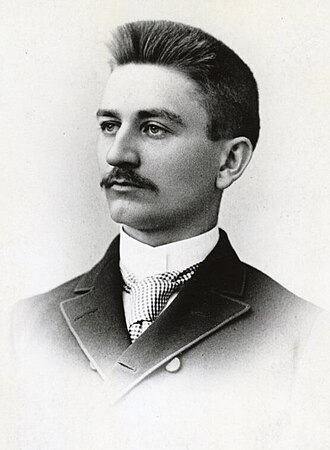
Herbert Henry Dow did not invent the chemical industry, but he very nearly invented an American one. When he began, the United States was a chemical colony of Germany: dyes, drugs, bromine, and dozens of other compounds were sold to U.S. industry by European combines at prices the combines set [4][6]. Dow's lifelong project was to break that dependence with cheaper processes, and his chosen raw material was the most improbable imaginable, the ancient seawater trapped in brine deep beneath central Michigan, a relic of a vanished inland ocean [3][7]. From that brine he extracted first bromine, then chlorine and bleach, then magnesium and a sprawling product line, building The Dow Chemical Company in Midland from a rented flour mill into one of the great industrial enterprises of the twentieth century [2][3].
His breakthrough was chemical and economic at once. Where rivals boiled brine down at enormous fuel cost, Dow's process oxidized it with electricity and blew the bromine out as a gas, a method first executed in Canton, Ohio in 1889 and perfected electrolytically in Midland, where on January 4, 1891 he produced bromine using a secondhand 15-volt generator turned by the steam engine of the flour mill he had rented [3][4][7]. The locals, watching a fresh-faced college graduate ride a battered bicycle into town chasing a fortune in saltwater, called him "Crazy Dow" [4][7]. His first company went bankrupt within a year; his second, the Midland Chemical Company, fired its own founder in spirit by blocking him from using his electrolysis to make chlorine and bleach [4][6]. Dow simply raised new money, formed the Dow Process Company in 1895, and in May 1897 reorganized everything as The Dow Chemical Company [2][6].
Then came the episode that made him a legend in business schools. Germany's bromine producers had combined into a cartel, Die Deutsche Bromkonvention, which fixed the world price at 49 cents a pound and warned Dow to stay out of foreign markets [4][6]. When he sold bromine in England and Japan anyway, the cartel retaliated in 1904–1905 by flooding the U.S. market with bromine at 15 cents a pound, far below cost, to bankrupt him, while holding the European price high [4][6]. Dow's counterstroke was audacious: rather than match the price, he quietly pulled out of the American market, bought the Germans' own cheap bromine through agents, repackaged it, and resold it back into Europe, including Germany itself, at 27 cents [4][6]. The cartel, baffled by the inexplicable demand, kept cutting its U.S. price to 12 and then 10.5 cents, subsidizing the very rival it meant to destroy [4][6].
The bromine war ground on until 1908, when the Bromkonvention sued for peace and divided world markets with the upstart from Michigan [4][6]. The victory did more than save Dow Chemical; it announced that an American chemical company could beat the Germans at their own game, and it became the template for Dow's later assaults on European monopolies in chlorine, dyes, and pharmaceuticals during World War I, when the British naval blockade cut Germany off and Dow rushed to supply phenol for explosives and aspirin, synthetic indigo, and other products the country could no longer import [2][6].
Dow was a relentless, frugal, endlessly curious inventor who personally held more than ninety patents and ran his company as a perpetual laboratory, insisting that the firm justify its existence only by doing things better and cheaper than anyone else [1][2]. He plowed profits into research, scattered new products from a single brine pipeline, and after the war turned magnesium, once a laboratory curiosity, into the lightweight "Dowmetal" alloy whose racing pistons powered the Frontenac that won the 1921 Indianapolis 500 [2][5]. He died in 1930 still president of the company, having transformed a backwoods salt town into the cradle of American industrial chemistry [2][3].
Early Life & Path
Herbert Henry Dow was born on February 26, 1866, in Belleville, Ontario, the eldest child of Joseph Henry Dow, an American inventor and master mechanic who made his living improving small factories in Connecticut and Ohio, and Sarah Bunnell Dow [3][7]. The family soon returned to the United States, settling near Cleveland, and the boy grew up steeped in his father's tinkering, by his own family's account he had built a small steam-driven incubator and other contraptions before he was out of his teens [3]. He inherited, one biography put it, not only his father's inventive genius but better business sense [3].
He enrolled at the Case School of Applied Science in Cleveland, graduating in 1888 [7]. It was a student project that set the course of his life: analyzing brine samples drawn from wells around the country, he found that the brines beneath Canton, Ohio and Midland, Michigan were unusually rich in bromine, then a valuable ingredient in sedative medicines and photographic chemicals, and largely controlled by foreign suppliers [3][4]. Most producers recovered bromine by costly evaporation; Dow saw a cheaper path through chemistry and, soon, electricity [3].
In 1889 he received his first patent for a bromine-extraction process and launched a company in Canton to exploit it; within a year it was bankrupt [4][7]. Undeterred, and backed by men who had seen what he could do, he moved to Midland in 1890, organized the Midland Chemical Company, and rented an old flour mill, rigging a secondhand 15-volt generator to its steam engine [4][7]. On January 4, 1891 he succeeded in producing bromine electrolytically, the "Dow process", a commercial first that would become the foundation of an industry [4][7]. In 1892 he married Grace Anna Ball, a former teacher; they would have seven children, one of whom, Willard, succeeded his father as head of Dow Chemical, while another, Alden, became a noted architect [2].
Career Timeline
- 1866Born February 26 in Belleville, Ontario, eldest child of American parents; the family later settles near Cleveland [3][7].
- 1888Graduates from the Case School of Applied Science in Cleveland; brine-analysis project points him toward bromine [7].
- 1889Receives first patent for a cheaper bromine-extraction process and founds a company in Canton, Ohio that fails within a year [4][7].
- 1890Moves to Midland, Michigan and organizes the Midland Chemical Company in a rented flour mill [4][7].
- 1891On January 4 produces bromine electrolytically, the Dow process, using a secondhand 15-volt generator [4][7].
- 1892Marries Grace Anna Ball; the couple will raise seven children, including future company head Willard Dow [2].
- 1895After backers block his chlorine/bleach work, forms the Dow Process Company to pursue electrolytic chlorine and caustic [4][6].
- 1897Reorganizes the business as The Dow Chemical Company in Midland in May, with dozens of original stockholders [2][6].
- 1904Begins exporting bromine to England and Japan, defying the German Bromkonvention's warning to stay out of foreign markets [4][6].
- 1905The German cartel dumps bromine in the U.S. at 15 cents a pound; Dow secretly buys it and resells it into Europe at 27 cents [4][6].
- 1908The bromine war ends as the Bromkonvention negotiates a settlement dividing world markets with Dow [4][6].
- 1914–1918With Germany blockaded, Dow supplies phenol, magnesium, synthetic indigo, and other products the U.S. could no longer import [2][6].
- 1921Magnesium "Dowmetal" pistons power the Frontenac that wins the Indianapolis 500 [2][5].
- 1930Dies October 15 at the Mayo Clinic in Rochester, Minnesota, still president of Dow Chemical; son Willard succeeds him [1][2][8].
Key Ventures & Innovations
The Dow process for bromine (1889–1891)
Instead of boiling brine to recover bromine, Dow oxidized it chemically and, by 1891, electrolytically, blowing the bromine out as a gas at a fraction of the fuel cost. Proven in a rented Midland flour mill with a secondhand 15-volt generator, it was the commercial foundation of everything that followed [3][4][7].
The Dow Chemical Company (1897)
After his Midland Chemical backers refused to let him make chlorine and bleach, Dow raised new capital, formed the Dow Process Company in 1895, and reorganized it in May 1897 as The Dow Chemical Company, the vehicle for turning one brine field into a vast product line [2][6].
Breaking the Bromkonvention (1904–1908)
When the German cartel dumped bromine in America at 15 cents to bankrupt him, Dow withdrew from the U.S. market, bought the cheap German bromine through agents, and resold it across Europe at 27 cents, turning the cartel's weapon against itself until it sued for peace [4][6].
Wartime import substitution (1914–1918)
The British blockade of Germany handed Dow a market for the chemicals America had been buying from Berlin. The company scaled up phenol for munitions and aspirin, synthetic indigo dye, magnesium, and more, accelerating the birth of an independent U.S. chemical industry [2][6].
Magnesium and Dowmetal
Drawing magnesium from the same Michigan brine, Dow developed lightweight Dowmetal alloys; their racing pistons powered the Indianapolis 500-winning Frontenac in 1921 and pointed toward the metal's later use in aircraft [2][5].
“If we can't do it better than the others, why do it?”
From the Record
“When this 15-cent price was made over here, instead of meeting it, we pulled out of the American market altogether and used all our production to supply the foreign demand.”
“We are absolute dictators of the situation.”
“If we can't do it better than the others, why do it?”
What Operators Can Learn
- 01
Compete on process, not just product
Dow's edge was almost always a cheaper way to make a known chemical. By attacking cost at the level of process, electrolysis instead of evaporation, he could enter markets others thought saturated and win on price.
- 02
Turn a predator's weapon against it
Facing below-cost dumping designed to bankrupt him, Dow refused to fight on the attacker's terms. By buying the cheap bromine and reselling it into the cartel's home market, he made the cartel finance its own defeat.
- 03
One raw material, many products
From a single brine pipeline Dow spun bromine, chlorine, bleach, magnesium, and more. Mastering one cheap feedstock and then asking what else it could yield became the engine of the company's growth.
- 04
Plow profit back into the lab
Dow ran the firm as a permanent research operation, reinvesting earnings into new processes rather than dividends. The discipline of justifying the company only by doing things better and cheaper kept it inventing for decades.
Legacy
Herbert Dow's deepest legacy is structural: he helped end America's dependence on European chemicals and proved that a U.S. firm could out-invent and out-price the German combines that had dominated the field [4][6]. The bromine war is taught to this day as a classic case in industrial strategy and predatory pricing, the rare instance in which the intended victim profited from the attack [4][6]. The methods he pioneered, electrolytic extraction from brine and relentless reinvestment in research, became the operating logic of the modern chemical industry, and the company he built in Midland grew into one of the largest in the world [2][3][9].
The institutions he seeded outlived him. His widow, Grace, founded the Herbert H. and Grace A. Dow Foundation, and the gardens he laid out in Midland endure as Dow Gardens [2]. His son Willard ran the company after his death in 1930, his son Alden became a distinguished architect, and the family name remains attached to Michigan philanthropy and to the global enterprise [2][8]. Among American business founders, Dow stands out as the chemist-entrepreneur, a man who saw a fortune in buried seawater when his neighbors saw only a crank on a broken bicycle [4][7].
Further Reading
Herbert H. Dow: Pioneer in Creative Chemistry, Murray Campbell and Harrison Hatton (1951)
The first full-length biography, tracing Dow's struggles to extract trace elements from brine and to break into world markets.
Growth Company: Dow Chemical's First Century, E. N. Brandt (1997)
The authoritative company history by Dow's longtime corporate historian, drawing on the corporate archives and 150-plus oral histories.
Empire Builders: How Michigan Entrepreneurs Helped Make America Great, Burton W. Folsom (1998)
Includes a vivid chapter on Dow's defeat of the German chemical cartels in bromine, chlorine, and dyes.
The Dow Story: The History of the Dow Chemical Company, Don Whitehead (1968)
An earlier narrative history of the company and its founder, written for a general audience.
Sources
- 1.Murray Campbell and Harrison Hatton, Herbert H. Dow: Pioneer in Creative Chemistry, Appleton-Century-Crofts, 1951, book
- 2.E. N. Brandt, Growth Company: Dow Chemical's First Century, Michigan State University Press, 1997, book
- 3.“Herbert Henry Dow (scientific biography)”, Science History Institute, n.d.
- 4.Burton Folsom, “Herbert Dow and Predatory Pricing”, Foundation for Economic Education (FEE), 2017
- 5.“Magnesium, from the Sea to the Stars”, Science History Institute (Distillations), n.d.
- 6.Burton W. Folsom, Herbert Dow, the Monopoly Breaker, Mackinac Center for Public Policy (Viewpoint on Public Issues, V1997-13), 1997, journal
- 7.“Herbert H. Dow papers, 1872–1930 (formerly held at the Post Street Archives, Midland, Michigan)”, Science History Institute Archives, Philadelphia, 1872-1930, archive
- 8.“Herbert H. Dow, chemical manufacturer and founder of The Dow Chemical Company, dies (obituary)”, The New York Times, October 16, 1930, newspaper
- 9.Don Whitehead, The Dow Story: The History of the Dow Chemical Company, McGraw-Hill, 1968, book
Researched and written with Claude + live web search.