Overview
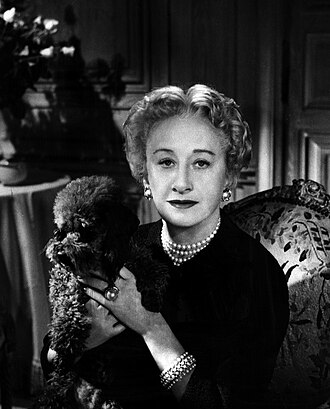
Hattie Carnegie's central paradox is the first thing every biographer notes: the woman whose name defined American elegance for three decades could neither cut a pattern nor sew a seam [1][2]. What she possessed instead was rarer and, in the end, more valuable, an unerring eye, an iron sense of taste, and the merchant's instinct to know exactly what a well-off American woman wanted to be seen in before she knew it herself [1][3]. Born Henrietta Kanengeiser to a poor Jewish family in Vienna, she arrived on the Lower East Side as a child, took the grandest American name she could imagine, Carnegie, after the richest man in the country, and turned a tiny hat shop into a multimillion-dollar empire [2][4].
The business began in 1909 as Carnegie, Ladies' Hatter, a partnership with a seamstress named Rose Roth: Carnegie trimmed the hats and minded the front of the house, Roth sewed the dresses [1][2]. The arrangement contained the whole logic of her career. Carnegie's gift was selection and presentation, never construction; she bought out Roth after World War I and from then on hired the hands that could execute what her eye decreed [1][2]. After 1919 she crossed to Paris season after season, by one count she made some 142 buying trips to Europe before the war shut the Atlantic down, returning with couture by Vionnet, Chanel, and later Dior, which she would either sell as imports or, more profitably, adapt into the look that bore her name [3][4].
That look crystallized into the "little Carnegie suit": trim, beautifully cut, neither girlish nor matronly, the daytime uniform of moneyed American women from the 1930s through the 1950s [1][3]. In 1928 she made the move that defined modern American fashion as an industry: she launched a ready-to-wear line and hired a young costume designer named Norman Norell to run it, taking her clothes out of the custom salon and into the best department stores in the country [1][6]. The talent that passed through her workrooms reads like a roster of twentieth-century American design, Norell, Pauline Trigère, Claire McCardell, James Galanos, Jean Louis, Travis Banton, and the young Pauline Potter, later Baroness Philippe de Rothschild [1][2][6].
By the mid-1940s the enterprise was vast and intricate. A 1945 LIFE profile pegged the "dress business" at $6,500,000 a year, run by a woman who stood four feet ten with flaming red hair and held court over more than a thousand employees, four seasonal wholesale collections, a hat line, a budget "Spectator Sports" label, cosmetics, perfume, and eventually costume jewelry [5][7]. She was, the magazine wrote, "the absolute boss" of it all [5]. She ruled by taste and temper both: designers found her exacting and frequently impossible, and many of the greatest left her after a year or two to make their own names [2][6].
Carnegie's genius was never the needle; it was the brand. She understood decades before the word existed that a name, a consistent standard, and a single coherent look could be sold across dresses, hats, scent, and jewelry alike, that taste itself could be manufactured, packaged, and franchised [2][3]. When she died in 1956 she left a company valued at more than $8 million and, more lasting, a template: the designer label as a business [4][7].
Early Life & Path
She was born Henrietta Kanengeiser in Vienna on March 15, 1886, the second of seven children in a poor Jewish household [2][4]. The family emigrated to New York around 1897 and settled on the crowded Lower East Side, and like countless immigrant children Henrietta went to work young to help support them, first, the story goes, as a messenger at Macy's at thirteen, then trimming hats for a millinery manufacturer in her teens [1][2]. She had almost no formal schooling and never learned to sew well; what she had was an eye, sharpened by a neighborhood shopkeeper who is said to have given the strikingly self-possessed girl free clothes to model his wares [4].
The name came before the fortune. While still a young woman she adopted the surname Carnegie, there was no relation; she simply took the name that to a penniless immigrant stood for the summit of American success, Andrew Carnegie being then the richest man in the United States [2][4]. It was an act of pure self-invention, and a tell: she grasped early that in America a person, like a product, could be branded. "Hattie Carnegie" was her first and most enduring creation [2].
In 1909 she went into business with the dressmaker Rose Roth, opening a little shop billed as Carnegie, Ladies' Hatter on the East Side [1][2]. By 1913 the venture was incorporated, and as it prospered it moved uptown; Carnegie handled hats, display, and customers while Roth made the dresses [2]. When she bought Roth out after the First World War, she committed for good to the division of labor that would make her famous, she would decide, and others would sew [1][2].
Career Timeline
- 1886Born Henrietta Kanengeiser in Vienna, Austria-Hungary, on March 15, into a poor Jewish family [2][4].
- 1897Emigrates with her family to New York, settling on the Lower East Side; goes to work as a child [2][4].
- 1909Opens Carnegie, Ladies' Hatter with seamstress Rose Roth; Carnegie trims hats, Roth sews dresses [1][2].
- 1913The business is incorporated as it prospers and moves uptown [2].
- 1918–1919Buys out Rose Roth after World War I and begins her regular Paris buying trips [1][2][3].
- 1925Acquires a custom retail shop at 42 East 49th Street and becomes a leading importer-adapter of Paris couture [3][7].
- 1928Launches a ready-to-wear line and hires Norman Norell to design it, opening the door to department stores [1][6].
- 1939Wins the Neiman Marcus Award; by this date has made some 142 European buying trips [4][3].
- 1941Norell leaves after a clash over a Gertrude Lawrence costume for 'Lady in the Dark' and joins Traina [6].
- 1942–1945Adapts the 'little Carnegie suit' into the U.S. Women's Army Corps uniform; later honored for the war work [1][4][7].
- 1945LIFE profiles her as 'the absolute boss of a $6,500,000 dress business' with over 1,000 employees [5][7].
- 1948Receives the Coty American Fashion Critics' Award for 'consistent contribution to American elegance' [4][7].
- 1956Dies in New York City on February 22, leaving a fashion empire valued at more than $8 million [4][7].
Key Ventures & Innovations
Carnegie, Ladies' Hatter (1909)
The founding partnership with seamstress Rose Roth on the Lower East Side. Carnegie trimmed hats and ran the front; Roth sewed. After buying Roth out following World War I, Carnegie kept the division of labor for life, she chose and judged, others executed [1][2].
Paris buying and adaptation (1919–1939)
Crossing the Atlantic season after season, by one count 142 trips before the war, she returned with couture by Vionnet, Chanel, and Dior, reportedly holding a multi-year exclusive on Vionnet designs, to sell as imports or, more profitably, 'adapt' into Carnegie-label clothes for American women [3][4].
The ready-to-wear line and Norman Norell (1928)
Hiring the young Norell to design a wholesale ready-to-wear collection moved Carnegie clothes out of the custom salon and into the nation's best department stores, an early model for the designer label as a scalable business [1][6].
The 'little Carnegie suit'
Her signature: a trim, impeccably cut day suit, neither youthful nor matronly, that became a status uniform for affluent American women. It was the visual core of the brand and the basis of her wartime WAC uniform design [1][3][7].
The diversified house: hats, scent, cosmetics, jewelry
By the 1940s and '50s the name spanned four seasonal wholesale collections, a hat line, the budget 'Spectator Sports' label, perfume, cosmetics, and a costume-jewelry company, taste manufactured and franchised across categories under one coherent look [2][5][7].
“There is really no Carnegie Look, there is only the YOU look. My clothes are built to show off the woman who wears them.”
From the Record
“With a 'look,' a little suit and a knowledge of all the angles, Hattie Carnegie has risen from poverty to be absolute boss of a $6,500,000 dress business.”
“There is really no Carnegie Look, there is only the YOU look. My clothes are built to show off the woman who wears them.”
“If you have a dress that is too often admired, be suspicious of it.”
What Operators Can Learn
- 01
You do not have to make the product to own the product
Carnegie could not sew, yet she built one of the great American fashion houses by mastering the parts that actually created value, selection, taste, presentation, and brand, and hiring the hands to execute the rest.
- 02
A name and a consistent standard can be sold across everything
She grasped before the vocabulary existed that one coherent 'look' could be franchised across dresses, hats, scent, cosmetics, and jewelry. The brand, not the seam, was the asset.
- 03
Adapt, don't merely import
Rather than only reselling Paris couture, she translated it for the American woman and put her own label on the result, capturing the margin and the loyalty that pure importing never could.
- 04
Great talent will not stay to be a footnote
Norell, McCardell, Trigère, and Galanos all passed through her workrooms and left to make their own names. Her exacting, often impossible temperament trained an industry, and lost its best people to it.
Legacy
Hattie Carnegie's most durable invention was not a garment but a business form: the American designer label as a brand that could be standardized, diversified, and sold at every price point under a single name [2][3]. Long before Ralph Lauren or Calvin Klein, she demonstrated that a coherent point of view, her 'look', could be extended from a custom salon down through ready-to-wear, hats, perfume, cosmetics, and costume jewelry, and that the founder's taste was the product [2][7]. That she did it as a four-foot-ten immigrant woman who could not cut a pattern only sharpens the point: what she sold was judgment [1][5].
Her workrooms were also a finishing school for American fashion itself. Norman Norell, Claire McCardell, Pauline Trigère, James Galanos, Jean Louis, and others learned the trade under her exacting eye before defining mid-century American style on their own [1][2][6]. When she adapted her trim suit into the Women's Army Corps uniform during the war, she put her aesthetic on the bodies of thousands of American women at once and was honored for it [1][4][7].
When she died in 1956 the company she left was valued at more than $8 million, and her name carried a guarantee of quality that outlived her by twenty years [4][7]. The historians who have since reclaimed her, in Milbank's New York Fashion, in Steele's work on women designers, and in Notable American Women, agree on the verdict: she was the first to run American taste as a serious, scalable enterprise [1][3][8].
Further Reading
New York Fashion: The Evolution of American Style, Caroline Rennolds Milbank (1989)
The defining history of American fashion; situates Carnegie as the pivotal figure who turned taste into an industry.
Couture: The Great Designers, Caroline Rennolds Milbank (1985)
Chapter-by-chapter portraits of the major couturiers and designers, with a sharp account of Carnegie's method and influence.
Women of Fashion: Twentieth-Century Designers, Valerie Steele (1991)
Scholarly treatment of women who shaped twentieth-century fashion, placing Carnegie among the field's pioneering businesswomen.
Notable American Women: The Modern Period, Barbara Sicherman and Carol Hurd Green (eds.) (1980)
The Harvard biographical dictionary; its Carnegie entry is a concise, well-sourced scholarly life.
Hattie Carnegie Jewelry: Her Life and Legacy, Georgiana McCall (2002)
Collector-oriented but biographically rich study of the costume-jewelry arm of the empire and the woman behind it.
Sources
- 1.Caroline Rennolds Milbank, New York Fashion: The Evolution of American Style, Harry N. Abrams, 1989, book
- 2.Caroline Rennolds Milbank, Couture: The Great Designers, Stewart, Tabori & Chang, 1985, book
- 3.Valerie Steele, Women of Fashion: Twentieth-Century Designers, Rizzoli, 1991, book
- 4.Jewish Women's Archive, “Hattie Carnegie”, Jewish Women's Archive, Encyclopedia, 2009, archive
- 5.Russell Maloney, “Profile of Hattie Carnegie ('...absolute boss of a $6,500,000 dress business')”, LIFE magazine (Vol. 19, no. 20), November 12, 1945, pp. 62-70, newspaper
- 6.“Norman Norell (fashion biography), career under Hattie Carnegie, 1928–1941”, Encyclopedia.com, 2018
- 7.“Hattie Carnegie (fashion biography), empire, awards, estate, design philosophy”, Encyclopedia.com, 2018
- 8.Barbara Sicherman and Carol Hurd Green, eds., Notable American Women: The Modern Period, A Biographical Dictionary, Belknap Press of Harvard University Press, 1980, book
- 9.Georgiana McCall, Hattie Carnegie Jewelry: Her Life and Legacy, Schiffer Publishing, 2002, book
Researched and written with Claude + live web search.