Overview
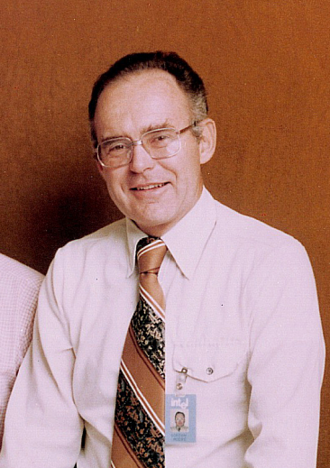
Gordon Moore is the rarest kind of founder: the one who lets the louder men stand in front of the cameras while he quietly decides what the company will actually be. At Intel he was, in the words of his biographers, "Silicon Valley's quiet revolutionary", the technological conscience of a firm whose other two principals, the charismatic Robert Noyce and the relentless Andy Grove, drew far more attention [1][7]. Yet it was Moore who in 1965 sketched the trend line that would govern the entire electronics industry for the next half-century, and Moore who, as president and then chief executive between the mid-1970s and 1987, presided over Intel's transformation from a struggling memory-chip maker into the company that powered the personal-computer revolution [1][3][6].
The idea that bears his name began as a magazine assignment. Asked to predict the future of integrated circuits for the thirty-fifth-anniversary issue of Electronics in April 1965, Moore, then director of R&D at Fairchild Semiconductor, plotted just a handful of data points and drew a straight line through them, observing that the number of components squeezed onto a chip at minimum cost had been roughly doubling every year, and would keep doing so for a decade [3]. He was making a point about economics, not prophecy: cramming more onto silicon made electronics cheaper, and cheaper electronics would go everywhere [6]. The Caltech professor Carver Mead later christened the observation "Moore's Law," and it hardened from a forecast into a self-fulfilling industrial roadmap that the whole sector organized itself to obey [1].
In July 1968 Moore and Noyce walked out of Fairchild, for the second time in their careers leaving an employer to build something new, and incorporated a company first filed as N M Electronics and quickly renamed Intel, for "integrated electronics" [4]. The financier Arthur Rock raised $2.5 million in convertible debentures almost on the strength of the two founders' names alone, and their first employee was Grove [4]. The bet was on semiconductor memory replacing the magnetic cores then used in computers; Intel delivered, but its most world-changing product arrived almost by accident in 1971, when engineers turned a Japanese calculator contract into the 4004, the first commercial microprocessor, a general-purpose computer on a single chip [1].
Moore's defining hour as a leader came not in a moment of triumph but of crisis. By the mid-1980s Japanese manufacturers had turned the DRAM memory business, Intel's founding product line, into a brutal commodity bloodbath, and Intel was hemorrhaging money [5]. In one of the most famous conversations in business history, Grove asked Moore what a new CEO brought in to replace them would do; Moore answered without hesitation that he would get Intel out of memories [5]. The two men, in effect, fired and rehired themselves, abandoned the business they had founded the company to pursue, closed plants and cut roughly a third of the workforce, and staked everything on microprocessors [5]. It was wrenching and it was right: by 1987 Intel was profitable again and on its way to dominating the brains of the PC era [5][6].
Moore stepped down as chief executive in 1987, handing the title to Grove while remaining chairman, and devoted his later decades to a second act as one of the most consequential philanthropists of his generation [6][7]. The Gordon and Betty Moore Foundation, endowed in 2000 with billions in Intel stock, has since given away more than five billion dollars to scientific research, environmental conservation, and the San Francisco Bay Area [6]. When he died in 2023 at ninety-four, the obituaries reached for superlatives, but Moore himself never lost the self-deprecating wonder of a man who called himself an "accidental entrepreneur" [6][8].
What made Moore extraordinary was the combination of a deep technologist's judgment with the temperament of someone who genuinely did not need to be the loudest person in the room [1][7]. He understood silicon at the molecular level and the economics of manufacturing at the spreadsheet level, and he trusted a hand-drawn line on a log scale enough to bet a company, and an industry, on it [1][3].
Early Life & Path
Gordon Earle Moore was born on January 3, 1929, in San Francisco and spent his first years in Pescadero, a tiny coastal farming village on the San Mateo Peninsula where his family had deep roots [1][9]. His father, Walter Harold Moore, was a lawman, a constable and later undersheriff of San Mateo County, and in 1939 a promotion moved the family inland to Redwood City [9]. Moore was, by his own account and his biographers', a quiet and unshowy boy, more comfortable with a problem than a crowd, a disposition that would never really leave him [1].
The pivotal gift arrived around age eleven: a neighbor's chemistry set that turned a backyard shed into a homemade laboratory, where the future microchip pioneer happily manufactured small quantities of explosives and nitroglycerin and turned them into fireworks [1][9]. The thrill of making things react settled his vocation early. He studied at San José State College and then the University of California, Berkeley, where he earned a bachelor's degree in chemistry in 1950, marrying Betty Whitaker that same year, the start of a partnership that lasted more than seven decades [1][9].
He went south to the California Institute of Technology for a PhD in physical chemistry, completing it in 1954, and after a stint at the Applied Physics Laboratory in Maryland was lured back to California in 1956 by William Shockley, the Nobel laureate and co-inventor of the transistor [1][9]. Shockley's lab was a disaster of management; in 1957 Moore was one of the "traitorous eight" who walked out to found Fairchild Semiconductor with backing from Sherman Fairchild, where Moore would run research and development, watch Noyce co-invent the integrated circuit, and write the article that made him famous [1][2][9].
Career Timeline
- 1929Born January 3 in San Francisco; raised in the coastal village of Pescadero, California [1][9].
- 1954Earns a PhD in physical chemistry from Caltech [1][9].
- 1956Joins William Shockley's Shockley Semiconductor Laboratory in Mountain View [1][9].
- 1957One of the "traitorous eight" who quit Shockley to found Fairchild Semiconductor; becomes head of R&D [1][9].
- 1965Publishes "Cramming more components onto integrated circuits" in Electronics (April 19), the origin of Moore's Law [3].
- 1968Co-founds Intel with Robert Noyce on July 18; Arthur Rock arranges $2.5 million in financing; Andy Grove is first employee [4].
- 1971Intel ships the 4004, the first commercial microprocessor, born of a calculator contract [1].
- 1975Becomes president of Intel, succeeding Noyce; revises Moore's Law to a doubling roughly every two years [3][6].
- 1979Named chairman and chief executive officer of Intel [6].
- 1985–1986With Grove, decides to exit the DRAM memory business and bet the company on microprocessors [5].
- 1987Steps down as CEO, handing the role to Andy Grove; remains chairman [6].
- 1997Becomes chairman emeritus of Intel [6].
- 2000Establishes the Gordon and Betty Moore Foundation with billions in Intel stock [6].
- 2023Dies March 24 at his home in Hawaii, aged 94 [6][8].
Key Ventures & Innovations
Fairchild Semiconductor (1957)
As one of the "traitorous eight" who fled Shockley's lab, Moore ran research and development at Fairchild, the company that commercialized the silicon integrated circuit and seeded much of Silicon Valley. It was here, in 1965, that he wrote the article that became Moore's Law [1][2][9].
Moore's Law (1965)
From five data points in an Electronics magazine piece, Moore observed that chip complexity at minimum cost was doubling about every year and would continue for a decade. The forecast became an industry-wide roadmap, a target the whole sector engineered itself to hit, decade after decade [3][6].
Intel (1968)
Moore and Noyce left Fairchild to build a semiconductor-memory company, raising $2.5 million through Arthur Rock and hiring Andy Grove as employee number one. Intel's accidental masterpiece, the 1971 microprocessor, would ultimately define the company [1][4].
The pivot from memory to microprocessors (1985–86)
Facing ruinous Japanese competition in DRAM, Moore and Grove abandoned Intel's founding business, closed plants, and cut roughly a third of the staff to concentrate on microprocessors. The painful decision returned Intel to profitability by 1987 and set up its dominance of the PC era [5][6].
The Gordon and Betty Moore Foundation (2000)
Funded with billions in Intel stock, the foundation has given more than $5.1 billion to scientific research, environmental conservation, and Bay Area causes, including landmark gifts to Caltech and to ocean and forest conservation [6].
“He would get us out of memories.”
From the Record
“The complexity for minimum component costs has increased at a rate of roughly a factor of two per year. Certainly over the short term this rate can be expected to continue, if not to increase.”
“Our world today, from the phone in your pocket to the car that you drive, the allure of social media to the strategy of the Pentagon, has been shaped irrevocably by the technology of silicon transistors. ... At the heart of it all has been one quiet Californian: Gordon Moore.”
“I looked out the window at the Ferris wheel of the Great America amusement park revolving in the distance, then I turned back to Gordon and I asked, "If we got kicked out and the board brought in a new CEO, what do you think he would do?" Gordon answered without hesitation, "He would get us out of memories." I stared at him, numb, then said, "Why shouldn't you and I walk out the door, come back in, and do it ourselves?"”
What Operators Can Learn
- 01
A clear trend, taken seriously, can become a strategy
Moore drew a line through a handful of points and chose to believe it. By committing to the doubling rate publicly, he turned a forecast into a coordination device that an entire industry organized itself to deliver, proof that the most powerful prediction is one people decide to fulfill.
- 02
Be willing to kill the business you were founded to build
Intel existed to make memory chips. When that business turned into a losing commodity war, Moore and Grove had the discipline to walk away from their own origin story and bet on microprocessors instead. Sunk identity is as dangerous as sunk cost.
- 03
Imagine you've already been replaced
The famous 'new CEO' thought experiment let Moore and Grove see their own situation without sentiment. Stripping away the founder's attachment revealed the obvious-but-painful answer they had been avoiding.
- 04
You don't have to be the loudest founder to be the most important
Moore let Noyce charm the press and Grove drive the troops while he supplied the technical judgment that decided what Intel actually made. Influence and visibility are not the same thing.
Legacy
Moore's Law became the closest thing the modern economy has to a law of physics for human progress, not because silicon was destined to obey it, but because Moore stated it so clearly that the world's engineers turned it into a promise they kept for fifty years [1][3]. Every smartphone, data center, and pocket computer is downstream of the cheap, ever-denser transistors his observation predicted and his company manufactured [1][6]. As the technologist who decided what Intel built, and the executive who steered it through the memory-to-microprocessor pivot, he sits at the literal center of the digital revolution [1][5][7].
His second legacy is philanthropic. The Gordon and Betty Moore Foundation has channeled billions from Intel's success into basic science, patient care, and the conservation of forests and oceans, among the largest such commitments of its era [6]. And his personal example endures as a counter-myth to the cult of the celebrity founder: the most influential man in Silicon Valley was a soft-spoken chemist who called himself an accidental entrepreneur, married his college sweetheart for seventy-two years, and let his work, and his graph, do the talking [1][6][8].
Further Reading
Moore's Law: The Life of Gordon Moore, Silicon Valley's Quiet Revolutionary, Arnold Thackray, David C. Brock, and Rachel Jones (2015)
The authorized, definitive biography, written with full access to Moore, his family, and contemporaries, the indispensable single source.
Only the Paranoid Survive, Andrew S. Grove (1996)
Grove's management classic, containing the firsthand account of the 1985 memory-to-microprocessor pivot and his pivotal exchange with Moore.
The Man Behind the Microchip: Robert Noyce and the Invention of Silicon Valley, Leslie Berlin (2005)
A superb scholarly biography of Moore's co-founder that doubles as a history of Fairchild and the early Valley.
Andy Grove: The Life and Times of an American, Richard S. Tedlow (2006)
The biography of Intel's third pillar, rich on the working relationship among the 'Intel trinity.'
The Intel Trinity: How Robert Noyce, Gordon Moore, and Andy Grove Built the World's Most Important Company, Michael S. Malone (2014)
A sweeping, character-driven history of the three founders and the company they built.
Sources
- 1.Arnold Thackray, David C. Brock, and Rachel Jones, Moore's Law: The Life of Gordon Moore, Silicon Valley's Quiet Revolutionary, Basic Books, 2015, book
- 2.Leslie Berlin, The Man Behind the Microchip: Robert Noyce and the Invention of Silicon Valley, Oxford University Press, 2005, book
- 3.Gordon E. Moore, "Cramming more components onto integrated circuits", Electronics, Vol. 38, No. 8, April 19, 1965, pp. 114–117, journal
- 4.“Intel's Founding”, Intel Corporation, Virtual Vault (history), 1968, archive
- 5.Andrew S. Grove, Only the Paranoid Survive: How to Exploit the Crisis Points That Challenge Every Company and Career, Currency Doubleday, 1996, book
- 6.“Gordon Moore, Intel Co-Founder, Dies at 94 (press release)”, Intel Corporation, March 24, 2023, archive
- 7.“In Memoriam: Gordon Moore (1929–2023)”, Computer History Museum, 2023
- 8.Michael Liedtke, “Intel co-founder, philanthropist Gordon Moore dies at 94 (Associated Press)”, Associated Press / PBS NewsHour, March 25, 2023, newspaper
- 9.Gordon E. Moore, “Oral History of Gordon Moore (interviewed by Craig Addison)”, Computer History Museum, 2008, interview
Researched and written with Claude + live web search.