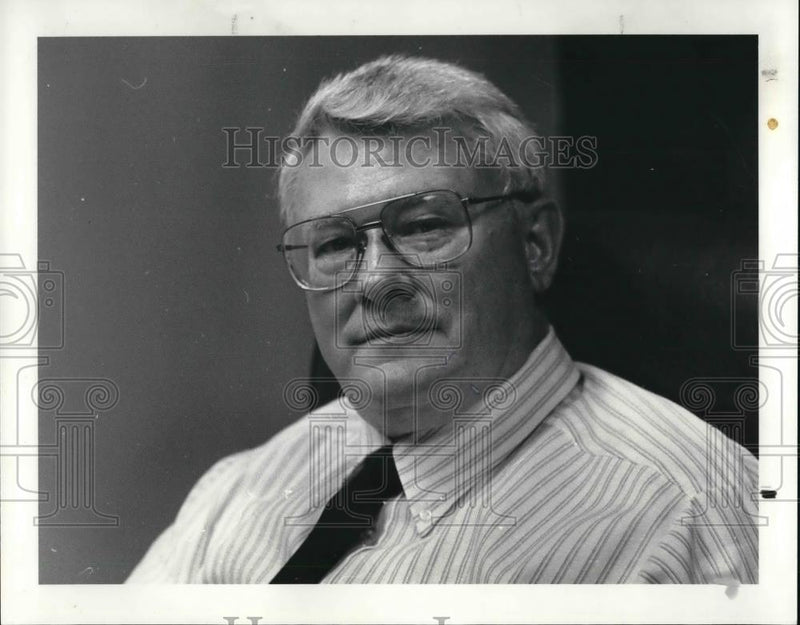
Overview
F. Kenneth Iverson did not set out to run a steel company, and the company he inherited barely was one. When he took over Nuclear Corporation of America in 1965, it was a sprawling, money-losing conglomerate of nuclear-instrument shops and odd subsidiaries on the edge of bankruptcy, with the most promising asset buried inside it: a Nebraska steel-joist maker called Vulcraft that Iverson himself had been hired in 1962 to run [4][6]. Over the next three decades he turned that wreck into Nucor, the most productive steelmaker in the United States, by betting on a technology the industry's giants dismissed and a culture they could not imitate [4][7].
The technology was the minimill. Rather than build a vast integrated mill that smelts iron ore in blast furnaces, capital Nucor did not have and could not raise, Iverson chose to melt cheap scrap steel in electric-arc furnaces. In 1968 he committed to building his own little mill at Darlington, South Carolina, financed largely on a $6 million bank loan, so that Vulcraft would no longer be at the mercy of the big mills that supplied its steel [1][6]. Darlington came on line in 1969, and within a few years it was making more steel than the joist business could consume and turning a profit on its own [1][6]. The strategy was the same flywheel Iverson would ride for the rest of his career: build cheaply, run efficiently, undercut the integrated mills, and reinvest the difference [1].
What made Nucor more than a low-cost producer was the way Iverson organized human beings. He ran a multibillion-dollar enterprise from a rented suburban office outside Charlotte with a corporate staff of barely two dozen people, four management layers between the front line and the chief executive, no executive dining room, no company cars, no reserved parking, and everyone, including Iverson, flying coach [4][7]. Pay was lean in base but heavily geared to output: production crews earned weekly bonuses tied directly to the good steel they shipped, so that Nucor's people were the best-paid steelworkers in America while the company carried the lowest labor cost per ton in the industry [1][4].
The bargain ran in both directions. Iverson refused to lay anyone off for lack of work, even through brutal downturns; instead Nucor practiced what its people called the "Share the Pain" plan, cutting hours and pay across the board and cutting executive pay hardest of all [4][7]. In the 1982 recession Iverson's own compensation fell from about $450,000 the year before to roughly $110,000 [3][7]. That visible sacrifice at the top, paired with real autonomy for the divisions, bought a loyalty and a productivity that the unionized, layoff-prone integrated mills could never match [1][7].
The boldest stroke came late. In the late 1980s Iverson staked something close to the whole company on an unproven German thin-slab casting machine at Crawfordsville, Indiana, a quarter-billion-dollar gamble to make flat-rolled sheet steel, the high-volume product that minimills had never cracked, and the last redoubt of the integrated giants [2]. When Crawfordsville started up in 1989 it worked, and it changed the economics of an entire industry [2][4]. By the time Iverson stepped down as chief executive at the end of 1995, sales that had been $17.5 million in 1964 were headed toward $4 billion, with Nucor never once having laid off an employee for lack of work [7].
Iverson distilled the philosophy in a slim, plainspoken 1998 book, Plain Talk, that became a management classic and a centerpiece of Jim Collins's Good to Great [1][8]. His argument was almost embarrassingly simple: hire good people, pay them for what they produce, push decisions down to where the work happens, tolerate the failures that come with real risk, and never, ever let the people at the top set themselves above the people who make the steel [1].
Early Life & Path
Francis Kenneth Iverson was born September 18, 1925, in Downers Grove, Illinois [4]. He was a builder and a tinkerer by temperament, and he aimed himself at engineering early. He started at Northwestern in 1943 but left to serve in the U.S. Navy during World War II, finishing the war as a lieutenant, then returned to take a degree in aeronautical engineering from Cornell in 1946 and a master's in mechanical engineering from Purdue in 1947 [4].
What followed was a long apprenticeship in metals rather than a fast climb. Iverson worked as a research physicist at International Harvester, then moved through a string of small metallurgical and specialty-metals firms, Illium Corporation, Indiana Steel Products, Cannon Muskegon, and Coast Metals, learning alloys, spectrographic analysis, and the unglamorous business of making and selling metal [4]. He was, in his own telling, a metallurgist who happened to be good at running things, not a financier or a salesman, and that hands-on grounding in how steel is actually made would shape everything about how he later ran Nucor [1][4].
The pivot came in 1962, when Nuclear Corporation of America acquired Vulcraft, a steel-joist fabricator, and hired Iverson to run it [4][6]. Nuclear Corporation was a troubled, acquisitive holding company drifting toward insolvency; by March 1965 it was effectively bankrupt and its leadership in disarray [4][6]. The board turned to the one division that was making money, Vulcraft, and to the man running it. In September 1965 Iverson, then thirty-nine, was made president of the whole company, charged with saving it [4][6]. He shed the failing nuclear businesses, moved headquarters to Charlotte, North Carolina, and bet the company's future on making steel cheaply, a decision that, in 1972, was ratified by renaming the firm Nucor [4][6].
Career Timeline
- 1925Born September 18 in Downers Grove, Illinois [4].
- 1946–1947Earns an aeronautical engineering degree from Cornell (1946) and a master's in mechanical engineering from Purdue (1947) after Navy service in World War II [4].
- 1962Hired to run Vulcraft, a steel-joist maker just acquired by Nuclear Corporation of America [4][6].
- 1965Nuclear Corporation of America files for bankruptcy in March; in September the board names Iverson president to rescue it [4][6].
- 1968Decides to build Nucor's own steel mill rather than keep buying from the big mills, choosing electric-arc minimill technology [1][6].
- 1969The Darlington, South Carolina, minimill begins operating, financed largely on a $6 million bank loan [1][6].
- 1972The company is renamed Nucor Corporation, completing the pivot to steel [4][6].
- 1982Through the deep recession Nucor cuts pay across the board rather than lay anyone off; Iverson's own pay falls from about $450,000 to roughly $110,000 [3][7].
- 1989The Crawfordsville, Indiana, mill starts up, the world's first commercial thin-slab cast flat-rolled sheet minimill, a roughly quarter-billion-dollar bet [2][4].
- 1991Receives the National Medal of Technology; named Steelmaker of the Year by Iron Age [4][9].
- 1995Steps down as chief executive at year-end, handing the role to John Correnti while remaining chairman [4][7].
- 1998Publishes Plain Talk: Lessons from a Business Maverick and retires as chairman [1][4].
- 2002Dies April 14 in Charlotte, North Carolina, at 76 [4][5].
Key Ventures & Innovations
Saving Nuclear Corporation of America (1965)
Handed a bankrupt conglomerate, Iverson stripped out the failing nuclear-instrument businesses, relocated to Charlotte, and concentrated the company on the one thing that worked, Vulcraft's steel joists, laying the groundwork for what became Nucor [4][6].
The Darlington minimill (1968–1969)
Unable to raise the hundreds of millions an integrated mill required, Iverson built a small electric-arc furnace that melted scrap into steel, financed largely on a $6 million bank loan. It made Vulcraft self-sufficient and soon became a profit center in its own right [1][6].
Pay-for-production and the bonus system
Iverson paid modest base wages but large weekly bonuses tied to tons of good steel a crew shipped, with managers held to demanding return targets. Nucor's workers became the best-paid in the industry even as Nucor carried the lowest labor cost per ton [1][4].
"Share the Pain" and the no-layoff record
Rather than fire workers in downturns, Nucor cut everyone's hours and pay, and cut executives' pay deepest. In 1982 Iverson's own compensation fell to roughly $110,000 from about $450,000. The company went decades without a single layoff for lack of work [3][4][7].
The Crawfordsville thin-slab gamble (1989)
Iverson bet close to the whole company on an unproven German thin-slab caster to make flat-rolled sheet, the integrated mills' last stronghold. The startup was rough but it worked, and it rewrote the economics of sheet steel, the story Richard Preston told in American Steel [2][4].
“Our 7,000 employees are the best-paid workers in our industry, yet Nucor has the lowest labor cost per ton of steel produced.”
From the Record
“When I think of the millions of dollars spent by people at the top of the management hierarchy on efforts to motivate people who are continually put down by that hierarchy, I can only shake my head in wonder.”
“We chose decentralization to gain the innovation, speed, and flexibility that stem from operating like twenty-one smaller companies instead of as a monolithic corporation. We're willing to live with the redundancies and 'inefficiencies' that go with that choice.”
“To me, a big headquarters isn't grand. It is a waste of money, a gross tribute to some executive's ego.”
What Operators Can Learn
- 01
Compete where you can afford to win
Iverson could not match the integrated mills' capital, so he refused to fight on their terms. The minimill let a small company turn cheap scrap into cheap steel and undercut giants who had bet everything on blast furnaces.
- 02
Tie pay to output, then get out of the way
Big production bonuses and real autonomy made Nucor's workers the best-paid and most productive in the industry at once. People drove hard because the reward was visible, immediate, and theirs.
- 03
Share the pain from the top down
By cutting his own pay hardest in downturns and never laying anyone off, Iverson bought a loyalty money alone could not. Sacrifice that starts at the top is the only kind workers believe.
- 04
Budget for failure if you want breakthroughs
Iverson expected roughly half of Nucor's bets on new technology to fail, and refused to punish the people who made them. That tolerance is what let the company risk Crawfordsville, and win.
Legacy
Iverson's minimill model did to American steelmaking what cheap, focused competitors have done to many entrenched industries since: it hollowed out the incumbents from below. Electric-arc minimills, led by Nucor, grew from a fringe curiosity to the dominant way steel is made in the United States, and Crawfordsville proved that even flat-rolled sheet, long thought safe for the integrated giants, was not beyond their reach [2][4]. By the time Iverson left, Nucor had grown from $17.5 million in sales in 1964 toward $4 billion, without ever laying off a worker for lack of work [7].
His deeper legacy is managerial. Plain Talk and Nucor's outsized chapter in Jim Collins's Good to Great turned Iverson's egalitarian, decentralized, pay-for-production system into a widely studied template, taught in business schools and cited by managers who never made a ton of steel [1][8]. The model's power was also its fragility: it depended on a level of trust between workers and a frugal, self-denying leadership that few companies have been willing to sustain [1][7].
When he died in 2002, obituaries credited him with reshaping the steel industry, and the verdict has held [4][5]. He was honored with the National Medal of Technology and a place in the National Academy of Engineering, but the tribute he would likely have valued more was the one his own numbers paid: the best-paid workers in the business, the lowest cost per ton, and a generation of steelworkers who kept their jobs through recessions that wiped out their unionized peers [4][7][9].
Further Reading
Plain Talk: Lessons from a Business Maverick, Ken Iverson with Tom Varian (1998)
Iverson's own concise statement of the decentralized, egalitarian, pay-for-production philosophy that built Nucor, the essential primary source.
American Steel: Hot Metal Men and the Resurrection of the Rust Belt, Richard Preston (1991)
A vivid, on-the-ground account of the Crawfordsville thin-slab gamble that brought minimill economics to flat-rolled sheet.
Good to Great: Why Some Companies Make the Leap... and Others Don't, Jim Collins (2001)
Features Nucor as a flagship 'good to great' company and Iverson as a Level 5 leader; widely responsible for popularizing his methods.
The Legend of Nucor Corporation, Jeffrey L. Rodengen (1997)
An authorized illustrated company history covering the Iverson era's growth, plants, and people.
Sources
- 1.Ken Iverson with Tom Varian, Plain Talk: Lessons from a Business Maverick, John Wiley & Sons, 1998, book
- 2.Richard Preston, American Steel: Hot Metal Men and the Resurrection of the Rust Belt, Prentice Hall Press, 1991, book
- 3.Inc. staff, “F. Kenneth Iverson of Nucor: Man of Steel”, Inc. Magazine, April 1, 1984, newspaper
- 4.Leslie Wayne, “F. Kenneth Iverson, 76, Dies; Reshaped the Steel Industry”, The New York Times, April 17, 2002, newspaper
- 5.“Ken Iverson, Who Revolutionized the Nation's Steel Industry, Dies at 76 (company death announcement)”, Nucor Corporation, April 15, 2002, newspaper
- 6.“Ken Iverson and Nucor Corporation”, Charlotte Museum of History, 2018, archive
- 7.John H. Sheridan, Tale of a 'Maverick', IndustryWeek, June 8, 1998, journal
- 8.Jim Collins, Good to Great: Why Some Companies Make the Leap... and Others Don't, HarperBusiness, 2001, book
- 9.“F. Kenneth Iverson, 1925–2002 (Memorial Tribute, National Academy of Engineering)”, National Academy of Engineering, 2003, archive
Researched and written with Claude + live web search.