Overview
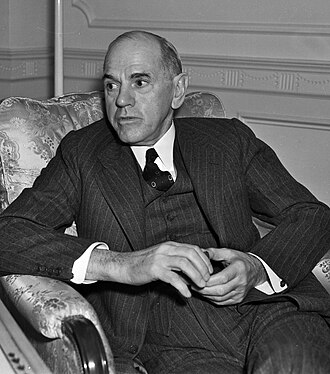
Eugene Gifford Grace was not the founder of Bethlehem Steel, that distinction belongs to the flamboyant Charles M. Schwab, who bought the small Pennsylvania producer in 1901 [1][2]. But Grace was the man who actually ran it, and for far longer: as president from 1916 and chairman from 1945 until his retirement in 1957, he was the operating brain of the company for more than four decades, and the two men together turned a firm with less than one percent of national ingot capacity in 1905 into the world's second-largest steel producer in fewer than thirty-five years [2][3]. If Schwab was the salesman and showman, Grace was the relentless, golf-playing tonnage man whose single creed, make more steel, flowed, in his historian's phrase, "through every vein and sinew of the firm" [3].
The son of a New Jersey ship's captain, Grace graduated valedictorian in electrical engineering from Lehigh University in 1899, turned down a professional baseball offer, and took a job at Bethlehem running an electric crane for about $1.80 a day [1][7]. Schwab spotted the young engineer's discipline, sent him to untangle the company's iron-ore mines in Cuba, and brought him back on a fast track: superintendent, general manager, vice president by 1911, and president of the whole corporation in 1916 at age thirty-nine [1][7]. By the 1920s Schwab had handed Grace day-to-day command and retreated into the role of public figurehead and stock-market speculator [1][2].
The two world wars made the company and the man. In the First World War, before American entry, Bethlehem held a near-monopoly on Allied munitions contracts, pouring out armor plate, gun forgings, and shells for the British, French, and Russians [2][6]. In the Second, Grace ran one of the great arsenals of democracy: Bethlehem's fifteen shipyards launched 1,121 vessels, more than any other builder, roughly a fifth of the U.S. Navy's two-ocean fleet, and the steel plants produced tens of millions of tons of armor, ordnance, and gun forgings [3][6]. In 1943 Grace personally promised Franklin Roosevelt a ship a day, and beat it [6]. By 1945 the company employed over 300,000 people and booked sales above $1.3 billion [6].
Grace's compensation became a national scandal and a permanent footnote in the history of executive pay. Under a percentage-of-profits bonus plan inherited from Schwab, Grace kept a nominal salary of just $12,000 while collecting enormous bonuses, averaging some $814,000 a year through the 1920s and a stupefying $1.6 million in 1929, making him the highest-paid executive in America [4][5]. When stockholders sued in 1931 to claw back $36 million in bonuses paid since 1911, a judge forced Grace to testify in open court that his 1929 bonus had been $1,623,753 [5]. The suit settled within months with no money returned but new disclosure rules and a cap [5].
Grace was also among the hardest of the anti-union steel men. Bethlehem ran company unions and fought the Steel Workers Organizing Committee through the violent "Little Steel" era of 1937, holding out until federal pressure and a wave of 1941 NLRB elections finally forced recognition of what became the United Steelworkers [9]. And the same monomania for tonnage that built the empire seeded its ruin: Grace and the management culture he stamped on the firm equated ever-larger capacity with success, refused to groom a successor, and dismissed the mini-mills and foreign imports that would gut American steel within a generation [1][3]. He died in 1960 a titan; the company he built would not outlive the century [1][3].
Early Life & Path
He was born August 27, 1876, in the village of Goshen, in Cape May County on the New Jersey shore, the son of a retired sea captain who kept a general store [1][7]. He clerked in his father's store and grew up with a ballplayer's competitiveness; at Lehigh University he was captain of the baseball team, a shortstop who reportedly batted over .400, and good enough that the Boston Braves offered him $200 a month to turn professional [1][7]. He turned it down. In 1899 he graduated valedictorian with a degree in electrical engineering and gave a commencement address titled "The Future of Electricity" [7].
Instead of the ballfield or a power company, Grace went to work at Bethlehem Steel for about $45 a month, running an electric crane in the yards, roughly $1.80 a day [1][7]. It was a deliberately humble start for a top graduate, and it impressed the men above him. Charles Schwab, who had bought Bethlehem in 1901, came to see in Grace the methodical operating discipline he himself lacked, and gave him a series of escalating tests [1][2]. The decisive one was Cuba: Schwab sent Grace to sort out the troubled Juragua iron-ore operations that fed Bethlehem's furnaces, and Grace ran them as superintendent and then general manager before being called back to Pennsylvania [7].
The rise after that was vertical. By 1911 he was vice president and general manager; in 1913 president of the Bethlehem Steel Company; and in 1916, at thirty-nine, president of the parent Bethlehem Steel Corporation, with Schwab moving up to chairman [1][7]. He would never work anywhere else, and would run the company, in one form or another, for the next forty-one years [1][3].
Career Timeline
- 1876Born August 27 in Goshen, Cape May County, New Jersey, son of a retired ship's captain [1][7].
- 1899Graduates Lehigh University as valedictorian in electrical engineering; turns down a Boston Braves baseball offer and takes a crane-operator job at Bethlehem Steel for about $1.80 a day [1][7].
- 1905Sent by Schwab to manage the Juragua iron-ore mines in Cuba that feed Bethlehem's furnaces [7].
- 1911Elected vice president and general manager of the Bethlehem Steel Company [7].
- 1916Becomes president of the Bethlehem Steel Corporation at age 39; Schwab moves up to chairman [1][7].
- 1914–1918Leads Bethlehem's wartime boom supplying armor, gun forgings, and shells to Britain, France, and Russia, then the U.S. [2][6].
- 1929Collects a bonus of $1,623,753 under the percentage-of-profits plan, making him the highest-paid executive in America [4][5].
- 1931Stockholders sue to recover $36 million in bonuses; Grace is ordered to disclose his 1929 figure in open court; the suit settles within months with disclosure rules and a cap [5].
- 1935–1936Serves as president of the American Iron and Steel Institute [8].
- 1937Bethlehem fights the SWOC organizing drive through the violent "Little Steel" strike era, relying on company unions [9].
- 1941A wave of NLRB elections forces Bethlehem to recognize the union after years of resistance [9].
- 1943Promises President Roosevelt "a ship a day"; Bethlehem's 15 shipyards exceed it, building 380 vessels that year [6].
- 1945Steps up to chairman after 29 years as president; wartime sales top $1.3 billion and employment exceeds 300,000 [3][6].
- 1957Retires as chairman after a 41-year reign over the company [1][3].
- 1960Dies July 25 in Bethlehem, Pennsylvania, at 83, with the company the nation's #2 steelmaker and #1 shipbuilder [1].
Key Ventures & Innovations
Building Bethlehem into the world's #2 steelmaker
As Schwab's operating partner and successor, Grace drove the acquisitions and capacity expansion that took Bethlehem from under 1% of U.S. ingot capacity in 1905 to the world's second-largest producer in under 35 years. "Ever larger" steel output was, his historian wrote, the mantra of Grace and the entire firm [2][3].
Arsenal of two world wars
In WWI Bethlehem had a near-monopoly on Allied munitions before U.S. entry. In WWII its 15 shipyards launched 1,121 ships, more than any builder, roughly a fifth of the two-ocean fleet, while supplying a huge share of U.S. armor plate and gun forgings [2][6].
The 'ship a day' pledge to Roosevelt (1943)
Grace personally promised FDR that Bethlehem would deliver a ship a day, then beat the pledge, the yards turned out 380 vessels in 1943 alone, a feat of wartime production management [6].
The percentage-of-profits bonus system
Grace ran on a tiny $12,000 salary plus bonuses tied to profits, which made him America's highest-paid executive, $1.6 million in 1929. The 1931 stockholder suit and its settlement reshaped how executive pay was disclosed [4][5].
Patron of Lehigh University
As chairman of Lehigh's board of trustees from 1924 to 1957, Grace presided over a doubling of enrollment and thirteen new buildings, and personally funded Grace Hall (opened 1942), binding the company, the town, and the university together [7].
“Gentlemen, we are going to make a lot of money.”
From the Record
“Eugene Gifford Grace of Bethlehem Steel got a $1,600,000 bonus in 1929 but his $12,000 salary had been upped to $180,000 for 1932.”
“Gentlemen, we are going to make a lot of money.”
“distinguished leadership in the administration of all phases of a large and complex industrial enterprise; for profound influence on the growth and health of the American iron and steel industry.”
What Operators Can Learn
- 01
An operator and a showman make a complete company
Schwab sold and dreamed; Grace measured and produced. Bethlehem worked because the founder recognized that his own genius needed a disciplined operating partner, and handed him real power, early.
- 02
Tie pay to results and you will get more results, and more scandal
The profit-share bonus aligned Grace's fortune with the company's, but unbounded and undisclosed it became a public outrage that drew lawsuits and helped invent modern norms of executive-pay disclosure.
- 03
War is a furnace that forges and flatters
Two wars made Bethlehem indispensable and made Grace a titan. But a company built on the boom-time appetite for armor and ships had to find a peacetime reason to exist, and the tonnage habit became a trap.
- 04
The metric that built you can blind you
Grace stamped the firm with a single creed, ever-larger output, and refused to reckon with mini-mills, imports, or a successor. The very fixation that scaled Bethlehem left it unable to see the forces that would destroy it.
Legacy
Eugene Grace died in 1960 at the apparent summit of American industry: Bethlehem was the nation's second-largest steelmaker and its largest shipbuilder, and his funeral at Lehigh's Packer Chapel drew the financial aristocracy of the country [1]. He had been, for a generation, the very image of the powerful American executive, the self-made engineer with a Plaza suite, a Southampton estate, golf partners named Crosby and Jones, and a paycheck that scandalized the nation [1]. The Charles F. Rand Memorial Gold Medal his profession gave him in 1948 honored "profound influence on the growth and health of the American iron and steel industry" [8].
Yet the more searching judgment of historians is that the culture Grace embedded in Bethlehem carried the seeds of its collapse. His successors were, in Kenneth Warren's words, "intelligent, hard working, and loyal employees who had striven to save the company", and yet they had absorbed from Grace and Schwab a faith that ever-larger output was the measure of success, a faith that proved illusory against global competition [3]. Grace refused to groom a successor, dismissed the mini-mills and foreign imports that would hollow out American steel, and left behind a management bred to defend tonnage rather than to question it [1][3].
The town of Bethlehem, Lehigh University, and the warships of two world wars are his monuments; so is the bankruptcy of the company in 2001, four decades after his death, a fall chronicled by the Pulitzer-winning local editor John Strohmeyer as a study in "the self-indulgence of both the unions and industry management" [3][10]. Grace remains a paradigm of the twentieth-century industrial executive at both his most formidable and his most cautionary.
Further Reading
Bethlehem Steel: Builder and Arsenal of America, Kenneth Warren (2008)
The definitive scholarly history of the company, framing Grace's tonnage creed within the rise and fall of American steel.
Steel Titan: The Life of Charles M. Schwab, Robert Hessen (1975)
The standard biography of Grace's mentor and partner, indispensable for understanding the Schwab–Grace team.
Crisis in Bethlehem: Big Steel's Struggle to Survive, John Strohmeyer (1986)
A Pulitzer-winning editor's intimate account of the company's long decline, rich with the legacy of the Grace era.
Charles M. Schwab, Eugene G. Grace (1947)
Grace's own short memorial tribute to his predecessor, a primary window into how he understood the firm and himself.
Bethlehem Steel: A Pictorial History, Lance E. Metz (ed.) (2011)
A documentary and photographic record of the plants, shipyards, and people of Grace's industrial empire.
Sources
- 1.Frank Whelan, “History's Headlines: Eugene Grace, prince of steel”, WFMZ-TV (Allentown, Pa.), 2019, newspaper
- 2.Robert Hessen, Steel Titan: The Life of Charles M. Schwab, Oxford University Press (repr. University of Pittsburgh Press), 1975, book
- 3.Kenneth Warren, Bethlehem Steel: Builder and Arsenal of America, University of Pittsburgh Press, 2008, book
- 4.“Business & Finance: Salaries”, TIME magazine, 1933, newspaper
- 5.“Stockholders' bonus suit against Bethlehem Steel officers (Northampton County Common Pleas, before Judge David G. Jenkins); Grace testifies his 1929 bonus was $1,623,753”, Court of Common Pleas, Northampton County, Pennsylvania, 1931, archive
- 6.“Bethlehem Steel Corp. (company history)”, Encyclopedia.com, 2006
- 7.“Eugene G. Grace (alumnus profile)”, P.C. Rossin College of Engineering & Applied Science, Lehigh University, n.d., archive
- 8.“Eugene Gifford Grace, Charles F. Rand Memorial Gold Medal (1948)”, American Institute of Mining, Metallurgical, and Petroleum Engineers (AIME), 1948, archive
- 9.Frank Whelan, “History's Headlines: Bethlehem Steel's violent strike of 1941”, WFMZ-TV (Allentown, Pa.), 2020, newspaper
- 10.John Strohmeyer, Crisis in Bethlehem: Big Steel's Struggle to Survive, Adler & Adler (repr. University of Pittsburgh Press), 1986, book
- 11.Eugene G. Grace, Charles M. Schwab, Bethlehem Steel Company (Charles M. Schwab Memorial Lecture, American Iron and Steel Institute), 1947, book
Researched and written with Claude + live web search.