Overview
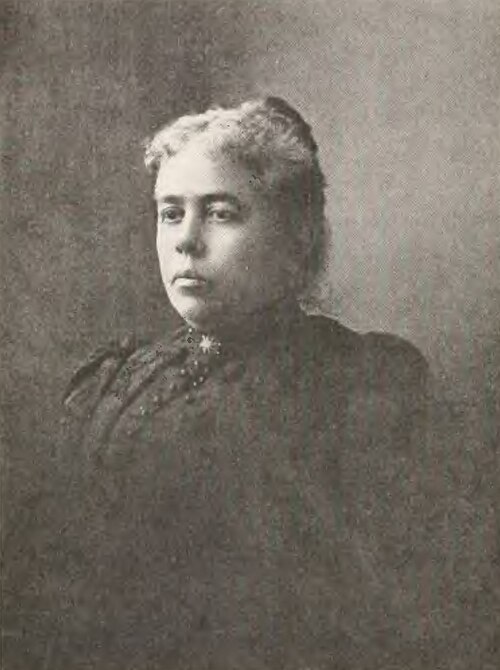
Elizabeth Eaton Boit was thirty-nine years old in 1888 when she and a younger former colleague, Charles N. Winship, pooled $2,500, bought eight second-hand machines, three for knitting, five for finishing, and rented a single room in Cambridgeport under the name Winship, Boit & Company [1][2][6]. Out of that one room grew the Harvard Knitting Mills, a Wakefield, Massachusetts manufacturer of fine cotton and lisle underwear that, at its height, ran hundreds of machines, employed several hundred hands, and shipped its goods to Lord & Taylor and department stores across the country [2][6][8]. Boit kept the books, set the prices, and ran the office; Winship ran the knitting floor [1][4][7]. By the early 1900s a New England biographical volume could state, without much fear of contradiction, that she was "said to be the only woman in the United States who is actively engaged in conducting a textile fabric manufactory" [3].
That distinction was not an accident of fashion. Boit had spent two decades climbing a ladder that, for a woman, normally had no top rung. She started at eighteen as a timekeeper in the finishing room of the Dudley Hosiery Knitting Mill, rose to assistant forewoman and then to full charge of the department, and in the early 1880s was made superintendent of the Allston Mills, believed to be the first woman to hold an administrative post of that kind in an American textile factory [1][3][4]. When she finally went into business for herself, she did not so much break into the industry as build her own door [4][7].
The firm's commercial engine was a single product done extremely well: a finely knit jersey undergarment sold under the registered brand "Mérode," advertised nationally and stocked by the best stores [6][8]. The strategy was the opposite of Henry Ford's price-cutting volume play, Boit's mill competed on quality, finish, and reputation, building a premium brand in an industry crowded with cheap, anonymous knit goods [2][6]. The aim, as the 1904 sketch put it, was "placing goods upon the market which should be a credit to themselves, serving also to elevate the standard of the American textile fabric industry" [3].
What made Boit genuinely unusual, though, was how she treated the people who made the goods. She instituted a profit-sharing plan open to all employees, a move that drew national notice when the firm expanded it around 1920, paid generous wages, and provided free medical care, eventually building a small clinic at the works and instituting a form of maternity leave for her women workers [1][2][4][6]. Most of her employees were young women, and she made their welfare a deliberate project: she pressed for them to be able to hold bank accounts in their own names, an everyday right then often denied to women, and in 1902 she was named to the board of the Wakefield Co-operative Bank, reportedly the first woman in the country to sit on such a board [1][4].
Boit never married and left the running of the firm to Winship in her later years, though she kept investing in it and reportedly visited daily [1][4]. The undergarment industry that had made her was undone in the 1920s by the same revolution in women's dress that liberated the bodies beneath it: shorter, lighter, simpler clothing killed the market for layered knit underwear, and the heavily built Harvard mill could not pivot fast enough [4][6]. The company quietly let its celebrated profit-sharing plan lapse by 1927 and limped on for years after Boit's death in 1932, finally closing in 1946 [4][6].
Hers is not the story of a disruptor who remade an industry, but of something arguably harder: a working woman who, in a business that systematically shut women out of ownership, built a durable, profitable, and humanely run company entirely on her own competence [1][4][7]. For a generation she was the proof, cited in directories of "representative" and "notable" American women, that it could be done at all [1][3].
Early Life & Path
Elizabeth Eaton Boit was born July 9, 1849, in Newton, Massachusetts, the Auburndale area, the second of six daughters of James Henry Boit and Amanda Church (Berry) Boit [1][3]. The family was of modest means; later records describe her father as a laborer [7]. She was educated locally and finished at Lasell Seminary in Auburndale, leaving at about eighteen [3][4]. There was no family fortune behind her and no obvious path into business; what she had was a head for figures, a relentless work ethic, and the willingness to take the only kind of mill job then open to a respectable young woman [1][4].
In 1867, at eighteen, she took a position as timekeeper in the sewing, or finishing, department of the Dudley Hosiery Knitting Mill at Newton, a department that turned out merino shirts, drawers, and hosiery [3][4]. "The able and whole-souled manner in which she performed her duties soon caused her promotion to the post of assistant foreman," the 1904 sketch records, and within a few years she had full charge of the department [3]. It was at Dudley that she first worked alongside Charles N. Winship, who was more than a decade her junior and learning the knitting trade [1][4].
When her superior, H. M. Scudder, left to establish the Allston Mills in Cambridge in the early 1880s, Boit went with him and was made superintendent, by most accounts the first woman to hold so senior an administrative post in an American textile factory [1][3][4]. There she hired Winship to run the knitting department [1][4]. By 1888 the two of them had learned every part of the business between them, she the office and the finishing, he the machines, and they decided to risk their savings on a firm of their own [2][4][7].
Career Timeline
- 1849Born July 9 in Newton, Massachusetts, the second of six daughters of James Henry and Amanda Church (Berry) Boit [1][3].
- 1867At eighteen, hired as timekeeper in the finishing department of the Dudley Hosiery Knitting Mill in Newton [3][4].
- c. 1872Promoted to assistant forewoman and then to full charge of the finishing department at Dudley [3].
- c. 1881–83Made superintendent of the Allston Mills in Cambridge, believed to be the first woman in such an administrative post in a U.S. textile factory; hires Charles N. Winship to run the knitting room [1][3][4].
- 1888With Winship, invests $2,500 in eight second-hand machines and founds Winship, Boit & Company / Harvard Knitting Mill in one room in Cambridgeport [1][2][6].
- 1889Moves the firm to Wakefield, Massachusetts, taking a floor of the Taylor (Wakefield) Building at Main and Lincoln Streets [4][6].
- 1897Builds a large brick factory on Albion Street in Wakefield, roughly 182 by 67 feet, three stories and basement [6].
- 1902Named to the board of the Wakefield Co-operative Bank, reportedly the first woman in the United States to serve on a bank board [1][4].
- 1904Profiled in Representative Women of New England as "the only woman in the United States who is actively engaged in conducting a textile fabric manufactory" [3].
- 1901–1921The Mérode-brand underwear business booms; the mill is expanded repeatedly (1901, 1903, 1907, 1909, 1911, 1921), at peak running hundreds of machines and several hundred workers [4][6].
- 1910–1913Builds an English-cottage estate compound on Cowdry's Hill in Wakefield, designed by architect Harland O. Perkins [5].
- c. 1917Provides free medical care and a small clinic at the mill and institutes a form of maternity leave for women workers [4][6].
- c. 1920The firm's profit-sharing plan, open to all employees, draws national attention [1][2].
- 1927With the underwear market collapsing under changing women's fashions, the company lets its profit-sharing plan lapse [4][6].
- 1932Dies November 14 in Wakefield; Winship reportedly kept the failing mill's whistle blowing on schedule so the bedridden Boit would not learn of its decline [4].
Key Ventures & Innovations
Winship, Boit & Company (1888)
Founded with $2,500 and eight second-hand machines in a single Cambridgeport room. Boit ran the finances and administration; Winship ran the knitting and production. It was an equal partnership in fact, but it was Boit who, as a woman owner-operator, was held to be without peer in the American textile industry [1][3][6].
Harvard Knitting Mills, Wakefield
The relocated and rebuilt works that became the firm's home from 1889. The 1897 Albion Street brick mill and its repeated expansions made it one of Wakefield's largest employers, running hundreds of knitting and sewing machines at its peak [4][6].
The "Mérode" brand
A finely knit jersey undergarment sold under a registered brand name, advertised nationally and stocked by Lord & Taylor and other leading stores. Rather than compete on cheap volume, Boit built a premium reputation for quality and finish, the firm's commercial engine for three decades [2][6][8].
Profit-sharing and worker welfare
A profit-sharing plan open to all employees (which drew national attention around 1920), generous wages, free medical care and an on-site clinic, and a form of maternity leave, an unusually humane labor regime for the era, aimed especially at the mill's many young women [1][2][4][6].
Director, Wakefield Co-operative Bank (1902)
Concerned that her women employees be able to bank in their own names, Boit took a seat on the bank's board, reportedly the first woman in the nation to do so, turning a personal conviction about women's financial independence into an institutional foothold [1][4].
“Miss Boit is said to be the only woman in the United States who is actively engaged in conducting a textile fabric manufactory.”
From the Record
“Miss Boit is said to be the only woman in the United States who is actively engaged in conducting a textile fabric manufactory.”
“She is especially interested in the welfare of young girls, particularly those in her employ, and avails herself of every opportunity to further the progress and well-being of the wage-earners of her sex.”
“The able and whole-souled manner in which she performed her duties soon caused her promotion to the post of assistant foreman.”
What Operators Can Learn
- 01
Master the whole business before you bet on yourself
Boit spent twenty years learning timekeeping, finishing, departmental management, and finally the superintendency before she risked a dollar of her own. When she did start a firm, she and Winship together understood every step from the knitting machine to the ledger, so there was little they had to take on faith.
- 02
Compete on what you can defend
In a market flooded with cheap, anonymous knit goods, Boit built a premium brand on quality and finish rather than racing the price down. The Mérode name, not the lowest cost, was her moat.
- 03
Treating workers well can be a strategy, not just a kindness
Profit-sharing, free medical care, decent wages, and maternity leave bound a skilled, largely female workforce to a single specialized mill. The humane regime was also a retention and quality regime.
- 04
A specialist's strength is a specialist's trap
The mill's deep expertise in layered knit underwear was its making, and, when women's fashion shifted to lighter, simpler dress in the 1920s, its undoing. A business built for one product can struggle to survive that product's eclipse.
Legacy
Elizabeth Boit's primary legacy is the bare, stubborn fact of what she did: in an industry that almost entirely barred women from ownership, she co-founded and ran a substantial manufacturing firm for decades on the strength of her own competence, and was repeatedly cited, in Representative Women of New England in 1904, in the scholarly Notable American Women, and later by Harvard Business School's roster of great twentieth-century leaders as the first American woman to establish ownership in the textile industry, as the proof that it was possible [1][3][7]. For the young women on her finishing floors, she was something rarer than a role model: a boss who used her position to widen their rights, from bank accounts to medical care [1][4].
The physical legacy survives in Wakefield. The Harvard Knitting Mills buildings still stand and have been adapted to new uses, and her English-cottage estate on Cowdry's Hill, designed by Harland O. Perkins between 1910 and 1913, was listed on the National Register of Historic Places in 1989, explicitly for its association with one of the first highly placed female executives in the male-dominated management of American textile firms [5]. The town's historical society and library keep her records, photographs, and grave among its civic memory [4].
If there is a cautionary half to the story, it is in the ending. The very specialization that made the firm excellent left it brittle when the market for its single great product vanished, and the celebrated profit-sharing plan was among the first casualties of the decline [4][6]. Boit's name faded from national memory as the industry that carried it shrank, a reminder that even a pioneering enterprise lives or dies with the demand for what it makes [4][7].
Further Reading
Notable American Women, 1607–1950: A Biographical Dictionary, Edward T. James, Janet Wilson James, and Paul S. Boyer, eds. (1971)
The authoritative scholarly reference; its concise Boit entry is the standard starting point for any serious account of her life.
Encyclopedia of American Women in Business: From Colonial Times to the Present, Carol H. Krismann (2005)
Places Boit in the broad sweep of American businesswomen and details the firm's founding, profit-sharing, and growth.
Representative Women of New England, Julia Ward Howe (ed.) (1904)
A near-contemporary primary sketch written while Boit was at the height of her career, the source of her best-known characterization.
The Female Economy: The Millinery and Dressmaking Trades, 1860–1930, Wendy Gamber (1997)
Essential context on women's place in the American garment and textile trades during exactly Boit's working lifetime.
Incorporating Women: A History of Women and Business in the United States, Angel Kwolek-Folland (1998)
A university-press survey of women in American business that frames why an owner-operator like Boit was so exceptional.
Sources
- 1.Edward T. James, Janet Wilson James, and Paul S. Boyer, eds., Notable American Women, 1607–1950: A Biographical Dictionary, Vol. 1 (entry: Elizabeth Eaton Boit), Belknap Press of Harvard University Press, 1971, pp. 190–191, book
- 2.Carol H. Krismann, Encyclopedia of American Women in Business: From Colonial Times to the Present (entry: Elizabeth E. Boit), Greenwood Press, 2005, pp. 84–85, book
- 3.Julia Ward Howe (ed.); Mary H. Graves et al. (comp.), "Elizabeth E. Boit," in Representative Women of New England, New England Historical Publishing Company, 1904, pp. 255–256, book
- 4.Wakefield Historical Society, “"Elizabeth Eaton Boit, 1849–1932" and "Harvard Knitting Mills"”, Wakefield Historical Society, 2017, archive
- 5.Massachusetts Historical Commission / National Park Service, “Elizabeth Boit House, National Register of Historic Places nomination (ref. no. 89000720)”, U.S. Department of the Interior, National Park Service, 1989, archive
- 6.Nancy Bertrand, “"History: The Harvard Knitting Mills"”, Wakefield Patch, May 17, 2011, newspaper
- 7.Harvard Business School, “Elizabeth E. Boit, Great American Business Leaders of the 20th Century”, Harvard Business School, 2008
- 8.“1906 advertisement, "Merode" women's underwear (Winship, Boit & Co.), distributed by Lord & Taylor, New York”, Lord & Taylor (wholesale distributors), 1906, archive
Researched and written with Claude + live web search.