Overview
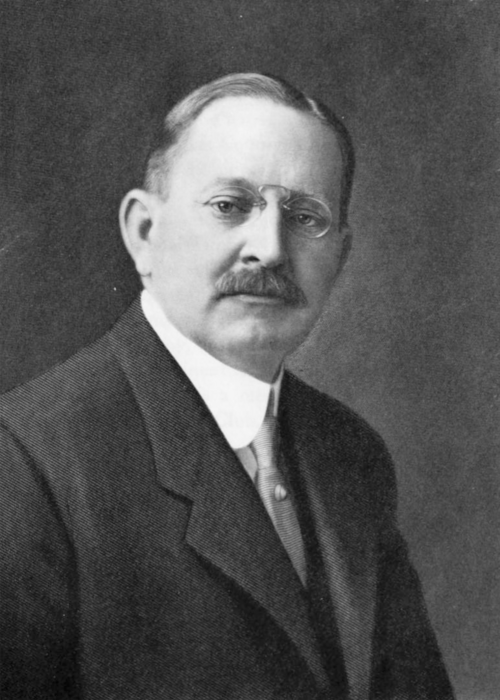
Elbridge Amos Stuart did not invent evaporated milk, and the plant he bought in 1899 was a failed one. What he had instead was a grocer's instinct for what a shelf could sell and a near-religious fixation on quality, and from a bankrupt condensery in the mud-flat town of Kent, Washington, he built the world's largest manufacturer of evaporated milk [2][6]. On September 6, 1899, the newly chartered Pacific Coast Condensed Milk Company turned out its first cases of a product Stuart called Carnation Sterilized Cream, unsweetened milk reduced in a partial vacuum, sealed in a tin, and able to keep for months in an age when most American kitchens cooled their food with a block of ice [2][5].
The early going was brutal. Cans burst and spoiled, housewives saw no reason to buy canned milk when the milkman called daily, and the enterprise reportedly lost something like $140,000 in its first stretch of operation [5]. Stuart had taken on a partner, Thomas E. Yerxa, to put up capital; by 1901 Yerxa had sold out and walked away, leaving Stuart sole owner of a company and roughly $105,000 of debt [1][5]. Salvation came from an unlikely quarter: the Klondike gold rush. Prospectors streaming through Seattle for the Yukon wanted food that would not spoil on the trail, and they bought Stuart's tinned milk by the case, pulling the company back from the edge [5][6].
Stuart proved a marketer of rare gifts. Casting about for a name with more appeal than "Pacific Coast Condensed," he settled on Carnation after spotting a box of cigars sold under that name in a downtown tobacconist's window [2][5]. Then, around 1906–1907, came the line that made the brand immortal, "Carnation Condensed Milk, the milk from contented cows", the kind of phrase, half-joke and half-creed, that fixed a humble grocery item in the national imagination [3][6]. It was not pure copywriting. Stuart genuinely believed that calm, kindly handled cows gave better milk, and he was willing to spend a fortune to prove it [4].
That conviction produced his second great venture. In 1908 he bought, sight unseen, a tract of land in the Snoqualmie Valley near the town of Tolt, and over the next two decades turned it into Carnation Stock Farms, a showplace of registered Holstein-Friesian breeding that became, in effect, a living advertisement [4][7]. There, in 1920, a cow officially named Segis Pietertje Prospect and known to the press as "Possum Sweetheart" set a world record by giving 37,381 pounds of milk in a year, nearly ten times an ordinary cow's yield [4][7]. Carnation animals would hold the world milk-production record for decades, and when Possum Sweetheart died Stuart raised a bronze statue to her, said to be the first monument ever erected to a single dairy cow [4][7]. In 1917 the town of Tolt renamed itself Carnation in the company's honor [2][7].
From that base Stuart expanded relentlessly, condenseries across Wisconsin and the Midwest, the renaming of the firm to the Carnation Milk Products Company in 1915, and a national distribution machine that carried the red-and-white can into kitchens across twenty-two states and seven countries by the time he died [1][2][6]. Under his leadership, which Harvard Business School dates from 1901 to 1932, the market for evaporated milk grew enormously and Carnation grew with it, acquiring plants and the famous cow farm to become the world's leading manufacturer of the product [9][10]. He stepped down as president in 1932 in the teeth of the Depression, handing the company to his son Elbridge Hadley Stuart and taking the chairmanship he held until his death [2][6]. From the wealth he amassed he created, in 1937, the Stuart Foundation, devoted to the welfare and education of children, an institution that long outlived him [1][6].
Stuart was not a Henry Ford reshaping the industrial world; his was a narrower triumph. But within his lane he was nearly complete: a self-made man who failed at several businesses before finding the one he would master, who understood that a brand is a promise and that quality is the only durable advertisement, and who built a company so identified with a single idea that a town took its name [1][2][6].
Early Life & Path
He was born September 10, 1856, in Guilford County, North Carolina, into a Quaker family of modest means [1][2]. The Quaker formation, its plainness, its discipline, its suspicion of waste, stayed with him for life, and biographers trace his lifelong insistence on quality and order to that upbringing [1]. Like many ambitious young men of his generation he went west to make himself, and in his early twenties he turned up in El Paso, Texas, running a general store on the rough edge of the frontier [2][8].
It was as a frontier grocer, the story goes, that the seed of Carnation was planted: in the heat of the Southwest, fresh milk spoiled fast and sickened children, and a merchant who handled the new tinned, sterilized milk could offer something fresh milk could not, keeping power [6][8]. Stuart's first ventures, in El Paso and later in Los Angeles, were not all successes; by his own foundation's account he tried at least three distinct businesses, some of which failed, before he found his footing [6]. By 1899 he was an established wholesale grocer with capital to invest, scouting the Pacific Northwest for an opportunity [2].
He found it in the wreckage of someone else's failure. A condensing plant built at Kent, Washington, in 1898 had gone bankrupt within about eighteen months [2][5]. Stuart and his partner Thomas Yerxa bought the idle plant and machinery cheaply, brought in the Swiss-trained evaporated-milk pioneer John B. Meyenberg, paying, by one account, $25,000 for rights to his patented process, and set out to make a milk that would keep [5]. Stuart was forty-three years old, a grocer with no manufacturing experience, betting everything on a product the public did not yet want [2][5].
Career Timeline
- 1856Born September 10 in Guilford County, North Carolina, into a Quaker family of humble means [1][2].
- 1870s–1880sGoes west as a young man; runs a general store in El Paso, Texas, and later works as a wholesale grocer in Los Angeles [2][8].
- 1899With partner Thomas E. Yerxa, buys a bankrupt condensery in Kent, Washington, and charters the Pacific Coast Condensed Milk Company; first cases of Carnation Sterilized Cream produced September 6 [2][5].
- 1901Yerxa sells out; Stuart becomes sole owner and president, inheriting roughly $105,000 of debt [1][5].
- 1900sKlondike gold-rush demand for shelf-stable milk rescues the struggling company [5][6].
- 1906–1907The slogan "Carnation Condensed Milk, the milk from contented cows" is introduced [3][6].
- 1908Buys land near Tolt in the Snoqualmie Valley, sight unseen, to found Carnation Stock Farms; first visits it in 1910 [4][7].
- 1915Reincorporates the firm as the Carnation Milk Products Company [1][2].
- 1917The town of Tolt, Washington, renames itself Carnation in the company's honor [2][7].
- 1920The Carnation cow "Possum Sweetheart" (Segis Pietertje Prospect) sets a world milk-production record of 37,381 pounds in a year [4][7].
- 1928Stuart erects a bronze statue to Possum Sweetheart, reportedly the first monument to an individual dairy cow [4][7].
- 1932Steps down as president, succeeded by his son Elbridge Hadley Stuart; becomes chairman [2][6].
- 1937Establishes the Stuart Foundation for the welfare and education of children [1][6].
- 1944Dies in Los Angeles in January, chairman to the end; by then Carnation operates across 22 states and 7 countries [2][8].
Key Ventures & Innovations
Carnation evaporated milk (1899)
From a bankrupt Kent condensery Stuart built a national product: unsweetened milk reduced in a partial vacuum, canned, and shelf-stable for months. After early losses and the rescue of Klondike demand, it became the world's leading evaporated-milk brand [2][5][6].
The "contented cows" campaign (1906–1907)
Half slogan, half philosophy. Stuart picked the name Carnation off a cigar box, then built the brand on the promise that calm, well-treated cows gave better milk, one of the most durable advertising lines in American business [2][3][6].
Carnation Stock Farms (1908)
A Snoqualmie Valley showplace of registered Holstein breeding that doubled as a living advertisement. Its cows held world milk-production records for decades, and a barn sign codified Stuart's insistence on patience and kindness toward the herd [4][7].
National expansion and the Carnation Milk Products Company (1915)
Stuart pushed condenseries across Wisconsin and the Midwest, reincorporated the firm in 1915, and built a distribution network that carried the red-and-white can across twenty-two states and seven countries [1][2][6].
The Stuart Foundation (1937)
From his fortune Stuart endowed a foundation devoted to the welfare and education of children, an institution that has since invested hundreds of millions in California and Washington and survives him by generations [1][6].
“Remember that this is the home of mothers. Each cow should be treated as a mother should be treated. Giving milk is a function of motherhood; rough treatment lessens the flow.”
From the Record
“The RULE to be observed in this stable at all times, toward the young and old cattle, is that of patience and kindness… Remember that this is the home of mothers. Each cow should be treated as a mother should be treated. Giving milk is a function of motherhood; rough treatment lessens the flow.”
“Stuart chose the name Carnation after a brand of cigars by that name.”
“Elbridge A. Stuart created the firm that became the Carnation [evaporated milk] Company in 1899 in Kent, Washington.”
What Operators Can Learn
- 01
A brand is a promise you have to keep with capital
Stuart did not just claim his milk came from contented cows, he bought a valley and built a model farm to make the claim literally true. The advertising worked because the quality behind it was real.
- 02
Failure first is not disqualifying
He failed at several businesses, inherited a bankrupt plant and six figures of debt, and was forty-three before he found the venture he would master. Persistence in the right lane beat early success in the wrong ones.
- 03
Find the customer the incumbents ignore
Settled housewives with a daily milkman saw no need for canned milk. Klondike prospectors, who could not keep fresh milk on the trail, did. The product survived by serving the buyer who had a problem only it could solve.
- 04
One idea, relentlessly pursued, can name a town
Stuart bent everything, name, farm, advertising, breeding program, around a single proposition about quality milk. The focus was so complete that a Washington town renamed itself after the company.
Legacy
Stuart's legacy is doubled, a product and a method of belief about it. Carnation evaporated milk became a fixture of American kitchens, war rations, and recipes for the better part of a century, and the company he founded grew into a global food enterprise that Nestlé bought in the mid-1980s for roughly $3 billion [2][6]. The "contented cows" line outlived its inventor as one of the most recognized slogans in American advertising, and the Snoqualmie Valley town that took the company's name still carries it today [2][7].
His deeper mark is on the idea that humane husbandry and commercial quality were the same thing. The Carnation breeding program advanced Holstein bloodlines that still shape dairy herds, and the barn-sign creed, treat each cow as a mother should be treated, anticipated by decades the modern understanding that stress depresses milk yield [4][7]. Through the Stuart Foundation he turned a fortune built on a tin can into a long-running investment in children's welfare and education [1][6]. A self-made Quaker grocer who never claimed to be a great inventor, Stuart proved that brand, quality, and conviction, held together long enough, could build something that bears your name long after you are gone [1][2][6].
Further Reading
Elbridge A. Stuart, Founder of the Carnation Company, James Marshall (1949)
The authorized biography, published by Carnation on its 50th anniversary; the foundational source, including facsimiles of the company's founding documents.
Carnation Company, in International Directory of Company Histories, Jay P. Pederson (ed.) (1988)
A compact, document-grounded corporate history covering the founding, the Yerxa partnership and buyout, expansion, and leadership succession.
Stuart, Elbridge A. (1856-1944) and the Kent condensery essays, Walt Crowley and the HistoryLink staff (2000)
Carefully sourced regional-history essays on Stuart, the Kent plant, and the renaming of Tolt to Carnation, the best free starting point.
Carnation Farms history and museum collections, Eric Flint and the Snoqualmie Valley Historical Society (2024)
Primary photographs, the barn-sign creed, and records of Possum Sweetheart and the model dairy farm Stuart built in the Snoqualmie Valley.
Sources
- 1.James Marshall, Elbridge A. Stuart, Founder of the Carnation Company, Carnation Company, Los Angeles, 1949, 238 pp., issued in memory of the founder on the company's 50th anniversary, with facsimile founding documents in appendix, book
- 2.Walt Crowley / HistoryLink Staff, “Stuart, Elbridge A. (1856-1944)”, HistoryLink.org, Online Encyclopedia of Washington State History, 2000, archive
- 3.“Carnation (brand), history of the "milk from contented cows" slogan”, Wikipedia, 2026
- 4.When Cows Were Kings: Revisiting Carnation's Golden Age of Dairy Breeding, The Bullvine (dairy-industry trade press), 2024, journal
- 5.Jay P. Pederson, ed., Carnation Company (company history), International Directory of Company Histories, St. James Press (repr. Encyclopedia.com), 1988, book
- 6.“Foundation History, Elbridge A. Stuart and the founding of Carnation”, Stuart Foundation, 2024
- 7.“History & Museum, Carnation Farms”, Carnation Farms (Snoqualmie Valley), 2024, archive
- 8.“Carnation Farms, namesake of a town and a worldwide milk brand, welcomes visitors again”, The Seattle Times, June 15, 2017, newspaper
- 9.“Elbridge A. Stuart, 20th Century Great American Business Leaders”, Harvard Business School, 2024
- 10.Mary Blake (Carnation Company), The Story of Carnation Milk, Carnation Company (Emergence of Advertising in America collection, Duke University), 1942, book
Researched and written with Claude + live web search.