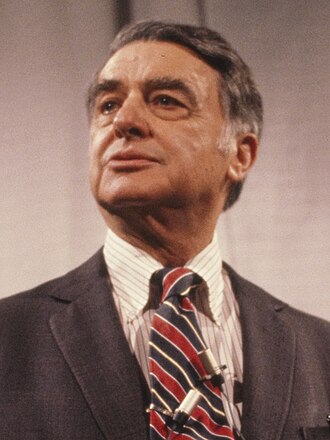
Overview
Edwin Land was the rarest kind of industrialist: a scientist who founded a corporation chiefly so that he would have a place to keep inventing, and who held to the end the belief that the bottom line was an afterthought to the work [1][4]. He never finished college, yet he amassed 535 U.S. patents, a count second in American history only to Thomas Edison, and built Polaroid from a polarizing-filter shop into one of the great research enterprises of the postwar age [2][6][9]. His two monuments were entirely his own: the synthetic light polarizer he perfected as a college-age unknown, and instant photography, a chemistry and a machine he conjured almost whole on a single afternoon's walk and then spent thirty years making real [1][3].
The polarizer came first and made the company possible. As a teenager Land became obsessed with the glare of oncoming headlights and the problem of polarizing light cheaply; rather than grow large, fragile crystals, he learned to align millions of microscopic ones in a plastic sheet [6][8]. With his Harvard physics instructor George Wheelwright III he founded Land-Wheelwright Laboratories in 1932, and in 1937, backed by Wall Street money including W. Averell Harriman and James P. Warburg, the venture was reincorporated as Polaroid Corporation [2][6]. Early contracts followed, photographic filters for Eastman Kodak in 1934, polarized sunglasses for American Optical in 1935, and during World War II Polaroid poured its polarizing know-how into gunsights, goggles, and the Vectrograph 3-D aerial-reconnaissance system [6][8].
Then, on a 1943 family holiday in Santa Fe, Land's three-year-old daughter Jennifer asked why she could not see the photograph he had just taken of her. Land later said the camera, the film, and the physical chemistry of a self-developing print resolved themselves "within an hour" as he walked the New Mexico streets [3]. He demonstrated the result to the Optical Society of America, of which he was then president, on February 21, 1947, pulling a finished sepia portrait from the camera in under a minute, and in November 1948 the first Polaroid Land Camera, the Model 95, sold out its opening run of fifty-seven units at Boston's Jordan Marsh in a single day [2][3][9].
What followed was three decades of restless escalation. Polacolor instant color film arrived in 1963 after thousands of dye-developer experiments, and in 1972 Land unveiled the SX-70, a folding single-lens-reflex that ejected a dry, self-developing color print before your eyes, the project he called his crowning achievement, pursued at a cost that ran past a quarter-billion dollars [1][7][9]. He was as much showman as scientist, staging shareholder meetings as theater and pulling cameras from his jacket like a magician, and his disdain for Wall Street arithmetic was open: pressed about the bottom line, he answered that it was "in heaven" [4][7].
Land's authority reached well beyond Cambridge. As a trusted adviser to President Eisenhower he chaired the intelligence panel that, in the mid-1950s, urged that the new U-2 spy plane be built and flown by the CIA rather than the military, and he helped steer the photographic-reconnaissance effort that became the CORONA satellite program [5][10]. He was, in effect, a one-man bridge between the optics bench and the Cold War's eye in the sky [5].
The ascent did not last. His instant home-movie system, Polavision, flopped expensively in the late 1970s; Wall Street turned cold; and in 1980, with the company's direction in question, Land relinquished the presidency, resigning the chairmanship in 1982 to retreat into pure research at his new Rowland Institute [2][7][9]. His final public vindication came through the courts: the patent-infringement suit he had launched against Eastman Kodak in 1976 ended in 1985–1991 with Kodak driven out of instant photography and ordered to pay roughly $900 million, at the time the largest such award in U.S. history [11][12].
Early Life & Path
Edwin Herbert Land was born on May 7, 1909, in Bridgeport, Connecticut, into a comfortable family; his father ran a scrap-metal and salvage business [2][6]. As a boy he was transfixed by optics, by a stereoscope, by a polarizing prism in a physics book, and above all by the dangerous glare of automobile headlights, which he resolved to tame [6][8]. He entered Harvard in the autumn of 1926 to study chemistry, but the lecture hall could not hold him, and he left after his freshman year to chase a single idea: a cheap, manufacturable polarizing material [6][8].
What he did next became the founding legend. Living in New York, Land studied the literature of polarization at the New York Public Library and ran experiments in a rented room, reportedly slipping into a Columbia University laboratory at night to use its equipment [6][8]. There he hit on the method that would define his life, suspending millions of microscopic, light-polarizing crystals and aligning them in a single direction within a transparent film, so that a sheet of plastic could do the work of a large, costly crystal. The moment he first turned white light to black through his aligned crystals he called "the most exciting single event in my life" [8].
Land returned to Harvard around 1929 to refine the polarizer, and in 1932 became, by the account of his university, the only undergraduate ever to deliver a Harvard physics department colloquium, describing his own invention [6][8]. He left again without a degree to go into business with his instructor George Wheelwright III, working through what one Harvard writer called "years of technical agony, mostly in grimy Boston buildings" before Wall Street backing turned the partnership into Polaroid Corporation in 1937 [6]. Harvard would eventually award him an honorary degree in 1957, twenty-five years after he had dropped out for the second time [6].
Career Timeline
- 1909Born May 7 in Bridgeport, Connecticut, son of a scrap-metal dealer [2][6].
- 1926Enters Harvard to study chemistry; leaves after his freshman year to pursue polarizers [6][8].
- 1926–1929Studies optics at the New York Public Library and experiments in New York, reportedly using a Columbia lab at night; devises the sheet polarizer [6][8].
- 1932Founds Land-Wheelwright Laboratories with Harvard instructor George Wheelwright III; gives a Harvard physics colloquium as an undergraduate [6].
- 1937The venture is reincorporated as Polaroid Corporation with backing from W. Averell Harriman, James P. Warburg, and others [2][6].
- 1939–1945Polaroid develops wartime optics, gunsights, dark-adaptation goggles, and the Vectrograph reconnaissance viewing system [6][8].
- 1943On holiday in Santa Fe, daughter Jennifer asks why she can't see the photo now; Land conceives instant photography on a walk [3].
- 1947Demonstrates instant photography to the Optical Society of America (of which he is president) on February 21, producing a print in under a minute [3][9].
- 1948The first Polaroid Land Camera, the Model 95, debuts at Jordan Marsh in Boston in November; its opening run sells out in a day [2][9].
- 1954–1956Advising Eisenhower, Land chairs the panel urging that the U-2 spy plane be CIA-operated; later helps shape the CORONA satellite effort [5][10].
- 1963Polaroid introduces Polacolor instant color film after thousands of dye-developer experiments [9].
- 1972Land unveils the SX-70 single-lens-reflex instant camera, the project he calls his crowning achievement [1][7].
- 1976Polaroid sues Eastman Kodak for patent infringement after Kodak enters instant photography [11][12].
- 1980–1982After the Polavision failure, Land gives up the presidency in 1980 and resigns as chairman in 1982 to found the Rowland Institute [2][7][9].
- 1985–1991Courts find Kodak infringed Polaroid's patents and order it to pay roughly $900 million, exiting instant photography [11][12].
- 1991Dies March 1 in Cambridge, Massachusetts, at 81 [2][9].
Key Ventures & Innovations
The sheet polarizer (Polaroid film)
Land's first and foundational invention: aligning millions of microscopic crystals in a plastic sheet to polarize light cheaply, replacing large fragile crystals. It seeded contracts with Eastman Kodak (1934) and American Optical (1935) and gave the company its name [6][8].
The Polaroid Land Camera, Model 95 (1948)
The first commercial instant camera, using a diffusion-transfer process to deliver a finished sepia print in about a minute. Demonstrated to the Optical Society in 1947, it sold out its debut run at Jordan Marsh in Boston in a single day in 1948 [2][3][9].
Polacolor (1963)
Instant color film, achieved after Polaroid chemists ran thousands of experiments on dye-developer compounds, molecules that carried color and controlled their own development inside the print [9].
The SX-70 (1972)
A folding single-lens-reflex that ejected a dry, self-developing color photograph that finished in the open air, "absolute one-step photography." Land called it his crowning achievement and spent past a quarter-billion dollars realizing it [1][7][9].
Cold War reconnaissance (U-2 and CORONA)
As Eisenhower's adviser, Land chaired the panel that argued the U-2 should be a covert CIA aircraft, not a military one, and helped guide the photographic-satellite work that became CORONA, exporting Polaroid's optics expertise into national intelligence [5][10].
Polavision (1977), the costly failure
An instant home-movie system that arrived just as videotape was eclipsing film. Its commercial collapse forced large write-offs, soured Wall Street, and hastened Land's departure from the company's leadership [2][7].
“Don't undertake a project unless it is manifestly important and nearly impossible.”
From the Record
“Why can't I see them now?”
“Don't do anything that someone else can do. Don't undertake a project unless it is manifestly important and nearly impossible.”
“There's a rule they don't teach you at the Harvard Business School. It is, if anything is worth doing, it's worth doing to excess.”
“The bottom line is in heaven!”
What Operators Can Learn
- 01
Pick problems that are 'manifestly important and nearly impossible'
Land deliberately avoided work others could do. He chose goals, a cheap polarizer, a photograph that develops in your hand, that were both consequential and barely achievable, and let the difficulty itself filter out the merely incremental.
- 02
Build the company around the research, not the reverse
Polaroid existed so Land could keep inventing. That ethos produced miracles and a generation of devoted scientists, but it also meant a founder who treated quarterly earnings as beneath him, with consequences when the magic stopped paying.
- 03
Demonstration is half the invention
Land understood that a breakthrough must be seen to be believed. The 1947 Optical Society reveal and the theatrical SX-70 unveiling were not vanity; spectacle was how he made the impossible feel inevitable to customers and investors alike.
- 04
Yesterday's monopoly is not tomorrow's moat
Polavision bet on instant film just as video arrived, and the company leaned on instant photography as digital loomed. Even a 28-year monopoly and a $900 million patent victory could not substitute for reading where the technology was going next.
- 05
Defend the patents you actually earned
Land's long suit against Kodak, ending in Kodak's expulsion from instant photography and a record award, showed that for a research company, the willingness to enforce hard-won intellectual property is part of the invention's value, not separate from it.
Legacy
Edwin Land made two things that outlived him in different ways. The polarizer is everywhere and invisible, in sunglasses, LCD screens, microscopes, and camera filters, a quiet utility most people never connect to his name [6][8]. Instant photography was the opposite: visible, magical, intimate, the act of watching an image swim up out of a blank square, and it shaped how the late twentieth century saw itself before the smartphone made the trick universal [3][9]. Holding 535 patents, ranked just behind Edison, Land also built at Polaroid a model of corporate research that fused pure science, engineering, and aesthetics, a culture later founders, Steve Jobs chief among them, openly revered [1][2].
Yet his story is also a parable about the limits of genius unchecked. The same conviction that let him spend freely on the impossible blinded him to Polavision's obsolescence and to Wall Street's patience; his exit in 1980–1982 was the close of an era his own success had built [2][7]. Polaroid itself would not survive the digital age, sliding into bankruptcy in 2001 [9].
What endures is the figure of the inventor-CEO who insisted that industry could be "a noble prototype", penetrating in science, reliable in engineering, creative in aesthetics, and who answered the demand for profits by pointing skyward [4][6]. The Rowland Institute he founded, the reconnaissance systems he helped midwife, and a culture of audacious research are his less-photographed monuments [5][6][10]. He remains the patron saint of the founder who would rather attempt the impossible than perfect the ordinary.
Further Reading
Insisting on the Impossible: The Life of Edwin Land, Victor K. McElheny (1998)
The definitive full-scale biography, by a former New York Times technology reporter, exhaustive on the science, the company, and the man.
Instant: The Story of Polaroid, Christopher Bonanos (2012)
A lively, well-researched cultural and corporate history of Polaroid, strong on Land's showmanship and the company's rise and fall.
Land's Polaroid: A Company and the Man Who Invented It, Peter C. Wensberg (1987)
An insider account by a longtime Polaroid executive who worked closely with Land.
A Brotherhood of Spies: The U-2 and the CIA's Secret War, Monte Reel (2018)
Narrative history of the U-2 program that details Land's pivotal role in Cold War aerial reconnaissance.
The Icarus Paradox: How Exceptional Companies Bring About Their Own Downfall, Danny Miller (1990)
A business-strategy classic that uses Land and Polaroid as a case study in how founding strengths curdle into fatal weaknesses.
Sources
- 1.Victor K. McElheny, Insisting on the Impossible: The Life of Edwin Land, Perseus Books, 1998, book
- 2.Christopher Bonanos, Instant: The Story of Polaroid, Princeton Architectural Press, 2012, book
- 3.“Edwin Land and the Birth of Instant Photography”, Optica (formerly OSA), 2023
- 4.Danny Miller, The Icarus Paradox: How Exceptional Companies Bring About Their Own Downfall, Harper Business, 1990, p. 126, book
- 5.“Edwin Land's Cold War Intelligence Legacy”, Central Intelligence Agency, Center for the Study of Intelligence, 2025, archive
- 6.Harvard Magazine, Vita: Edwin Herbert Land, Harvard Magazine, 1999, journal
- 7.Harry McCracken, “Polaroid's SX-70: The Art and Science of the Nearly Impossible”, Technologizer, 2011
- 8.“Edwin Land (inventor profile)”, Lemelson-MIT Program, 2006, archive
- 9.“Edwin Land and Instant Photography (National Historic Chemical Landmark)”, American Chemical Society, 2015, archive
- 10.Monte Reel, A Brotherhood of Spies: The U-2 and the CIA's Secret War, Doubleday, 2018, book
- 11.“Polaroid Wins Patent Suit Against Kodak (Mass Moments, September 13)”, Massachusetts Foundation for the Humanities, 1985, archive
- 12.U.S. District Court for the District of Massachusetts (Zobel, J.), “Polaroid Corp. v. Eastman Kodak Co., 641 F. Supp. 828 (D. Mass. 1986)”, Justia U.S. Law, 1986, archive
- 13.“Edwin Land profile and quotation ('manifestly important and nearly impossible')”, Forbes, May 4, 1987, newspaper
Researched and written with Claude + live web search.