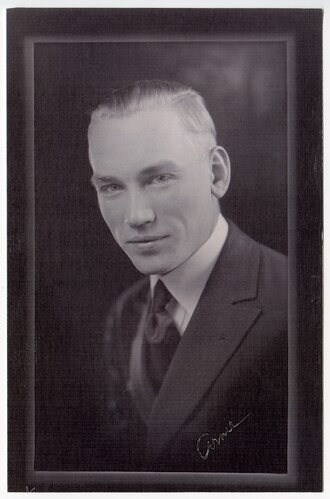
Overview
Arnold Orville Beckman did not set out to be an industrialist. He was a Caltech chemistry instructor with a knack for electronics when, in 1934, an old University of Illinois classmate named Glen Joseph, by then a chemist at the California Fruit Growers Exchange, the cooperative behind Sunkist, came to him with a maddening practical problem: how to measure, quickly and reliably, the acidity of lemon juice being treated with sulfur dioxide [1][3]. The standard method, a delicate glass electrode wired to a fussy galvanometer, kept failing. As Beckman put it, "the glass electrodes were always breaking, and if it wasn't that, the galvanometer itself would break" [3]. Rather than build a better galvanometer, Beckman did something more radical: he amplified the tiny electrode signal with vacuum tubes and packed the whole apparatus, battery, amplifier, and meter, into a single sturdy box [1][5].
The result was the world's first commercially successful electronic pH meter, and it was the hinge on which Beckman's life turned. On April 28, 1935, he quietly engineered a name change for a small shop he part-owned, the National Inking Appliance Company, rechristening it National Technical Laboratories to manufacture the new instrument [5]. He priced the device at $195, an audacious sum in the depths of the Depression, when litmus paper cost pennies, and advisors warned him the entire market might be a few hundred units [4][8]. He sold 87 in 1935 and 444 the next year, and never looked back [5].
What Beckman had really invented was not just a meter but a category. Before him, precision measurement meant a skilled scientist hand-assembling apparatus on a bench; after him, a researcher could simply buy a reliable instrument off the shelf and start taking data, "Now a scientist could purchase a precision instrument and start making quick, simple, reliable measurements," as his biographers wrote [2]. He followed the pH meter with the Beckman DU ultraviolet spectrophotometer in 1941, an instrument so transformative that a Nobel laureate would later call it "probably the most important instrument ever developed toward the advancement of bioscience"; more than 21,000 were sold before it was discontinued in 1964 [1][8]. During the war he devised the Helipot, a ten-turn precision potentiometer that improved variable-resistor accuracy tenfold and went into radar sets, and built infrared spectrometers that helped the synthetic-rubber program [1][6].
Beckman resigned his Caltech faculty post in 1940 to run the company full time [1][7]. National Technical Laboratories became Beckman Instruments in 1950, went public in 1952 at $12.50 a share, and listed on the New York Stock Exchange in 1955 [8][9]. By the mid-1950s sales topped $20 million a year and would pass $100 million by the mid-1960s [8]. The instruments multiplied, analytical ultracentrifuges, oxygen analyzers, smog-monitoring gear born of Beckman's crusade against Los Angeles air pollution, until "Beckman" was a name stamped on benches in every serious laboratory in the world [1][8].
In one fateful side-bet, Beckman in 1955 agreed to bankroll William Shockley, the Nobel co-inventor of the transistor, setting up the Shockley Semiconductor Laboratory as a subsidiary of Beckman Instruments [10][11]. Against Beckman's wishes Shockley planted it near his ailing mother in the Santa Clara Valley, at 391 South San Antonio Road in Mountain View, the first silicon-device company in what would become Silicon Valley [10][11]. Shockley's abrasive management drove out the "traitorous eight," including Robert Noyce and Gordon Moore, who left to found Fairchild Semiconductor and, downstream, Intel; Beckman sold the money-losing lab at a substantial loss in 1960 [10][11]. The venture failed, but the diaspora it triggered did not.
Having made his fortune, Beckman spent the rest of his very long life giving it away with the same precision he had brought to measurement. Through the Arnold and Mabel Beckman Foundation, he and his wife gave more than $400 million, almost all of it to science, to Caltech, the University of Illinois, Stanford, and the National Academy of Sciences, guided by a rule as simple as his instruments: fund the scientists who had been his customers [1][7][12].
Early Life & Path
Beckman was born April 10, 1900, in Cullom, Illinois, a prairie town of a few hundred people, the son of a village blacksmith [1][7]. The defining moment of his childhood came at age nine, when he found a battered copy of J. Dorman Steele's nineteenth-century textbook Fourteen Weeks in Chemistry in the attic and, in the words of his National Academy memorial, "fell under its spell, a spell that was to last a lifetime" [1]. He set up a working laboratory in a backyard tool shed his father built him, stocked with chemicals coaxed from the local druggist, and was running experiments before he was out of grade school [1][7].
He was valedictorian of University High School in Normal, Illinois, having already worked through two and a half years of college chemistry, and went on to the University of Illinois, where he took a bachelor's degree in chemical engineering (1922) and a master's in physical chemistry (1923) [1][7]. Graduate work under the polymer chemist Carl "Speed" Marvel involved synthesizing toxic dialkyl mercury compounds; a bout of mercury poisoning helped push Beckman toward the safer terrain of physical chemistry and electronics [1]. He paid his way in part by playing piano for silent movies, and briefly worked at Western Electric and Bell Telephone Laboratories in New York, where he absorbed the vacuum-tube and quality-control techniques that would later define his instruments [1][7].
In 1928 he completed a Ph.D. in photochemistry at the California Institute of Technology and joined its faculty, teaching and consulting on the side [1][7]. By the early 1930s he was the campus's unofficial maker-of-things, fixing instruments and even running a small ink-jet venture, which is how, when Glen Joseph walked in with his lemon-juice problem in 1934, Beckman happened to be exactly the man, with exactly the workshop, to solve it [1][3].
Career Timeline
- 1900Born April 10 in Cullom, Illinois, the son of a village blacksmith [1][7].
- 1909At age nine discovers Steele's Fourteen Weeks in Chemistry and builds a backyard laboratory [1].
- 1922–1923Earns a B.S. in chemical engineering and an M.S. in physical chemistry from the University of Illinois [1][7].
- 1928Completes a Ph.D. in photochemistry at Caltech and joins the faculty [1][7].
- 1934Glen Joseph of the California Fruit Growers Exchange asks Beckman for a durable way to measure lemon-juice acidity; Beckman builds a vacuum-tube acidimeter [1][3].
- 1935Renames the National Inking Appliance Company to National Technical Laboratories on April 28; demonstrates the pH meter at the ACS meeting and sells 87 units [5].
- 1936Sells 444 pH meters, priced at $195 each, vindicating the venture [4][5][8].
- 1940–1941Resigns his Caltech faculty post and introduces the Beckman DU ultraviolet spectrophotometer [1][8].
- 1942Develops the Helipot precision potentiometer and infrared spectrometers for the wartime radar and synthetic-rubber programs [1][6].
- 1950National Technical Laboratories is renamed Beckman Instruments, Inc. [8].
- 1952Beckman Instruments goes public at $12.50 a share; lists on the NYSE in 1955 [8][9].
- 1955Bankrolls William Shockley's Shockley Semiconductor Laboratory as a Beckman subsidiary, the first silicon firm in Silicon Valley [10][11].
- 1953–1974Serves on the Caltech board of trustees, as chairman from 1964; later chairman emeritus [1][7].
- 1989Receives the National Medal of Science; wife Mabel dies the same year [7][8].
- 2004Dies May 18 at Scripps Green Hospital in La Jolla, California, at age 104 [7][12].
Key Ventures & Innovations
The pH meter (1935)
Born from Glen Joseph's lemon-juice problem, the acidimeter amplified a glass electrode's tiny signal with vacuum tubes and sealed it in a rugged box. Priced at $195 in the Depression, when skeptics saw a market of a few hundred, it sold 87 in 1935 and 444 in 1936, and created the electronic-instrument industry [1][3][5][8].
The Beckman DU spectrophotometer (1941)
An ultraviolet/visible spectrophotometer that collapsed analyses from hours into minutes and let biochemists read the spectra of proteins and nucleic acids. A Nobel laureate called it "probably the most important instrument ever developed toward the advancement of bioscience"; over 21,000 sold before 1964 [1][8].
The Helipot and wartime instruments (1942)
A ten-turn precision potentiometer that improved variable-resistor accuracy roughly tenfold, the Helipot became a critical radar component. Beckman also built infrared spectrometers for the synthetic-rubber program and oxygen analyzers for high-altitude flight [1][6].
Going public and scaling (1950–1965)
National Technical Laboratories became Beckman Instruments in 1950, went public in 1952 at $12.50 a share, and listed on the NYSE in 1955. Driven by ultracentrifuges, gas analyzers, and smog monitors, sales climbed past $20 million by the mid-1950s and over $100 million by the mid-1960s [8][9].
Funding Shockley Semiconductor (1955)
Beckman financed William Shockley's silicon lab as a subsidiary; sited in Mountain View, it was the valley's first silicon firm. Shockley's management drove off Noyce, Moore, and the "traitorous eight," who founded Fairchild. Beckman sold the lab at a loss in 1960, but the talent it scattered built Silicon Valley [10][11].
The Arnold and Mabel Beckman Foundation
After cashing out, Beckman turned to systematic philanthropy, giving more than $400 million almost entirely to science, funding the Beckman Institutes at Caltech, Illinois, and Stanford, and programs for young investigators, on the principle of funding the scientists who had been his customers [1][7][12].
“I accumulated my wealth by selling instruments to scientists, so I thought it would be appropriate to make contributions to scientists.”
From the Record
“Now a scientist could purchase a precision instrument and start making quick, simple, reliable measurements.”
“The glass electrodes were always breaking, and if it wasn't that, the galvanometer itself would break.”
“I accumulated my wealth by selling instruments to scientists, so I thought it would be appropriate to make contributions to scientists, and that's been my number-one guideline for charity.”
“He fell under its spell, a spell that was to last a lifetime.”
What Operators Can Learn
- 01
Sell the toolmaker, not the gold mine
Beckman did not chase any single scientific breakthrough; he sold the instruments every scientist needed regardless of their field. By arming the whole research enterprise, he captured value from discoveries he never had to make himself.
- 02
Solve the durability problem, not just the measurement problem
Rivals had glass electrodes that could measure pH; they broke constantly. Beckman's edge was ruggedization, packaging fragile science into a box a working chemist could trust. The reliability, not the novelty, was the product.
- 03
Price for value, and ignore the people sizing the existing market
Advisors said $195 was absurd and the market was a few hundred units. They were measuring demand for a product that did not yet exist. Beckman priced to the value he created and grew a market no one had counted.
- 04
Backing the right people matters more than owning the outcome
The Shockley lab was a financial failure Beckman sold at a loss, yet by bringing Shockley west he set off the chain that produced Fairchild, Intel, and Silicon Valley. Some bets pay off in places the balance sheet never sees.
Legacy
Beckman's deepest legacy is invisible because it is everywhere: the idea that precision measurement should come in a box you can buy. By turning bench craft into off-the-shelf instruments, he industrialized the act of measurement and accelerated twentieth-century chemistry, biology, and medicine, the DU spectrophotometer alone underpinned a generation of work on proteins, vitamins, and DNA [1][8]. Caltech's Harry Gray summed it up plainly: "Arnold Beckman started an instrumentation revolution that completely changed the course of chemistry and biology not only at Caltech, but all over the world" [7].
There is also the accidental legacy of geography. By financing William Shockley in 1955 and tolerating his move north, Beckman helped plant the first silicon company in the Santa Clara Valley; the engineers who fled Shockley's lab built Fairchild and Intel and, with them, the modern technology economy [10][11]. It is one of the great what-ifs of business history that the man who created the scientific-instrument industry also, almost as a footnote, lit the fuse on the semiconductor one.
Finally there is the money, returned with intent. The more than $400 million Beckman and Mabel gave away, to the Beckman Institutes, to young investigators, to the National Academy of Sciences, was governed by a single, characteristically exact philosophy: give to the scientists who made you rich [1][7][12]. He died in 2004 at 104, his name still on the instruments, the buildings, and the foundation, a measurement that has not yet stopped reading.
Further Reading
Arnold O. Beckman: One Hundred Years of Excellence, Arnold Thackray and Minor Myers Jr. (2000)
The definitive, document-grounded biography, drawing on Beckman's own papers, oral histories, and corporate archives; foreword by James D. Watson.
The Man Behind the Microchip: Robert Noyce and the Invention of Silicon Valley, Leslie Berlin (2005)
Traces the Shockley lab Beckman funded and the 'traitorous eight' who left it to build Fairchild and Intel.
Broken Genius: The Rise and Fall of William Shockley, Joel N. Shurkin (2006)
On Shockley, whose Beckman-financed laboratory became the seed crystal of Silicon Valley.
Memorial Tributes, Volume 19 (Arnold O. Beckman), National Academy of Engineering (2015)
A concise, authoritative biographical memoir of Beckman's scientific and entrepreneurial career.
Arnold O. Beckman, Scientific Biography and Beckman Historical Collection, Science History Institute (2017)
An online biography plus a deep digital archive of Beckman's letters, instruments, and photographs.
Sources
- 1.Arnold Thackray and Minor Myers Jr. (foreword by James D. Watson), Arnold O. Beckman: One Hundred Years of Excellence, Chemical Heritage Foundation, 2000, book
- 2.Arnold Thackray and Minor Myers Jr., Arnold O. Beckman: One Hundred Years of Excellence (passage on the pH meter's significance), Chemical Heritage Foundation, 2000, book
- 3.“Origins: Birth of the pH Meter”, Caltech Magazine, c. 2015, archive
- 4.International Directory of Company Histories, Beckman Instruments, Inc. (corporate history entry), St. James Press (via Encyclopedia.com / FundingUniverse), 1998, book
- 5.American Chemical Society, “Beckman pH Meter, National Historic Chemical Landmark”, American Chemical Society, 2004, archive
- 6.Lemelson-MIT Program, “Arnold Beckman, inventor profile (pH meter, DU spectrophotometer, Helipot)”, Massachusetts Institute of Technology, 2004
- 7.“Arnold O. Beckman (1900–2004)”, Beckman Coulter (company biography), 2004
- 8.“Arnold O. Beckman, Scientific Biography”, Science History Institute (formerly Chemical Heritage Foundation), 2017, archive
- 9.“Beckman Instruments, Inc. (IPO and listing history)”, Encyclopedia.com / International Directory of Company Histories, 1998
- 10.David Laws, “Beckman, Shockley, and the 60th Anniversary of the Birth of Silicon Valley”, Computer History Museum, 2016, archive
- 11.“Shockley Semiconductor Laboratory”, Wikipedia, 2024
- 12.“Arnold Beckman, inventor of pH meter, dies at 104”, The Seattle Times (Associated Press), May 23, 2004, newspaper
- 13.Arnold O. Beckman, PhD (1900–2004), Clinical Chemistry, Vol. 50, No. 8, 2004, journal
Researched and written with Claude + live web search.