Overview
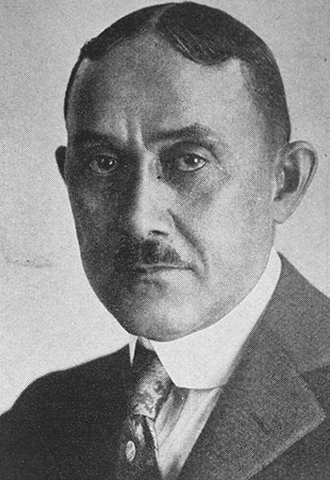
Anthony Overton did not invent the cosmetics business, the Black-owned bank, or the race newspaper. What he did, and what almost no one else of his era managed, was to stitch all of them together into a single, interlocking enterprise, a personal-care manufacturer, a national bank, a life-insurance company, a magazine, and a newspaper, and run the whole conglomerate from one four-story building in the Black Metropolis of Chicago [1][4]. Born to enslaved parents in Monroe, Louisiana, in 1865, he became, by the late 1920s, the most celebrated Black businessman in the United States and the first business figure ever awarded the NAACP's Spingarn Medal [1][5][9].
The empire grew from an unglamorous seed. In 1898, in Kansas City, Overton put roughly $2,000 of family savings into the Overton Hygienic Manufacturing Company, whose first product was a baking powder called Hygienic Pet [1][8]. The breakthrough was cosmetics. His High Brown Face Powder, advertised as "the first and only face powder that was ever made especially for the complexion of colored ladies", found a market that white manufacturers had simply ignored, and it became the foundation of everything that followed [8][2]. By the time Overton moved the firm to Chicago in 1911, he was selling through a salaried staff plus some four hundred door-to-door agents; by 1915 the company made sixty-two products and was capitalized at $268,000, with orders arriving from Egypt, Liberia, and Japan [1][8].
Overton understood, decades before Madison Avenue made it doctrine, that he needed to own the channel as well as the product. In 1916 he launched the Half-Century Magazine, named for the fifty years since emancipation and conceived partly as a vehicle to sell Overton goods to Black women; in the 1920s he added the Chicago Bee newspaper [1][2]. Then he reached for finance. He founded the Victory Life Insurance Company (1922) and, in 1922–23, the Douglass National Bank, the second nationally chartered Black-owned bank in the country [1][9]. By 1927 the Bradstreet credit agency rated his manufacturing business above $1 million, and Overton presided over a vertically and horizontally diversified empire with no real precedent in Black America [1][8].
The scholarship that finally took his measure, Robert E. Weems Jr.'s 2020 biography, is unsparing about both the achievement and the myth. Weems shows that the romantic story of Overton as a youthful prodigy who was a college graduate, lawyer, and judge before thirty was largely embroidered; in reality "he struggled until he was in his 30s," a man with four children and "the motivation to be successful at something so he could feed his family" [10]. The 1903 Kansas City flood nearly wiped him out; in these years Overton corresponded with Booker T. Washington, whose self-help, enterprise-first creed closely matched his own [1][3].
The Great Depression destroyed most of what he built. As deposits drained from the Douglass National Bank and his real-estate bets soured, Overton quietly funneled cash from Victory Life into propping up the bank, buying its stock and lending against a failed Douglass real-estate deal [6]. In March 1932 the Chicago Defender exposed the maneuvers; the bank failed that year and the insurance company slipped into a court-appointed receivership under a white administrator, a humiliation widely felt across Black Chicago [6][1]. He lost the bank, the insurance company, and the public title that had defined him, "the merchant prince of his race", yet the cosmetics firm and the Bee survived, and Overton rebuilt enough to die, in 1946, still a respected elder of Black enterprise [1][6].
Early Life & Path
Anthony Overton was born on March 21, 1865, in Monroe, Louisiana, to parents who had been enslaved [1][5]. His father, also named Anthony Overton, was freed by emancipation and rose during Reconstruction to serve in the Louisiana legislature and to own a grocery; when the violent reassertion of white control in the post-Reconstruction South made Louisiana dangerous, the family fled to Topeka, Kansas, in the 1870s, part of the great "Exoduster" migration of Black Southerners to the plains [1][5]. The son thus grew up inside the brief, bright window of Black political possibility and watched it slam shut, an experience that shaped a lifelong conviction that economic self-reliance, not politics, was the surer ground for Black advancement [1].
The conventional account of Overton's youth, graduate of Washburn College with a chemistry degree, holder of a University of Kansas law degree, municipal judge in Topeka, turns out to be mostly legend, repeated so often in admiring profiles that it hardened into fact. Weems's archival work found a far messier truth: Overton attended Washburn and spent perhaps two years at the University of Kansas before leaving, dabbled in law and small commerce, and, in Weems's blunt summary, "struggled until he was in his 30s" [10]. By the late 1890s he was a married man with four children and pressing reasons to make something work [10].
That something was manufacturing. In 1898, in Kansas City, he founded the Overton Hygienic Manufacturing Company with about $2,000 in savings and a single product, a baking powder [1][8]. The pivot from the pantry to the vanity, from baking powder to cosmetics formulated for Black women's skin, was the decision that made him, and it grew out of his own chemistry training and a clear-eyed reading of a market that mainstream manufacturers refused to serve [8][2].
Career Timeline
- 1865Born March 21 in Monroe, Louisiana, to formerly enslaved parents; his father later serves in the Louisiana legislature during Reconstruction [1][5].
- 1870sFamily flees post-Reconstruction violence in Louisiana and resettles in Topeka, Kansas, amid the Exoduster migration [1][5].
- 1898Founds the Overton Hygienic Manufacturing Company in Kansas City with roughly $2,000, first selling Hygienic Pet baking powder [1][8].
- c. 1900Introduces High Brown Face Powder, marketed as the first powder made specifically for Black women, the firm's breakthrough product [8][2].
- 1903A devastating Kansas City flood nearly destroys the business; in this period Overton corresponds with Booker T. Washington, a mentor figure whose self-help philosophy he shared [1][3].
- 1911Relocates the company to Chicago to reach a larger market, selling through salaried staff and some 400 door-to-door agents [1][8].
- 1915Company makes 62 products and is capitalized at $268,000, with export orders from Egypt, Liberia, and Japan [1][8].
- 1916Launches the Half-Century Magazine, named for the 50 years since emancipation and used to market Overton products to Black women [1][2].
- 1922Founds the Victory Life Insurance Company and begins organizing the Douglass National Bank [1][9].
- 1923Douglass National Bank opens, the second nationally chartered Black-owned bank in the U.S.; the Overton Hygienic Building on State Street houses the empire [1][4][9].
- 1927Becomes the first businessman awarded the NAACP's Spingarn Medal; also receives the Harmon Foundation's first gold medal in business; Bradstreet rates the manufacturing firm above $1 million [1][5][9].
- 1932The Chicago Defender exposes the diversion of Victory Life funds into the bank; the Douglass National Bank fails and Victory Life enters court-appointed receivership [6][1].
- 1930s–40sStripped of the bank and insurer, Overton rebuilds around the surviving cosmetics company and the Chicago Bee [1][6].
- 1946Dies July 2 in Chicago, still honored as an elder of Black business [1][5].
Key Ventures & Innovations
Overton Hygienic Manufacturing Company (1898)
Begun with about $2,000 and a baking powder, it became one of the nation's largest makers of Black cosmetics on the strength of High Brown Face Powder. By 1915 it produced 62 products at a $268,000 capitalization; by 1927 Bradstreet rated it over $1 million, with orders from Egypt, Liberia, and Japan [1][8].
Half-Century Magazine (1916)
Named for the fifty years since emancipation, the magazine was both a Black women's periodical and a marketing engine for Overton's products, an early fusion of media and commerce aimed at a consumer market white firms ignored [1][2].
Douglass National Bank (1922–23)
The second nationally chartered Black-owned bank in the country, it gave Overton's conglomerate a financial anchor and Black Chicago a federally chartered institution of its own. It failed in 1932 amid the Depression and Overton's own intercompany dealings [1][9][6].
Victory Life Insurance Company (1922)
Overton's insurer was, for a time, licensed in multiple states, a rare reach for a Black-owned company. Its undoing came when its cash was funneled to prop up the failing Douglass bank, leading to a receivership run by a white court appointee [1][6].
The Overton Hygienic Building and the Chicago Bee
The 1923 four-story building at 3619–27 South State Street, designed by Z. Erol Smith, housed the manufacturing firm, the bank, the insurer, and offices for Black professionals; Overton later added the Chicago Bee newspaper and its own building. Both structures survive on the National Register of Historic Places [4][7].
“The first and only face powder that was ever made especially for the complexion of colored ladies.”
From the Record
“The use of face powders made by white concerns for the white woman make you look as if you had fallen into a flour barrel.”
“High-Brown Face Powder clings so closely and matches the skin so perfectly that no one ever suspects the powder is there. The quality is rare, the perfume rich and fragrant.”
“By the late 1890s, he had four children and had the motivation to be successful at something so he could feed his family.”
What Operators Can Learn
- 01
Serve the market everyone else refuses to see
Overton's fortune rested on a single insight: that Black women were customers, not an afterthought. High Brown Face Powder succeeded precisely because mainstream manufacturers had written off the market, leaving it wide open to someone who took it seriously.
- 02
Own the channel, not just the product
Long before integrated media-and-commerce was a strategy with a name, Overton built a magazine and a newspaper partly to reach and sell to his own customers. Controlling distribution and audience let a manufacturer shape demand instead of merely chasing it.
- 03
Diversification can become contagion
The interlocking conglomerate that made Overton powerful also linked his fates fatally together. When the bank weakened, he raided the insurer to save it, and the failure of one limb pulled down the others, the dark side of a tightly coupled empire.
- 04
Beware the myth you let others build
Overton tolerated and benefited from an inflated origin story of the prodigy-judge-chemist. The legend won admirers, but the real lesson of his life, a man who failed into his thirties and then ground out a business to feed four children, is both truer and more useful.
Legacy
Anthony Overton's significance is structural, not merely commercial. He is recognized by Harvard Business School's roster of twentieth-century American business leaders as the first African American to head a major business conglomerate, and he was the first businessman of any kind to receive the NAACP's Spingarn Medal, in 1927 [1][5][9]. In an era when Black Americans were locked out of mainstream capital, insurance, and retail, he demonstrated that a vertically and horizontally integrated enterprise, making, financing, insuring, and publicizing, could be built and owned within the Black community itself [1][4].
The Depression exposed the fragility beneath the achievement, and Weems's biography refuses to let the collapse be airbrushed: the diversion of Victory Life's funds, the bank's failure, the bitterness of a white receiver taking over a flagship Black institution [6][1]. Yet the cosmetics company and the Chicago Bee endured, and Overton rebuilt enough standing to die honored in 1946 [1][6]. The story is therefore neither pure triumph nor pure cautionary tale, but both at once.
His monuments are physical and institutional. The Overton Hygienic Building and the Chicago Bee Building still stand on State Street, listed on the National Register of Historic Places as part of the Black Metropolis–Bronzeville thematic district, and a Chicago public school bears his name [4][7]. For decades a half-forgotten figure, Overton was restored to the center of African American business history by Robert E. Weems Jr.'s definitive 2020 study, the book that finally separated the man from the myth he helped create [1][10].
Further Reading
The Merchant Prince of Black Chicago: Anthony Overton and the Building of a Financial Empire, Robert E. Weems Jr. (2020)
The definitive biography, archival, critical, and the source that separated the real Overton from the myth.
The History of Black Business in America: Capitalism, Race, Entrepreneurship, Juliet E. K. Walker (1998)
The standard survey of African American enterprise that sets Overton in the long arc of Black business history.
Desegregating the Dollar: African American Consumerism in the Twentieth Century, Robert E. Weems Jr. (1998)
Essential context on the Black consumer market that Overton's cosmetics and magazine were built to serve.
Building the Black Metropolis: African American Entrepreneurship in Chicago, Robert E. Weems Jr. and Jason P. Chambers (eds.) (2017)
Essays on the Bronzeville business world Overton helped create, placing his empire among its peers.
Black Metropolis: A Study of Negro Life in a Northern City, St. Clair Drake and Horace R. Cayton (1945)
The classic contemporary sociology of Black Chicago, the milieu in which Overton's conglomerate rose and fell.
Sources
- 1.Robert E. Weems Jr., The Merchant Prince of Black Chicago: Anthony Overton and the Building of a Financial Empire, University of Illinois Press, 2020, 224 pp., book
- 2.Robert E. Weems Jr., Desegregating the Dollar: African American Consumerism in the Twentieth Century, New York University Press, 1998, book
- 3.Louis R. Harlan and Raymond W. Smock, eds., “The Booker T. Washington Papers (correspondence of Washington's network of Black business allies, including Anthony Overton)”, University of Illinois Press / Library of Congress, 1972–1989, archive
- 4.“Overton Hygienic Building”, National Park Service (Places / Black Metropolis), 1923, archive
- 5.BlackPast.org, “Anthony Overton (1865–1946)”, BlackPast.org, n.d.
- 6.“Investigation of Victory Life Insurance Company finances (coverage of fund diversion to Douglass National Bank)”, Chicago Defender, March 1932, newspaper
- 7.“Black Metropolis Thematic District / Black Metropolis–Bronzeville District, National Register of Historic Places (Overton Hygienic Building and Chicago Bee Building, listed April 30, 1986)”, National Register of Historic Places, U.S. Department of the Interior, 1986, archive
- 8.“Anthony Overton, Business Pioneer”, African American Registry, n.d.
- 9.“Overton Hygienic MFG Co., est. 1898”, Made-in-Chicago Museum, n.d.
- 10.“Book Explores Life of Black Business Trailblazer with Topeka and KC Roots (interview with Robert E. Weems Jr.)”, The Community Voice (Wichita, Kansas), July 9, 2020, newspaper
- 11.Juliet E. K. Walker, The History of Black Business in America: Capitalism, Race, Entrepreneurship, Twayne / Macmillan, 1998, book
Researched and written with Claude + live web search.