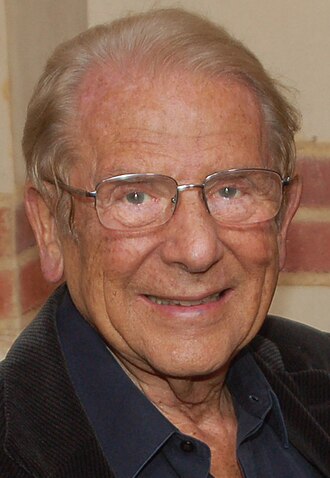
Overview
Alfred E. Mann did not set out to build pacemakers. He was a UCLA-trained physicist running a pair of profitable aerospace companies, Spectrolab and Heliotek, that powered America's first spacecraft with solar cells, when a friend with a problem walked through the wrong door at the right moment [1][2][7]. That friend was Robert Fischell, chief engineer at the Johns Hopkins University Applied Physics Laboratory, whose team had bought Spectrolab's solar panels to run its satellites [7]. In 1969 Fischell sketched on his blackboard a rechargeable cardiac pacemaker, a device that, instead of being cut out of a patient's chest every eighteen months to swap its dying mercury-zinc battery, could be topped up through the skin by radio waves [4][7]. He needed someone to manufacture it. He turned to Mann [1][7].
The pacemaker of the late 1960s was a crude object: roughly half a pound, powered by a battery good for perhaps eighteen to twenty-one months before another operation [1][3]. The implantable pacemaker itself was barely a decade old, traceable to Wilson Greatbatch's accidental 1958 invention in a Buffalo barn, and the field was still wrestling with the battery as its central, unsolved constraint [11]. Fischell's insight, and Mann's, was that the same nickel-cadmium battery chemistry and radio-frequency telemetry that kept satellites alive in orbit could keep a human heart beating without repeat surgery [3][7]. Mann recognized the opportunity, and in 1972 he founded Pacesetter Systems in the San Fernando Valley town of Sylmar, California, around the rechargeable pacemaker concept [1][2][6]. The device reached the market in the summer of 1973, the patient periodically donning a line-powered vest that recharged the implant through radio-frequency coupling, arriving just as rival CPI introduced a long-life lithium battery that would soon make recharging unnecessary [1][3].
That could have killed the company. It is the first lesson of Mann's career that it did not. Pacesetter pivoted from its founding technology to the things that actually mattered to cardiologists: in 1979 it introduced the first commercially available bidirectional-telemetry pacing system, borrowing NASA's two-way satellite-communication methods so a physician could interrogate and reprogram an implanted pacemaker without cutting the patient open, and pushed toward the first single-chip pacemaker [3][6]. "Under Mann's leadership," the National Academy of Engineering would later write, "Pacesetter proved to be an adaptable company with a loyal following" [1]. It grew into the second-largest cardiac-pacemaker maker in the world [1][2].
In 1985 Mann sold Pacesetter to Siemens for a reported $150 million, then stayed on to run the German giant's new subsidiary, Siemens-Pacesetter, as chairman and CEO until 1992 [2][5]. The sale did two things. It made Mann rich, and it freed him to do the only thing he truly wanted to do, which was to start the next company [1][5]. The Pacesetter sale capitalized MiniMed, his insulin-pump and continuous-glucose-monitoring venture, which Medtronic would buy in 2001 for more than $3 billion [2][5]. Over roughly fifty years Mann founded or co-founded seventeen companies; nine were acquired for a combined total approaching $8 billion [1][2][5].
What made Mann unusual was not any single device but the repeatable method behind all of them: take hard-won technology from one domain, spacecraft power, satellite telemetry, microelectronics, and carry it across the wall into medicine, then control the whole chain from invention to manufacture [1][3][7]. He was an inventor who happened to be an operator, a physicist who learned finance, and a man who treated the gap between a university laboratory and a shipped product as the central engineering problem of his life [3][8]. By the end he was pouring his fortune back into closing that gap, endowing freestanding institutes at USC, Purdue, and the Technion to drag academic ideas into the marketplace [1][2].
Early Life & Path
Alfred Eugene Mann was born November 6, 1925, in Portland, Oregon, the son of Charles Mann, an English-immigrant grocer, and Anna, a Polish-born singer and pianist [1][5]. The household was musical and modest; Mann himself played cello, oboe, and piano, and the love of music never left him, late in life he gave generously to musical causes [1][5]. "I came from humble beginnings," he wrote in his Giving Pledge letter, "and grew to become a young scientist pioneering in a field of electro-optical physics" [9]. He finished high school at sixteen and headed for the University of California, Los Angeles [2].
His education was interrupted by World War II, he served in the Army Air Corps, after which he returned to UCLA and took bachelor's and master's degrees in physics, completing his studies around 1949 [1][5]. He went to work in the burgeoning Southern California aerospace world, and there found the pattern that would define him. In 1956, by his own account, the U.S. Army "actually set me up in business," and Mann founded Spectrolab, an electro-optical company [9]. Two years later, he wrote, "the Air Force came to me for help with our country's first spacecraft" [9]. Spectrolab's solar cells and panels would power American satellites; in 1960 he founded the semiconductor firm Heliotek as well [1][2].
Mann sold both Spectrolab and Heliotek to Textron in 1960 but continued to manage them until 1972, the year he finally left aerospace for medicine [1][2]. The bridge between the two worlds was personal as much as technical: Robert Fischell's Johns Hopkins satellite teams were Spectrolab customers, and it was that working relationship that put a blackboard sketch of a rechargeable pacemaker in front of exactly the right manufacturer [7]. Mann was forty-six, financially secure, and looking for a second act when the heart of his career arrived [1][2].
Career Timeline
- 1925Born November 6 in Portland, Oregon, to an immigrant grocer and a musician [1][5].
- 1949Completes bachelor's and master's degrees in physics at UCLA after Army Air Corps service [1][5].
- 1956Founds Spectrolab, an electro-optical/aerospace company; soon supplies solar cells for America's first spacecraft [1][9].
- 1960Founds the semiconductor firm Heliotek; sells both companies to Textron but keeps managing them [1][2].
- 1969Robert Fischell of Johns Hopkins APL conceives a rechargeable pacemaker and recruits Mann to manufacture it [4][7].
- 1972Founds Pacesetter Systems in Sylmar, California, around the rechargeable pacemaker, leaving aerospace behind [1][2][6].
- 1973Pacesetter's rechargeable pacemaker reaches the market in summer, just as CPI launches a long-life lithium pacer [1][3].
- 1979Pacesetter introduces the first commercially available bidirectional-telemetry pacing system, drawing on NASA satellite tech [3][6].
- 1983Founds MiniMed to develop wearable insulin microinfusion pumps for diabetes [2][5].
- 1985Sells Pacesetter to Siemens for a reported $150 million; founds the Alfred Mann Foundation [1][2][5][9].
- 1985–1992Serves as chairman and CEO of the Siemens subsidiary, Siemens-Pacesetter, Inc. [1][2].
- 2001Medtronic acquires MiniMed for more than $3 billion [2][5].
- 2011Signs the Giving Pledge, committing at least 90% of his estate to philanthropy [9].
- 2016Dies February 25 in Las Vegas at age 90, having founded some 17 companies over 50 years [1][5].
Key Ventures & Innovations
Spectrolab and Heliotek (1956, 1960)
Mann's aerospace foundation: Spectrolab's solar cells powered America's earliest spacecraft, and Heliotek added semiconductors. The companies made him wealthy, taught him to ship hardware, and, crucially, put him in business with the Johns Hopkins engineers who would hand him his next career [1][9].
Pacesetter Systems (1972)
Built around Robert Fischell's rechargeable pacemaker, Pacesetter survived the obsolescence of its founding technology by pivoting to programmability and telemetry. Its 1979 bidirectional-telemetry system let doctors reprogram an implant without surgery, and the company became the world's second-largest pacemaker maker before Siemens bought it in 1985 for a reported $150 million [1][2][3][6].
MiniMed (1983)
Mann's diabetes venture, developing belt-worn insulin microinfusion pumps and, later, continuous glucose monitoring, bringing the precise, programmable delivery of insulin, isolated and first injected in the 1920s, into a wearable device [12]. Capitalized in part by the Pacesetter windfall, it was acquired by Medtronic in 2001 for more than $3 billion, his single largest exit [2][5].
Advanced Bionics and Second Sight (1990s)
Carrying neuromodulation into the senses, Advanced Bionics built cochlear implants to let the deaf hear, and Second Sight developed a retinal prosthesis, the Argus II artificial retina, for the blind, approved in 2013 [2][5].
The Alfred Mann Foundation and university institutes (1985 onward)
An operating research foundation focused on neuromodulation, staffed almost entirely by scientists and engineers, plus endowed biomedical institutes at USC, Purdue, and the Technion, each funded at $100 million or more, designed to convert academic intellectual property into shipped medical products [1][9].
“I want to use those resources to make this a better world, and to do as much as I can during my lifetime.”
From the Record
“I came from humble beginnings and grew to become a young scientist pioneering in a field of electro-optical physics. The US Army needed my help and actually set me up in business in 1956. Two years later the Air Force came to me for help with our country's first spacecraft.”
“Eventually Mann founded a small company to develop a pacemaker for the rechargeable battery; this was the origin of Pacesetter Systems.”
“I want to use those resources to make this a better world, and to do as much as I can during my lifetime. I am therefore committing most of my estate to philanthropy, primarily focusing on development of medical products to improve and extend lives.”
What Operators Can Learn
- 01
Carry technology across the wall between industries
Mann's defining move was importing aerospace technology, spacecraft battery chemistry, satellite telemetry, microelectronics, into medicine. The hardest problems in one field are often already solved next door; the value is in the translation.
- 02
Be willing to outlive your founding idea
Pacesetter's whole reason for existing, the rechargeable battery, was made obsolete almost immediately by long-life lithium cells. Mann let go of the premise and kept the company, pivoting to programmability and telemetry. Founders who marry the original technology rather than the customer's problem do not survive that moment.
- 03
Sell to fund the next thing, not to retire
Each exit, Pacesetter to Siemens, MiniMed to Medtronic, became the capital and the freedom for the next venture. Mann treated liquidity not as a finish line but as fuel, founding seventeen companies across fifty years.
- 04
Own the path from lab to product
Mann saw the gap between a university invention and a shipped device as the central engineering problem of his life, and he built institutions, companies and, later, endowed institutes, specifically to close it. Ideas are cheap; the manufacturing and commercialization machine is the asset.
Legacy
Alfred Mann's inheritance is measured in two currencies. The first is the devices themselves: the rechargeable and then programmable pacemakers that spared cardiac patients repeat surgery; the insulin pumps and glucose monitors that reshaped how millions manage diabetes; the cochlear implants that let the deaf hear and the artificial retina that gave some of the blind a crude vision [1][2][5]. The companies that made them, Pacesetter, MiniMed, Advanced Bionics, Second Sight, were folded into Siemens, St. Jude Medical, Medtronic, and others, embedding his work in the spine of the modern medical-device industry [1][2][5].
The second currency is the model. Mann demonstrated, repeatedly, that a single founder could shepherd a technology all the way from a laboratory blackboard to an FDA-approved product implanted in a human body, and then do it again [1][8]. His Giving Pledge committed at least ninety percent of his estate to philanthropy, almost all of it aimed at medical technology, and his endowed institutes at USC, Purdue, and the Technion were an attempt to systematize what he had done by instinct, to manufacture, on purpose, the bridge from academic invention to marketable cure [1][9].
When he died of a heart attack in Las Vegas on February 25, 2016, at ninety, the National Academy of Engineering's tribute reduced a sprawling career to a single sentence that doubled as an epitaph: "Al Mann was a visionary, inventor, and prolific entrepreneur. He started 17 companies in 50 years" [1][5]. He had, in the most literal sense, spent his life putting machines in people's hearts.
Further Reading
Machines in Our Hearts: The Cardiac Pacemaker, the Implantable Defibrillator, and American Health Care, Kirk Jeffrey (2001)
The definitive scholarly history of the pacemaker industry, placing Mann's Pacesetter and the rechargeable battery in their full technological and clinical context.
The Only EKG Book You'll Ever Need, Malcolm S. Thaler (2018)
Accessible clinical grounding in the cardiac rhythms that pacemakers like Mann's were built to correct.
Memorial Tributes, Volume 23 (Alfred E. Mann), National Academy of Engineering (2019)
A concise, authoritative engineering-community assessment of Mann's life, companies, and contributions.
The Making of the Pacemaker: Celebrating a Lifesaving Invention, Wilson Greatbatch (2000)
A firsthand memoir by the engineer who invented the implantable pacemaker, the device whose battery problem created the opening Mann's Pacesetter was built to fill.
The Discovery of Insulin, Michael Bliss (1982)
The classic history of insulin's discovery, essential background to the diabetes-delivery problem Mann attacked with MiniMed's pumps and sensors.
Sources
- 1.National Academy of Engineering, “Alfred E. Mann (Memorial Tribute)”, National Academies Press, Memorial Tributes, Volume 23, 2019, archive
- 2.“Alfred E. Mann, 90, pioneer in medical devices”, The Boston Globe, February 28, 2016, newspaper
- 3.National Aeronautics and Space Administration, “Programmable Pacemaker (NASA Spinoff 1996)”, NASA Spinoff, 1996, archive
- 4.“How a 1969 Battery Ad Inspired a Medical Device Invention”, MD+DI (Medical Device and Diagnostic Industry), 2016
- 5.“Al Mann Dies, Leaving Legacy of 17 Companies”, Los Angeles Business Journal, February 26, 2016, newspaper
- 6.Larry Tyler / The World of Implantable Devices, “Pacesetter's 1973 Rechargeable Pacemaker”, implantable-device.com, 2014
- 7.“Robert Fischell: When I See a Problem, My Mind Sees Solutions”, MD+DI (Medical Device and Diagnostic Industry), 2016
- 8.Alfred E. Mann, interviewed by Molly Joel Coye, Confessions Of A Serial Entrepreneur: A Conversation With Alfred E. Mann, Health Affairs, 2006, Vol. 25, No. 3, pp. w104–w113 (DOI 10.1377/hlthaff.25.w104), journal
- 9.Alfred E. Mann, “Alfred E. Mann, The Giving Pledge (pledge letter)”, The Giving Pledge, 2011, archive
- 10.Kirk Jeffrey, Machines in Our Hearts: The Cardiac Pacemaker, the Implantable Defibrillator, and American Health Care, Johns Hopkins University Press, 2001, book
- 11.Wilson Greatbatch, The Making of the Pacemaker: Celebrating a Lifesaving Invention, Prometheus Books, 2000, book
- 12.Michael Bliss, The Discovery of Insulin, University of Chicago Press, 1982, book
Researched and written with Claude + live web search.