Overview
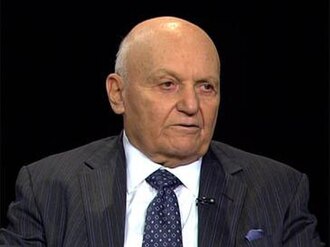
Alan Courtney "Ace" Greenberg did not found Bear Stearns, Joseph Bear, Robert Stearns, and Harold Mayer did that in 1923, with $500,000 in capital [4][8]. What Greenberg founded was its culture and its second life. He walked into the firm in 1949 as a clerk earning $32.50 a week, and by the time he handed over the chief executive's office in 1993 he had turned a clubby bond-trading shop into the fifth-largest securities firm in the United States [1][3]. When he took command in 1978, after the death of the trading legend Cy Lewis, Bear Stearns had roughly 1,000 employees and about $46 million in capital; when he stepped down as CEO fifteen years later, shareholders' equity stood near $1.8 billion and the headcount above 6,000 [1][3].
Greenberg's instrument was not a product but a temperament. He had learned risk arbitrage, betting the spread on announced mergers, at the elbow of the firm's traders, running the arbitrage desk by his mid-twenties, and he governed the whole company as if it were a single trading book: cut your losses fast, never fall in love with a position, and watch expenses like a hawk [1][4]. The New York Times described him as "a cigar-chomping capitalist in shirtsleeves: balding, muscular, poker-faced, some said icy" [3]. He was also, improbably, a championship contract-bridge player who won the Reisinger teams title in 1977, a practicing sleight-of-hand magician, and a big-game hunter, a man who treated probability as a craft in every room he entered [1][3].
He ran the place by memo. Beginning in 1978 he issued a stream of short, mordant directives, many delivered through an invented sage named Haimchinkel Malintz Anaynikal, that became Wall Street folklore and were eventually collected as a book [5]. The most famous, dated August 9, 1985, informed the staff that the purchasing department would no longer buy paper clips, since the firm received plenty attached to incoming mail; saved and recycled, he wrote, "we will also, in a short time, be awash in the little critters" [5][6]. The point behind the comedy was deadly serious: every dollar of expense not spent dropped straight to the bottom line, and a firm that cut costs in good times would never be forced to in bad [5].
He hired against the grain. While rivals chased Ivy League MBAs, Greenberg wanted "PSDs", people who were poor, smart, and possessed of a deep desire to become rich, believing hunger beat pedigree on a trading floor [1][5]. He paired that meritocratic edge with an unusual moral demand: every one of the firm's senior managing directors was required to give at least 4 percent of gross income to charity, a mandate no other Wall Street house imposed, and one Greenberg backed by giving away a large share of his own fortune [7]. He even paid cash bounties to employees who reported their own and others' errors, on the theory that a hidden mistake was the only expensive kind [7].
The last act was a tragedy he watched from the chairman's seat rather than the driver's. Greenberg had personally recruited James "Jimmy" Cayne, a former scrap-metal salesman and bridge champion, in 1969; in 1993 Cayne maneuvered him out of the CEO job [1][2]. In September 1998, when the Federal Reserve Bank of New York herded fourteen firms into a $3.65 billion rescue of the collapsing hedge fund Long-Term Capital Management, Bear Stearns alone refused to contribute, a defiance that hardened into a grudge other banks would remember a decade later [2]. When Bear Stearns suffered a fatal run on its capital in March 2008 and was sold to JPMorgan Chase for an initially humiliating $2 a share, the eighty-year-old Greenberg was still on the premises, and he laid the blame squarely on Cayne in his memoir, The Rise and Fall of Bear Stearns [2][9].
Greenberg's legacy is the rare one of a corporate culture more durable than the corporation. The firm he built is gone, but the doctrine, frugality as discipline, humility as edge, losses cut without sentiment, and the line he repeated for thirty years that a man does well in commerce only "as long as he does not believe his own body odor is perfume", remains one of the most quoted bodies of management wisdom Wall Street ever produced [5][3].
Early Life & Path
He was born September 3, 1927, in Wichita, Kansas, and raised in Oklahoma City, where his father, Theodore, ran a women's clothing store that was part of a small family chain spread across Kansas, Oklahoma, and Missouri [1][3]. The boy who would become "Ace" was an athlete first, he went to the University of Oklahoma on a football scholarship, but a back injury ended that path, and he transferred to the University of Missouri, where he took a business degree in 1949 [1][3]. The nickname, by his own account, came later and partly by design: he simply liked it better than Alan.
With his degree fresh and no Wall Street connections, the twenty-one-year-old went east and took the first job a brokerage would give him, a clerk's stool at Bear Stearns for $32.50 a week [1][3]. It was the kind of unglamorous, low-pedigree entry that would later define his entire hiring philosophy; he had been a PSD himself. He rose with startling speed inside the firm's risk-arbitrage operation, the high-stakes business of trading the price gaps around announced corporate deals, and by his mid-twenties he was running that desk and trading the firm's own money [1][4].
What shaped him as much as the trading floor were the two games he played for life. Greenberg became a nationally ranked bridge player, partnering with future Bear Stearns colleagues and winning major tournaments, and a serious amateur magician who co-founded a small publisher of conjuring books [1][3]. Both pursuits rewarded the same disciplines he prized in markets: cold calculation of odds, emotional control under pressure, and a showman's grasp of how other people could be made to see what wasn't there. He carried all of it into the executive suite when Cy Lewis died and the firm turned to him in 1978 [1][3].
Career Timeline
- 1927Born September 3 in Wichita, Kansas; raised in Oklahoma City, son of a women's-clothing-store owner [1][3].
- 1949Graduates from the University of Missouri and joins Bear Stearns as a clerk at $32.50 a week [1][3].
- 1953By his mid-twenties is running the firm's risk-arbitrage desk [1][4].
- 1969Recruits James "Jimmy" Cayne, a former scrap-metal salesman and bridge champion, to the firm [1][2].
- 1977Wins the Reisinger Board-a-Match Teams, a top national contract-bridge title [1][3].
- 1978Becomes head of Bear Stearns after the death of Cy Lewis, with about 1,000 employees and roughly $46 million in capital [1][3].
- 1985Issues the legendary August 9 "paper clip" memo ordering the purchasing department to stop buying them [5][6].
- 1985Becomes chairman of the board (a role he holds until 2001) [1].
- 1993Hands the CEO title to Cayne; firm now has ~6,300 employees and ~$1.8 billion in shareholders' equity [1][3].
- 1996Publishes Memos from the Chairman, collecting two decades of his directives [5].
- 1998Bear Stearns alone among major firms refuses to join the Fed-brokered $3.65 billion LTCM rescue [2].
- 2008A run on Bear Stearns forces its fire sale to JPMorgan Chase; Greenberg, then 80, is still on the board [2][3].
- 2010Publishes The Rise and Fall of Bear Stearns, blaming the collapse largely on Cayne [9][2].
- 2014Dies July 25 in Manhattan of complications from cancer, age 86 [3][7].
Key Ventures & Innovations
The risk-arbitrage desk
Greenberg made his name and the firm's early modern profits trading the spreads around announced mergers, buying targets, shorting acquirers, and living or dying on the deal closing. The discipline of cutting losing positions instantly became the governing philosophy he later applied to the whole company [1][4].
The memos and the cost-cutting religion
From 1978 he ran Bear Stearns by short, funny, ruthless memos, often ventriloquized through the fictional sage Haimchinkel Malintz Anaynikal, preaching that expenses be cut hardest when business was best. The 1985 paper-clip memo became the most famous document in the firm's history [5][6].
Hiring PSDs
Against an industry recruiting from elite MBA programs, Greenberg sought people who were 'poor, smart, and with a deep desire to become rich,' betting that hunger and common sense outperformed credentials on a trading floor [1][5].
The 4% charity mandate
Greenberg required every senior managing director, some 300 of them, to give at least 4 percent of gross income to charity, an obligation no other Wall Street firm imposed, and matched it by donating much of his own income himself [7].
Building a top-five securities firm
Over his fifteen years as CEO he grew Bear Stearns from roughly $46 million in capital and ~1,000 employees into the fifth-largest U.S. securities house, with ~$1.8 billion in equity and ~6,300 staff by 1993, while keeping it lean and profit-obsessed [1][3].
“Thou will do well in commerce as long as thou does not believe that thine own odor is perfume.”
From the Record
“I have just informed the purchasing department that they should no longer purchase paper clips. All of us receive documents every day with paper clips on them. If we save these paper clips, not only will we have enough for our own use, but we will also, in a short time, be awash in the little critters. Periodically, we will collect excess paper clips and sell them.”
“Thou will do well in commerce as long as thou does not believe that thine own odor is perfume.”
“We are really looking for people with PSD degrees. They built this firm and there are plenty around because our competitors don't seem to know that they exist. PSDs are poor, smart and have a deep desire to become rich.”
What Operators Can Learn
- 01
Cut costs in the good times, not the bad
Greenberg's central heresy was that expense discipline is a permanent posture, not an emergency response. A firm that trims relentlessly while it is winning never has to gut itself in a downturn, and every dollar saved falls straight to the bottom line.
- 02
Run the business like a trading book
Cut your losses fast and never fall in love with a position. The arbitrageur's habit of killing a bad trade without sentiment, applied to the whole company, kept Bear Stearns lean and unromantic about its mistakes.
- 03
Hire hunger over pedigree
His 'PSD' philosophy, poor, smart, deep desire to get rich, bet that motivation and common sense beat credentials. He had been a clerk on $32.50 a week himself, and built a meritocracy that prized results over résumés.
- 04
Humility is a competitive edge, not a virtue you can afford to skip
The body-odor-is-not-perfume line was not a joke about manners. Greenberg believed arrogance was the precursor to the unforced error, and that the firm that stayed 'humble, humble, humble' would outlast the ones that believed their own legend.
- 05
Reward the exposure of error
By paying cash to employees who surfaced mistakes, Greenberg inverted the usual incentive to hide them. The only truly expensive error, he reasoned, is the one nobody admits until it has compounded.
Legacy
Greenberg outlived the firm he made, and that is the central irony of his story. Bear Stearns vanished in March 2008, swallowed by JPMorgan Chase in the first great convulsion of the financial crisis, and Greenberg, eighty years old, still arriving at the office, still cutting his own losses without sentiment, watched it go [2][3]. He pinned the catastrophe on the leadership that succeeded him, above all on Cayne, the protégé he had recruited in 1969 and who had pushed him out in 1993 [1][2]. The 1998 refusal to help rescue Long-Term Capital Management, made on Cayne's watch, became in hindsight the moment Wall Street decided it owed Bear Stearns no favors [2].
Yet the culture proved more portable than the company. Greenberg's memos are still passed around trading floors and reprinted in business courses; his 'PSD' hiring creed, his insistence on cutting costs hardest in the fat years, and his 4 percent charity mandate are studied as a coherent and unusually moral management philosophy [5][7]. The Harvard Business School lists him among its twentieth-century leaders for delivering profits while championing ethics and giving [7].
He was, in the end, a man who distrusted his own success. The Oklahoma clothier's son who started on a $32.50 clerk's wage spent his life warning the people he made rich not to believe their own legend, and the collapse of the institution that ignored that warning became, against his will, the loudest argument for it [3][5].
Further Reading
Memos from the Chairman, Alan C. Greenberg (1996)
The primary source: two decades of Greenberg's own pithy, funny, ruthless directives, the best window into how he actually ran the firm.
The Rise and Fall of Bear Stearns, Alan C. (Ace) Greenberg with Mark Singer (2010)
Greenberg's memoir of the firm's arc and 2008 collapse, settling scores with his successor and defending his own doctrine.
House of Cards: A Tale of Hubris and Wretched Excess on Wall Street, William D. Cohan (2009)
The definitive narrative history of Bear Stearns from its 1923 founding to the 2008 fire sale, rich on Greenberg, Cayne, and the culture between them.
Street Fighters: The Last 72 Hours of Bear Stearns, Kate Kelly (2009)
A taut, reported reconstruction of the firm's final collapse, the Wall Street Journal coverage that broke it open expanded into book form.
Sources
- 1.William D. Cohan, House of Cards: A Tale of Hubris and Wretched Excess on Wall Street, Doubleday, 2009, book
- 2.Kate Kelly, Street Fighters: The Last 72 Hours of Bear Stearns, the Toughest Firm on Wall Street, Portfolio / Penguin, 2009, book
- 3.Landon Thomas Jr., “Alan C. Greenberg, Who Built and Ran Bear Stearns, Dies at 86”, The New York Times, July 25, 2014, newspaper
- 4.Alan C. (Ace) Greenberg with Mark Singer, The Rise and Fall of Bear Stearns, Simon & Schuster, 2010, book
- 5.Alan C. Greenberg, Memos from the Chairman, Workman Publishing, 1996, book
- 6.“Chairman's Cost-Cutting Humor”, The Washington Post, October 18, 1987, newspaper
- 7.“Alan C. Greenberg, 20th Century Leaders”, Harvard Business School (Creating Emerging Markets / Leadership initiative), 2014, archive
- 8.“Bear Stearns, company history and founding (1923)”, MarketsWiki, 2008
- 9.Laura Lorenzetti, “Alan 'Ace' Greenberg, former chairman of Bear Stearns, dead at 86”, Fortune, July 25, 2014, newspaper
Researched and written with Claude + live web search.